

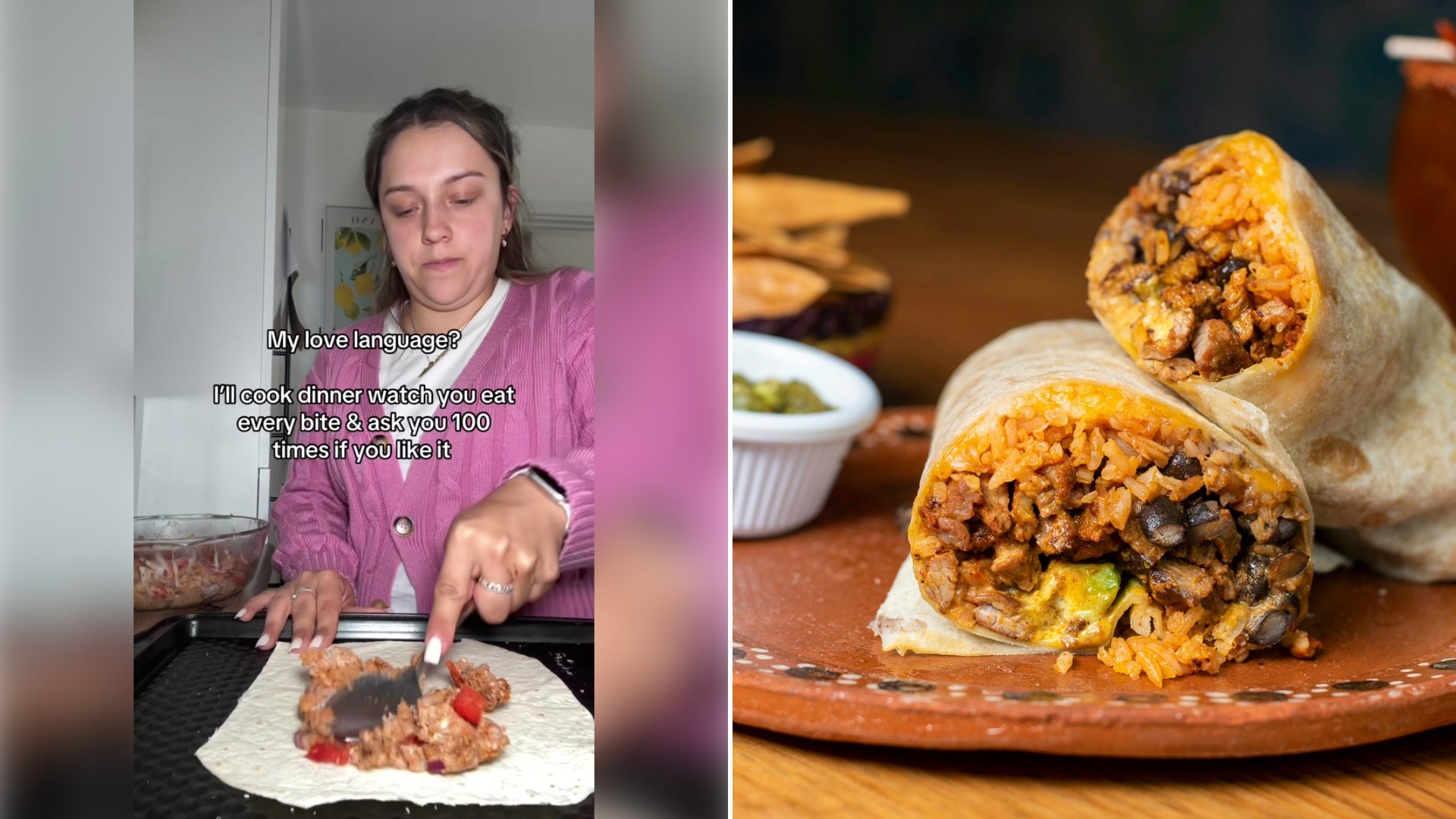
There is a specific kind of question that anyone who cooks for someone they love has probably asked more than once: did you actually like it, or are you just being nice. One creator has turned that exact anxiety into a running bit, and in the process, into one of the more relatable relationship videos making the rounds this fall.
Posted on September 14, the TikTok from @miasoper12 shows her assembling a large, thoroughly loaded homemade quesadilla on camera, the kind of hearty, from-scratch dish that clearly took real effort. The caption does the heavy lifting for the joke: even if you tell me you like it, I’ll still ask you another ninety-nine times. It is a wildly specific number, delivered completely straight-faced, and it is exactly that specificity that makes the video so funny and so recognizable at the same time.
What sells the clip is that it is not a skit or a staged bit written for the algorithm. It reads as a genuine, first-person post from someone simply narrating her own well-known habit, one that anyone in her life could presumably confirm without hesitation. The nearly 30,000 likes the video has picked up suggest that a lot of people either recognize themselves in her or recognize a partner, a parent, or a best friend who does the exact same thing.
@miasoper12 Even if you tell me you like it I’ll still ask you another 99 times😂🤭 #lovelanguages #food #dinner ♬ original sound – rebecca
The joke works because it is rooted in something almost universally true about the way people express care through food. Cooking a meal for someone, especially something as labor-intensive as a large homemade quesadilla built from scratch, is rarely just about hunger. It is an offering, a way of saying that time and effort were spent specifically on another person’s enjoyment. That is precisely why a single word of approval never quite feels like enough. Compliments are easy to say and easy to say insincerely, and anyone who has cooked for someone they love has felt that flicker of doubt: are they just saying that so I’ll stop asking?
Relationship and family therapists who study love languages often point out that acts of service and words of affirmation frequently show up together this way, tangled into a single behavior rather than existing as two clean separate categories. The cooking is the act of service. The repeated asking for reassurance is a request for words of affirmation layered on top of it, a way of needing the verbal confirmation to match the effort that went into the physical gift. Ninety-nine times is obviously an exaggeration, but the impulse underneath it, wanting to hear it again and again until the doubt fully quiets down, is something almost everyone who cooks for a partner can recognize in themselves to some degree.
There is also something worth noting about why this particular joke travels so well online. It does not require any context about the couple’s history, their length of time together, or any specific backstory. It is instantly legible to anyone who has ever cooked a meal for someone they wanted to impress, which is a nearly universal experience cutting across long marriages, new relationships, and even friendships and family dinners. A parent asking a teenager if they liked dinner, a new boyfriend anxiously waiting on a first home-cooked meal, a spouse of twenty years still checking in after the thousandth dinner made: the specific number of ninety-nine questions is exaggerated, but the underlying behavior is not.
For anyone who has ever found themselves asking a version of the same question more times than they would like to admit, the video offers a small kind of permission. Needing reassurance about something made with real effort is not insecurity so much as it is an honest reflection of how much the effort meant in the first place. The quesadilla was clearly good. The asking was never really about the food.
There is also a lighter, more universal truth buried in why this specific joke, framed around a specific and absurd number, works so well compared to a vaguer version of the same sentiment. Saying someone needs a lot of reassurance is a bit flat. Committing to the precise, ridiculous number of ninety-nine is what turns an ordinary feeling into a genuinely funny bit, because it takes something real and pushes it just far enough into exaggeration to become comedy, while still keeping one foot in truth. That balance, between something true enough to be relatable and exaggerated enough to be funny, is a big part of why food and relationship content built around small, specific quirks tends to perform so well. It is also a small reminder for anyone tempted to downplay their own quirks as too minor or too silly to mention out loud. The specific, slightly ridiculous habits are usually the most memorable and most relatable ones, far more than any generic statement about loving someone ever could be.
Food creators in particular have leaned into this kind of reassurance-seeking as a content niche of its own, since a home-cooked dish gives the bit a built-in visual payoff that a joke about, say, a haircut or a gift would not have in quite the same way. Viewers get to see exactly what prompted the ninety-nine questions, which makes the joke land even for people who have never met either person in the video.
It is a small, funny habit in the grand scheme of a relationship, but it is also exactly the kind of detail that ends up in a wedding toast someday, told fondly by someone who has clearly been on the receiving end of the questioning more than once.
