Growing up with a single, deeply ingrained version of a staple food can create a surprisingly specific blind spot, one that only becomes obvious once life eventually calls for the version nobody at home ever made. That is exactly the gap one woman found herself facing when it came to flour tortillas.
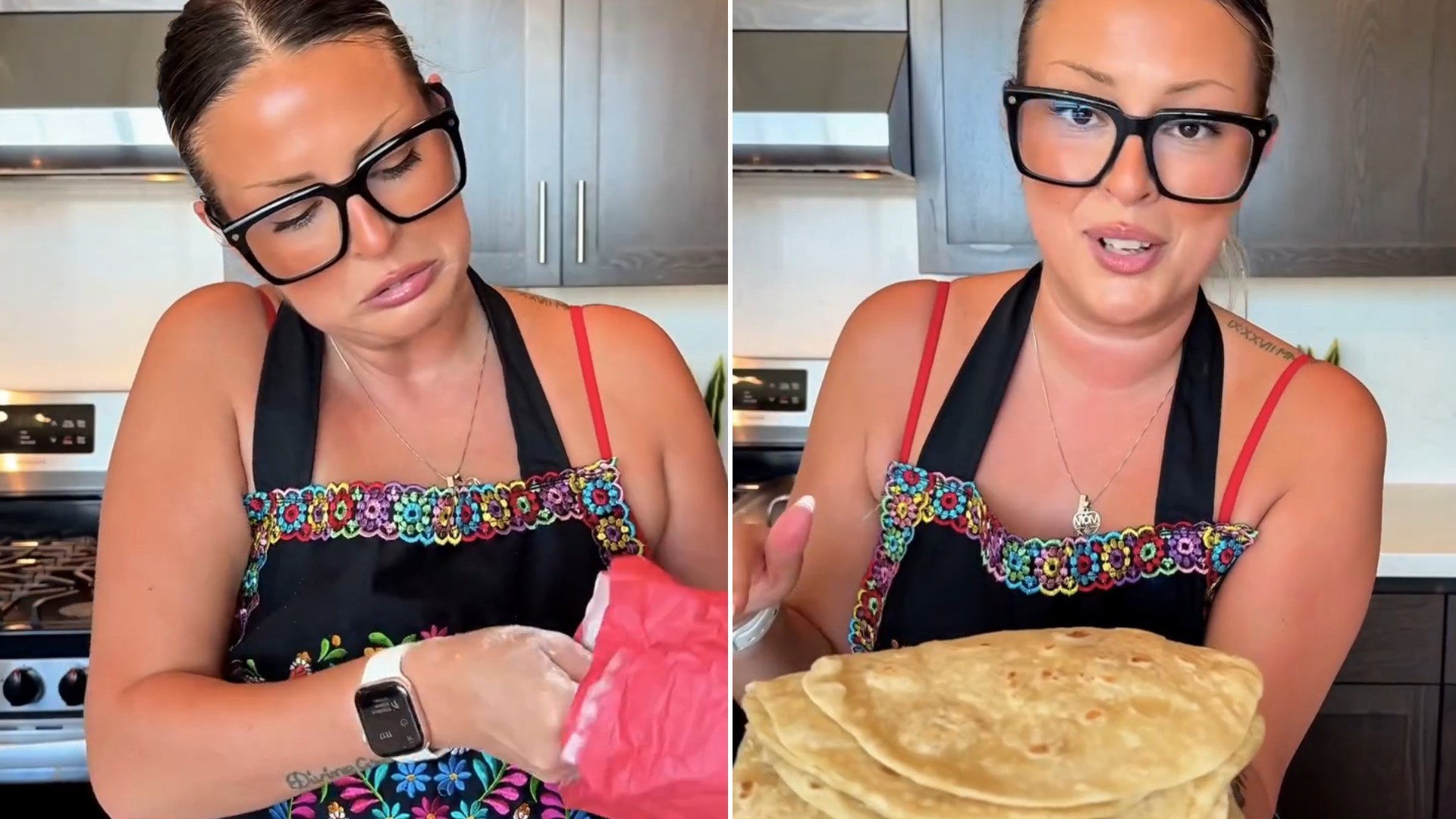
In her video, @malinda.rocha explains that she grew up on corn tortillas exclusively, a foundational part of her family’s kitchen that meant she genuinely had no experience making flour tortillas until well into adulthood. Rather than treating that gap as a minor inconvenience to work around, she decided to close it directly, demonstrating her homemade flour tortilla recipe step by step for the camera and ending the video by holding up the finished stack, clearly proud of the result.
There is something relatable in the specific shape of this gap, because it is not a story about someone who simply never learned to cook, or who grew up disconnected from a family food tradition. It is the opposite. She grew up deeply immersed in a strong culinary tradition, just one that happened to center exclusively on a different type of tortilla, which meant an entire category of a food she otherwise knew intimately remained completely unfamiliar territory until she chose to learn it herself as an adult.
View this post on Instagram
Corn and flour tortillas, despite both falling under the same general category, actually involve meaningfully different techniques, ingredients, and textures. Corn tortillas rely on masa, a corn-based dough with its own particular handling requirements, while flour tortillas use a wheat-based dough that behaves quite differently, requiring its own separate technique to roll and cook properly. A household that focused entirely on one version, likely for reasons rooted in regional tradition or family preference passed down through generations, would have no natural reason to also teach the other, since there was never a gap in the family’s own kitchen to fill.
That regional specificity is actually a meaningful and often overlooked detail within broader food traditions. Outside observers sometimes treat tortillas as a single, interchangeable category, but the corn-versus-flour distinction actually tracks real regional and cultural lines, with different areas and family traditions historically favoring one over the other based on factors like local agriculture, available ingredients, and inherited custom. Growing up exclusively on one version is not a gap in someone’s food knowledge so much as it is an accurate reflection of a specific, legitimate culinary tradition, one that simply did not happen to include the other type.
That context makes her decision to finally learn flour tortillas as an adult particularly interesting, since it represents someone voluntarily expanding beyond the specific tradition she grew up inside, rather than replacing it. There is no indication in her story that she is turning away from corn tortillas or the tradition that raised her. She is simply adding a new skill to what she already knows, closing a specific gap not out of necessity but out of genuine curiosity about a food closely related to something she already loves.
For anyone in a similar position, having grown up deeply rooted in one version of a family staple while remaining unfamiliar with a closely related variation, this story offers a useful reminder that filling that particular kind of gap does not require abandoning anything. Learning to make flour tortillas does not diminish a lifetime of corn tortilla expertise; it simply adds another tool to an already substantial set of kitchen skills. Food traditions are rarely as rigid or exclusive as they might initially appear from the inside, and there is real room to expand a personal repertoire without it reading as a betrayal of where that repertoire started.
Holding up that finished stack of flour tortillas at the end of the video reads less like the conclusion of a cooking tutorial and more like a small personal milestone, proof that a lifetime spent on one side of a genuine culinary divide does not have to stay that way forever, and that curiosity about the other side is worth acting on whenever the moment finally arrives.
There is also a broader point here about how internet food culture has become an unusually effective way for people to fill exactly these kinds of specific gaps in their own culinary knowledge. A generation ago, learning an unfamiliar technique like flour tortilla making might have required finding someone in person willing to teach it, a real barrier for anyone without that kind of connection readily available. Now, a clear, well-documented video can serve as a genuine substitute for that in-person mentorship, making it possible for someone to pick up an entirely new skill within an afternoon that might otherwise have taken years to encounter organically. That shift matters most for exactly the kind of gap described here, a real skill missing not because of a lack of interest but because of geography or family tradition, now closable with nothing more than curiosity and a willingness to try.
There is no wrong order to learn a food tradition in, only the order life happens to offer, and she simply decided, as an adult, that this particular gap was finally worth closing on her own terms.
Flour tortillas also carry their own distinct regional identity within broader Mexican and Tex-Mex cooking traditions, historically more closely associated with northern Mexican states where wheat cultivation was more common than corn, a geographic detail that helps explain why entire households elsewhere grew up with corn tortillas as the unquestioned default and never had reason to develop the other skill at all.