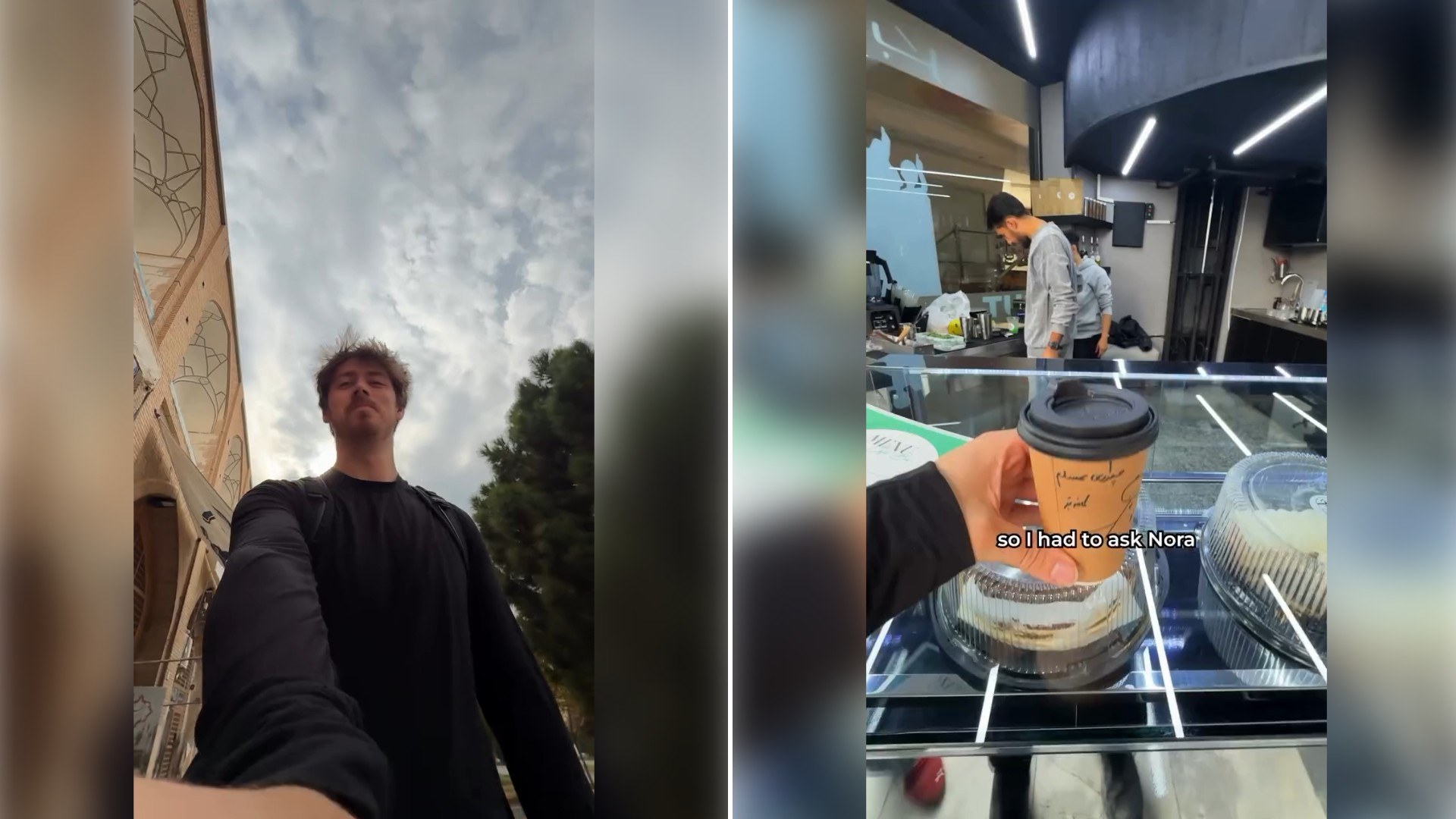
Handing a complete stranger a hundred dollars and asking them to plan your entire day sounds like the setup for a disaster. One travel creator tried it anyway in Isfahan, and the resulting footage suggests it might have been one of the better decisions of his trip.
The creator, @alex.by.air, approaches a local stranger in Isfahan, Iran, and offers her a hundred dollars, an amount he notes is roughly a month’s wages for a restaurant manager there, to design and lead him through an entire day of activities. The video that follows blends the spontaneous local stops that resulted from her plan with his own reflections on what the exchange actually meant for both of them.
View this post on Instagram
Travel content built around handing strangers money to design an itinerary has become its own recognizable subgenre, precisely because it inverts the usual power dynamic of tourism. Instead of a traveler consulting guidebooks and reviews written by other outsiders, the day gets shaped entirely by someone who actually lives there, with local knowledge no amount of pre-trip research could replicate.
It’s worth pausing on just how much trust this kind of exchange actually requires from both sides. The traveler is surrendering something most people guard closely on a trip abroad, control over his own schedule and destinations, to a person he met minutes earlier, with no way to verify in advance whether the resulting day will be safe, interesting, or worthwhile. The local stranger, for her part, is being asked to take on an unusual kind of responsibility, essentially vouching for her own city and her own judgment to someone who has no context for either. That mutual leap, on both sides, is precisely what makes the format compelling to watch; neither party has a script to fall back on if things go wrong, which means whatever unfolds is as close to unfiltered reality as travel content gets.
The specific detail about the sum representing roughly a month’s local wages adds a layer of real economic context that a lot of similar videos skip over. It reframes the gesture from a simple novelty into something closer to a meaningful, if informal, exchange, one that clearly mattered enough to the person receiving it to lead a stranger through a full day of her city. Naming that economic detail explicitly also does something else: it forces the viewer to sit with the disparity built into the exchange itself, a sum that functions as pocket money for a traveler and as a month’s income for the person spending her day designing his itinerary. That imbalance doesn’t necessarily undercut the sincerity of the exchange, but acknowledging it honestly, rather than glossing over it, gives the video a level of self-awareness that a lot of similar stranger-based travel content doesn’t bother with.
Setting a video like this in Iran specifically carries its own weight, given how heavily mediated most outside audiences’ impressions of the country tend to be, shaped far more often by geopolitics and news coverage than by footage of actual daily life, actual neighborhoods, and actual people going about an ordinary day. A video built around a spontaneous, locally led tour through Isfahan offers a different kind of window into the country than most viewers are used to seeing, one centered on hospitality, curiosity, and an ordinary person’s pride in showing off her own city, rather than on any of the usual framing outside coverage tends to default to.
Videos built around this kind of spontaneous cultural exchange also tend to reveal something about the specific destination that a standard travel itinerary never could. Wherever the day actually led, a favorite meal spot, a quiet corner of the city, a friend or family member roped into the plan along the way, those choices reflect one local resident’s own sense of what’s worth showing a visitor, not the algorithmically ranked list of top attractions that dominates most travel planning online. That personal curation is, in a lot of ways, the entire appeal of the format: it replaces a generic itinerary with someone’s actual, specific love for the place they call home.
There’s also something worth saying about why this format has proliferated across travel content specifically, rather than staying a one-off stunt. Audiences have grown increasingly skeptical of heavily curated, sponsor-driven travel content, the kind that feels indistinguishable from an advertisement regardless of the destination. A video built around handing control to a genuine local stranger reads as the opposite of that, unscripted, unsponsored, and dependent entirely on one real person’s choices rather than a marketing team’s. That authenticity is a large part of why this particular format keeps resurfacing across different creators and different countries, each version offering a slightly different local flavor while sharing the same underlying structure of trust extended to a stranger.
It’s also worth noting the emotional arc this kind of video tends to follow, one of gradually dissolving hesitation. A traveler cold-approaching a stranger with an unusual proposal is likely to be met with confusion at first, then curiosity, then, if the exchange goes well, a kind of genuine warmth that neither party expected walking in. Watching that progression play out over the course of a single video, from an awkward opening pitch to an afternoon spent laughing over a shared meal or a spontaneous stop somewhere unplanned, is part of what makes the format so satisfying, a small, compressed arc of strangers becoming, if only for a day, something closer to friends.
Whatever specific stops filled out the day, the format itself, a stranger, a fixed sum, and total trust in the plan that results, tends to produce exactly the kind of unscripted, locally grounded travel content that a pre-booked tour simply can’t replicate, a reminder that sometimes the most memorable version of a place comes not from a guidebook, but from handing the day over entirely to someone who already calls it home.