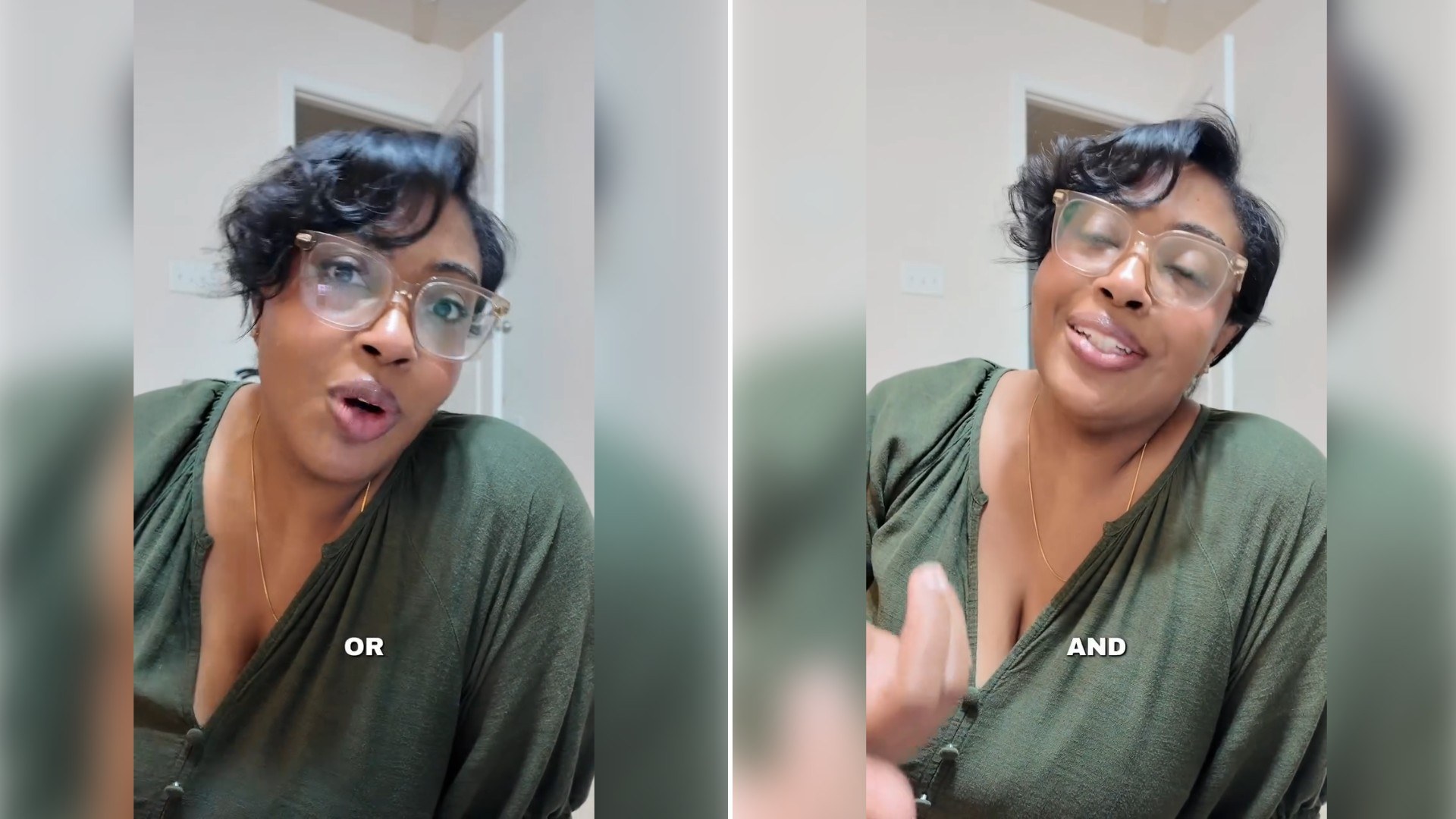
Six years is a long time to keep hearing the same reductive comment about your own marriage, and one creator finally decided to address it directly, on her own terms, rather than continuing to let it sit unanswered.
The creator, @thekarnes, uses the video to push back on recurring comments suggesting her husband only married her for a green card, a narrative that has apparently followed their relationship for years online. Rather than simply denying it, she reframes the conversation entirely, explaining that the two of them actually bonded over her work teaching English to immigrants and refugees, a far more meaningful origin story than the rumor ever gave them credit for.
View this post on Instagram
International couples often describe fielding some version of this exact assumption, an easy, cynical explanation that reduces a genuine relationship down to paperwork, simply because one partner happens to come from a different country. That kind of comment tends to say far more about the commenter’s assumptions than about the actual relationship, but it can still take a real toll to hear repeated for years without ever getting the chance to set the record straight.
There’s a particular exhaustion that comes from having strangers narrate your own relationship back to you, especially when the narration is wrong and repeated often enough to start feeling inescapable. Six years of a specific, cynical assumption resurfacing in comment sections is six years of having to decide, over and over, whether it’s worth responding, ignoring it, or simply absorbing it as the cost of sharing a relationship publicly at all. That she eventually chose to respond, and chose to do so by offering context rather than simply asserting her marriage is real, suggests a level of patience that most people confronted with the same repeated insinuation might not have managed to sustain for nearly as long.
What makes this video effective is the choice to counter a cynical narrative with a specific, human one rather than a defensive denial. Teaching English to immigrants and refugees isn’t a detail anyone would invent to make a relationship sound more legitimate; it’s a real, specific point of connection that explains far more about how two people actually fell for each other than any rumor ever could. A denial alone, no matter how firm, tends to leave the original accusation hanging in the air, unanswered in substance even if formally rejected. Replacing the accusation with an actual story, one grounded in a specific job, a specific population of students, a specific shared purpose, does something a denial can’t: it gives the audience something concrete and human to hold onto instead of the cynical narrative they walked in with.
International and cross-border relationships carry a particular kind of public scrutiny that same-nationality couples rarely have to contend with, an ongoing, unspoken suspicion that immigration status must be playing some hidden role in the relationship’s foundation. That scrutiny tends to flatten a couple’s entire story down to a single administrative detail, immigration paperwork, while ignoring everything else that actually built the relationship, the shared work, the shared values, the years of everyday life that have nothing to do with a visa at all. Addressing that scrutiny publicly, as this creator has chosen to do, means taking on the work of re-humanizing a relationship that strangers have spent years trying to reduce to its most cynical possible explanation.
The specific detail of teaching English to immigrants and refugees also adds an ironic layer to the whole situation that’s worth sitting with. The same work that brought this couple together, work rooted in helping people navigate a new country and a new language, is precisely the kind of work that gets erased by an assumption reducing her marriage to immigration convenience. In a sense, the rumor gets the entire dynamic backwards: rather than her husband seeking out a marriage for legal advantage, it was her own investment in helping immigrants build new lives that led directly to meeting him in the first place.
There’s also a broader pattern worth naming about how audiences online tend to treat international couples’ relationships as inherently suspicious until proven otherwise, in a way that couples of the same nationality almost never have to contend with. A same-nationality couple sharing a wedding anniversary video is rarely met with accusations about their motives. An international couple sharing the same kind of milestone content is far more likely to encounter some version of the green card assumption, regardless of how long the relationship has actually lasted or how much evidence of genuine connection has already been shared. That asymmetry says something uncomfortable about how differently cross-border relationships get read by strangers online, treated as needing to justify their legitimacy in a way other couples simply don’t.
Choosing to respond to that scrutiny with specificity rather than generality also models something useful for other couples navigating similar comments. A vague assurance that “our love is real” rarely satisfies a skeptical commenter, because it offers nothing to actually engage with. A concrete story, a classroom, a set of students, a shared mission that predates the relationship itself, gives even a skeptical viewer something factual to reckon with, shifting the conversation away from unfalsifiable suspicion and toward an actual, checkable origin story.
Six years, by any measure, is long enough to prove a relationship’s staying power on its own. That she felt compelled to address the comments at all says less about any doubt in the relationship itself and more about how persistent, and how tiring, that particular assumption can be to live with, and how much simpler, in the end, it turned out to be to just tell the real story rather than keep absorbing a version that was never true to begin with.