There’s a specific kind of kitchen urgency that comes from cooking against a clock you didn’t set yourself, and one creator’s race to finish a traditional Brazilian dinner before her husband gets home from work captures exactly that energy.
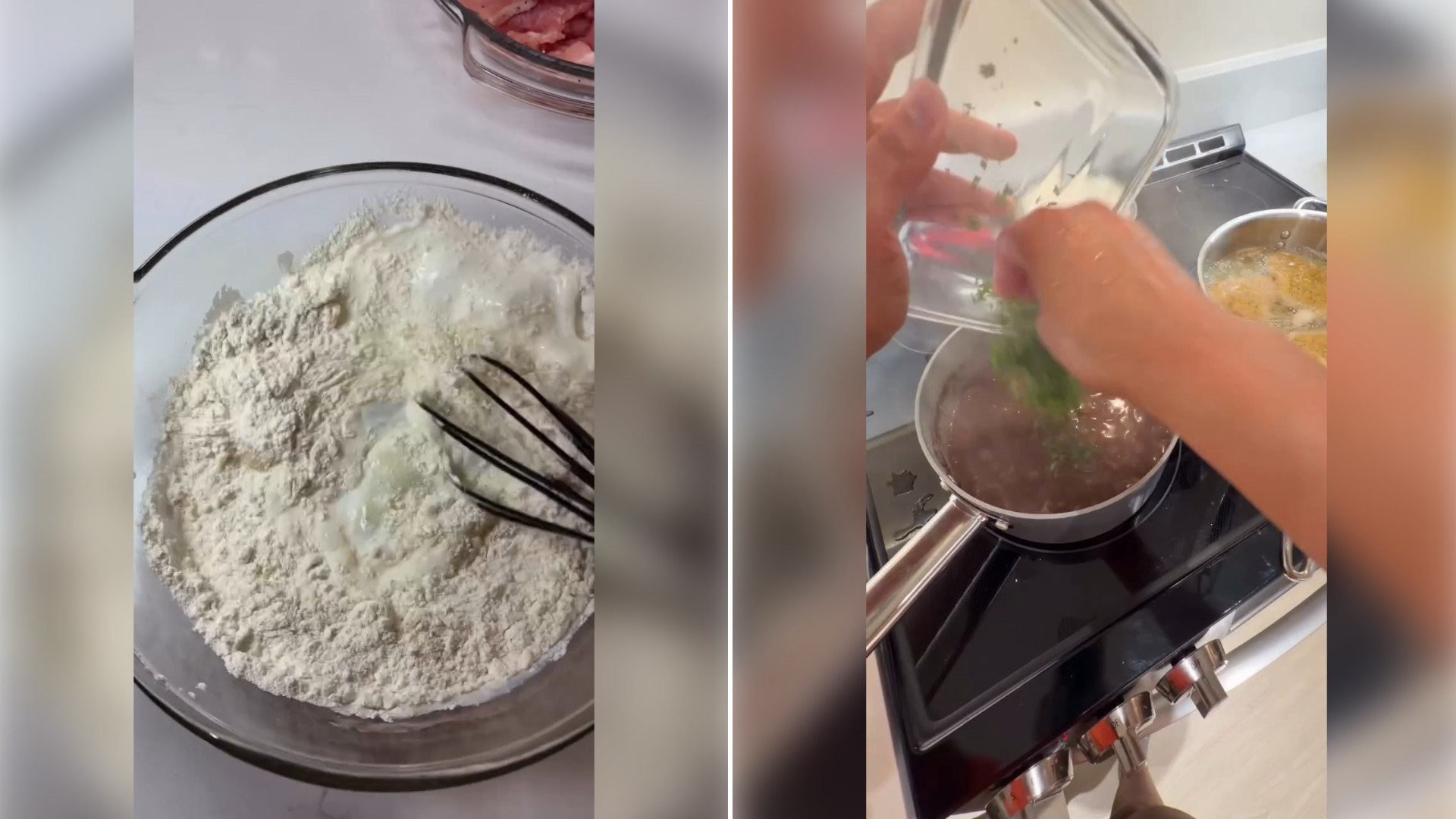
The creator, @gabrielamoraisdaniels, prepares a traditional Brazilian spread, breaded pork cutlet, white rice, and black beans, narrating as she goes that her husband is due home from work soon. The cultural context she gives is simple but pointed: she’s Brazilian, and the implication is clear enough without needing to be spelled out further, this is the kind of home-cooked dinner tradition expects on the table. The video is part of an ongoing series documenting her home-cooked meals for her family.
View this post on Instagram
Breaded pork cutlet, rice, and beans form a combination deeply familiar to Brazilian households, a staple trio that shows up on tables across the country with enough regularity that it functions almost like a cultural anchor rather than a special-occasion dish. Cooking it specifically to be ready the moment a spouse walks in from work adds a layer of everyday devotion to a meal that might otherwise seem routine from the outside.
It’s worth dwelling on just how much choreography goes into timing a meal like this one precisely. Rice and beans both require attention at different points in their cooking process, the beans typically needing a longer simmer to develop their flavor, the rice timed more tightly to avoid overcooking, while the breaded pork cutlet demands last-minute frying so it arrives at the table hot and crisp rather than soggy from sitting. Coordinating three separate components so that all of them land on the plate at their individual peak, at the exact moment someone walks through the door, is a genuinely demanding logistical feat, the kind of skill that looks effortless on camera precisely because it’s been practiced and refined over countless repetitions.
The specific detail of racing a clock she didn’t set herself is worth sitting with a bit longer. The deadline here isn’t a recipe’s suggested cook time or a dinner party’s fixed start hour; it’s a spouse’s commute, a variable she has limited control over and has to estimate based on habit, traffic, and whatever small signals might tip her off that he’s running early or late. Cooking against that kind of soft, shifting deadline requires a specific mental math that a lot of home cooks develop instinctively over years of doing it, factoring in not just how long a dish takes but how long a particular person’s day tends to run.
Home cooks navigating cultural food traditions passed down through family often describe a similar pressure, not from any one person directly, but from the accumulated weight of generations who did things a certain way before them. Racing the clock to have dinner ready isn’t really about the clock at all; it’s about honoring an expectation that existed long before this particular kitchen or this particular couple did. Cooking a dish this specific to one’s own cultural background, especially while living somewhere outside that country of origin, also carries its own quiet meaning, a way of keeping a piece of home present in daily life, passed along not through ceremony but through the ordinary repetition of an everyday dinner.
There’s also something worth noting about documenting home-cooked meals as an ongoing series rather than a one-off video. That format choice suggests the routine itself, not just any single dish, is the real subject of the content, an accumulating record of what it actually looks like to feed a family, night after night, with real cultural weight behind the choices being made. Viewers following a series like this one aren’t just picking up individual recipes; they’re getting a window into an entire sustained practice of care, repeated meal after meal, that a single standalone video could never fully capture.
Food traditions like this one also travel in both directions across a marriage, not just from the person who grew up with them. A partner who didn’t grow up eating breaded pork cutlet, rice, and beans as a weekly staple gradually comes to expect and look forward to it too, absorbing a piece of their spouse’s culture simply through years of sitting down to the same table. In that sense, a dinner like this one isn’t only a continuation of her own family’s tradition; it’s slowly becoming a tradition of the household the two of them have built together.
It’s also worth pointing out how differently a meal like this reads depending on where the household is located. Cooking rice, beans, and breaded pork cutlet in Brazil is simply cooking dinner, unremarkable in its familiarity. Cooking the exact same meal somewhere far from Brazil, timed to a spouse’s workday commute in a country that doesn’t share the same culinary default, turns the same dish into something closer to an act of cultural preservation, a deliberate choice to keep a specific tradition alive rather than drift toward whatever is locally convenient. That distinction, between cooking a dish because it’s simply what’s done and cooking it because it matters enough to maintain deliberately, is easy to miss without the context she provides, but it changes the entire emotional register of the video once it’s made explicit.
Whether she made it with minutes to spare or finished comfortably ahead of schedule, the dinner on the table represents more than a meal. It’s a small, daily continuation of a tradition she’s carrying forward in her own home, one plate of rice, beans, and pork cutlet at a time, timed, as always, to land exactly when it matters most.