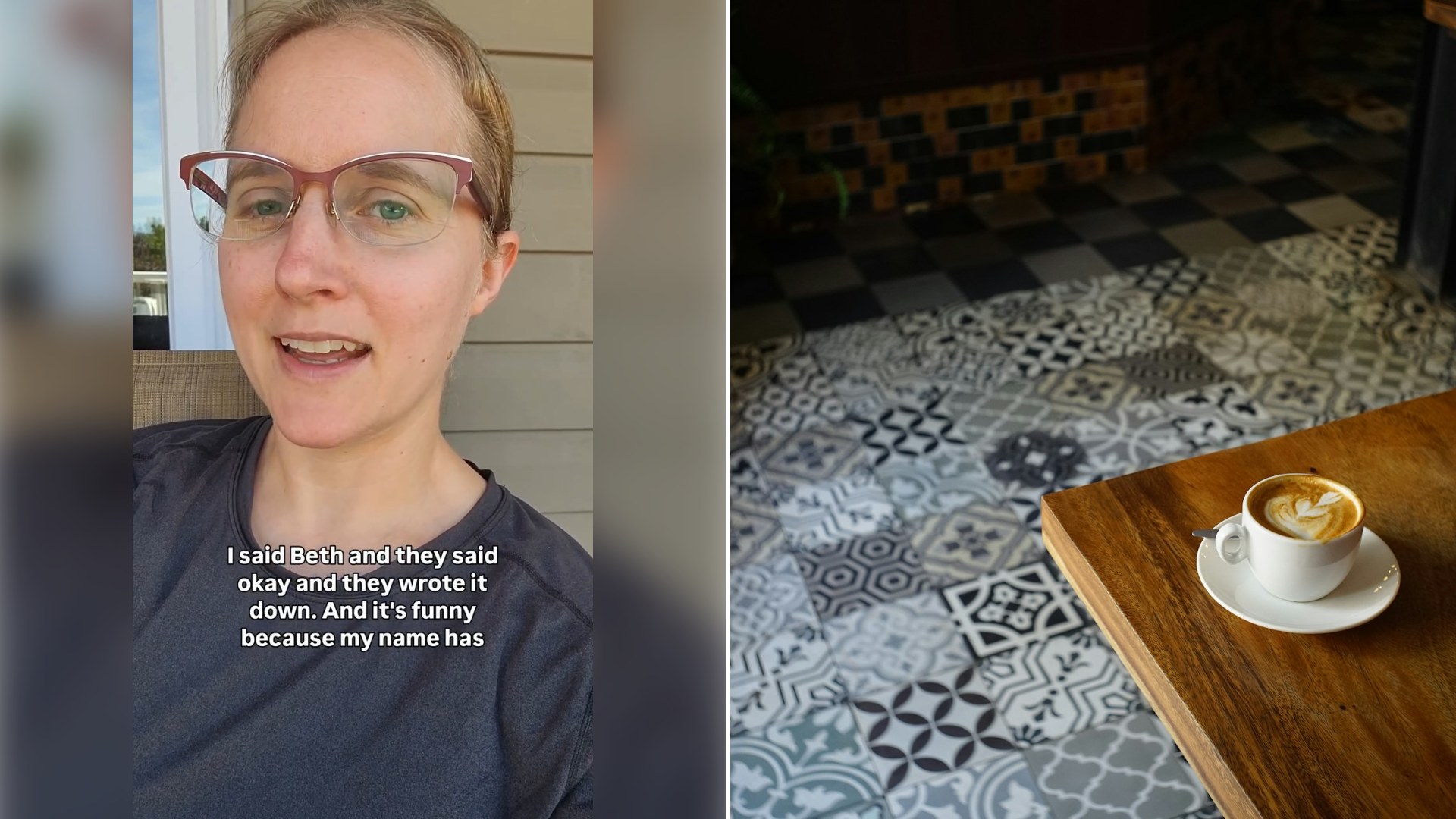
Ordering a coffee seems like the smallest possible decision a person makes in a day, which is exactly what makes this next story land so hard. In her video, the creator explains a quiet ritual she’s built into her daily coffee run: she gives the barista her late mother’s name instead of her own, just so she can hear it called out across the shop one more time.
It’s a small act, almost invisible to everyone else in line, but for her it’s become a deliberate tether to someone she’s no longer able to call or text. There’s no dramatic buildup in the clip, just a calm, matter-of-fact explanation of why she does it, which somehow makes the gesture hit even harder than if it had been delivered through tears.
Grief specialists often talk about ‘continuing bonds,’ the idea that healthy mourning doesn’t actually require severing a connection to someone who has died, but rather finding new, sustainable ways to keep them present in daily life. Hearing a name called out loud, even by a stranger behind a counter who has no idea what it means, becomes exactly that kind of continuing bond, a tiny, repeatable ritual that costs nothing and asks nothing of anyone else.
Names carry an enormous amount of emotional weight, more than most people consciously register until they’re gone. The sound of a specific name spoken aloud activates memory and identity in a way that few other cues can match, which is part of why so many people instinctively reach for a loved one’s name during moments of grief, whether by naming a child after them, tattooing it somewhere visible, or, in this case, quietly borrowing it for a coffee order.
What’s striking about this particular ritual is how ordinary its setting is. A coffee shop is about as unremarkable a backdrop as modern life offers, the kind of place most people move through without a second thought. That contrast, between the mundane errand and the profound private meaning layered underneath it, is exactly why the video resonates so widely with people who have quietly built their own version of the same coping mechanism.
It also reflects something true about how grief actually works over the long term, which rarely matches the version shown in movies. Most people don’t experience loss as one dramatic breakdown followed by closure. Instead, it shows up in these small, recurring moments woven into otherwise normal routines, a name on a cup, a song on the radio, a recipe pulled out around the holidays.
The comment section under this kind of video tends to fill up quickly with people sharing their own small rituals: keeping a parent’s voicemail saved, wearing their perfume, setting a place at the table out of habit. There’s something genuinely comforting about discovering that an intensely personal coping strategy is actually shared, in spirit, by thousands of strangers who’ve found their own small ways of staying connected to someone they’ve lost.
This kind of content has carved out real space in the lifestyle and home corners of social media precisely because it doesn’t try to resolve grief into a tidy narrative. It simply documents it, in real time, through the lens of an everyday habit, which makes it feel less like a performance and more like an invitation to sit with something true.
For anyone who has quietly done something similar, ordered a drink under a name that isn’t theirs, kept a number in their phone they’ll never call again, this video offers a kind of quiet validation that the smallest rituals can be the ones that matter most.
For readers at Cultivated Comfort who spend a lot of time thinking about what actually makes a house feel like home, moments like this one are a useful reminder that the emotional architecture of a home is built as much from absence as from presence. The empty chair, the recipe no longer made by the same hands, the specific brand of coffee that sits untouched in the cabinet, all of it becomes part of a home’s quiet emotional landscape, whether anyone chooses to acknowledge it on camera or not.
It’s worth noting how differently this kind of content ages compared to more trend-driven posts. A viral dance or a seasonal recipe has a shelf life measured in weeks, but a video built around grief and remembrance tends to keep finding new viewers for months or years afterward, surfacing again whenever someone searches for exactly this kind of recognition during their own difficult season.
There’s also a quiet lesson here about documentation itself. Plenty of people instinctively want to look away from hard moments rather than film them, assuming that private grief belongs strictly offline. Choosing instead to document it, carefully and on one’s own terms, suggests a different philosophy, that even painful chapters deserve to be witnessed rather than hidden away entirely.
This kind of storytelling also does something valuable for anyone who happens to be scrolling through a hard week of their own. It offers proof, delivered gently and without any instruction to feel better, that other people are also quietly carrying loss through their everyday routines, which can make an isolating experience feel slightly less isolating.
What’s striking, too, is how this kind of video changes the way an entire comment section behaves. Rather than the usual mix of jokes, tags, and quick reactions that fill most comment sections, posts like this one tend to draw long, thoughtful replies from strangers describing their own losses in careful detail, as if the tone of the original video gives permission for that same honesty in return.
In the broader context of home and lifestyle content, this kind of post is a useful corrective to the idea that a ‘cozy’ or comforting feed has to mean only soft lighting and finished results. Real comfort, the kind this niche is actually built around, often includes space for grief, memory, and the complicated feelings that come with loving people who are no longer physically present, and content willing to sit in that space tends to feel far more genuinely comforting than anything purely aspirational.