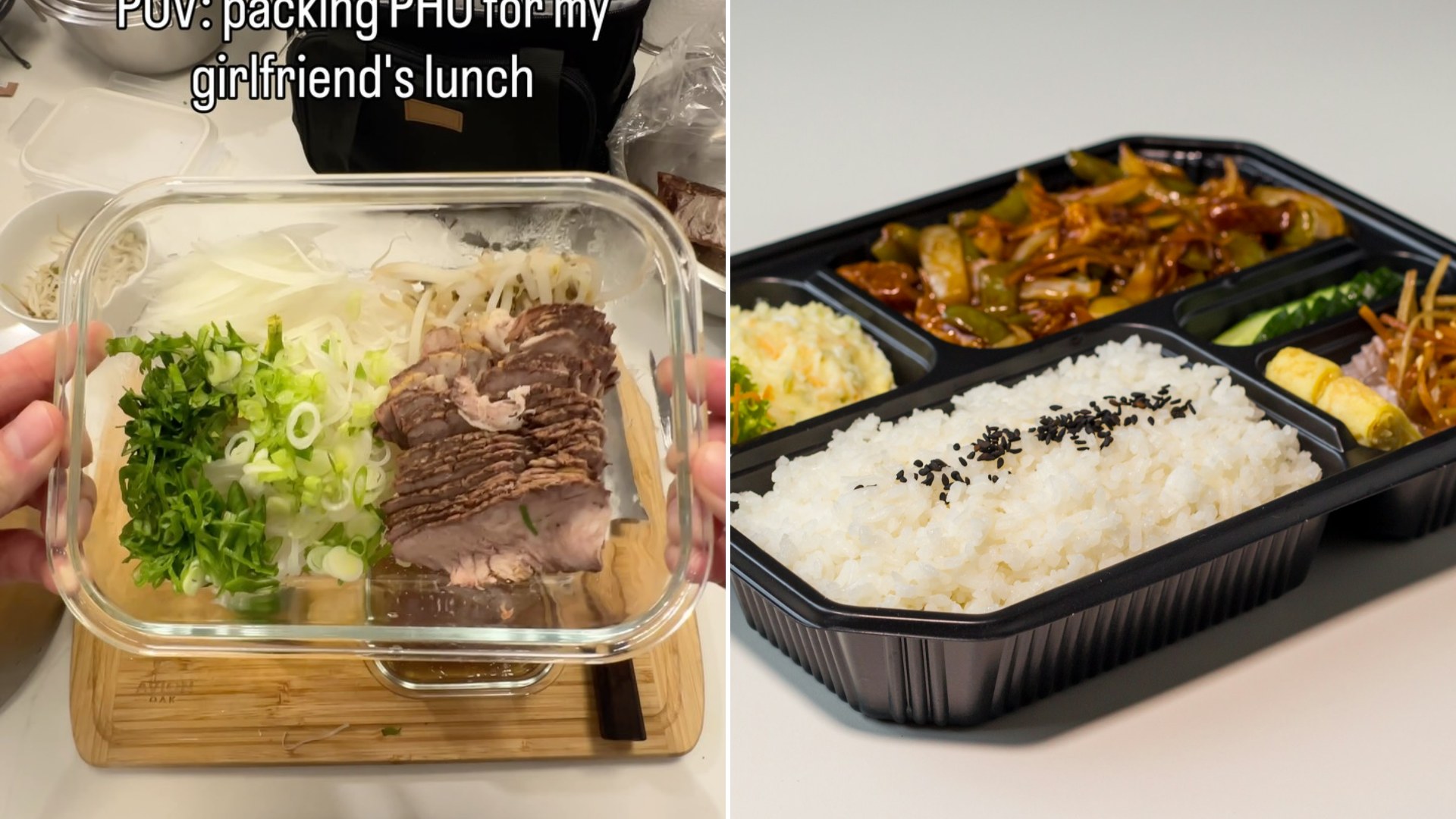
There’s a specific kind of video that reliably sends an entire comment section into a chorus of ‘I need a man like this,’ and this one, showing a boyfriend spending his morning carefully packing a full homemade pho lunch for his girlfriend, fits the pattern exactly.
The video walks through the process in loving detail: broth simmered and portioned carefully so it doesn’t spill, noodles packed separately to avoid getting soggy, herbs and lime wedges tucked in just so, everything assembled with the kind of care usually reserved for a dish being served at a restaurant rather than carried to an office in a lunch bag.
What elevates this beyond a simple cooking clip is the labor-intensiveness of the dish itself. Pho isn’t a quick weekday lunch to throw together; a proper broth typically requires hours of simmering bones and aromatics, which means this isn’t a last-minute gesture but a planned act of care that required real forethought and time.
This kind of content taps directly into ongoing conversations about love languages and acts of service, a framework that’s become deeply embedded in how people, especially younger audiences, talk about relationships online. Packing a labor-intensive homemade meal checks nearly every box: it requires time, attention to detail, and consideration of what the other person specifically enjoys.
There’s also a quiet subversion happening here of older, gendered assumptions about who does the emotional and domestic labor of meal prep in a relationship. Content showing men take on this kind of detailed, nurturing task, without irony or self-congratulation, continues to resonate because it offers a model of partnership that feels both aspirational and achievable.
Food carried from home into a workday also carries its own emotional charge. A packed lunch, especially one this elaborate, functions as a kind of physical reminder of home and care that follows someone through an otherwise ordinary, possibly stressful day, a small anchor point they can return to at noon.
It’s worth noting, too, how much this kind of video benefits from specificity. A generic ‘I made my girlfriend lunch’ post wouldn’t carry nearly the same weight as watching the actual steps: the broth being strained, the containers chosen to keep things from mixing, the final product assembled in a way that will still taste right hours later. That level of detail signals genuine thoughtfulness rather than a performance for the camera.
The comment sections under these videos tend to become a mix of admiration and gentle self-deprecation, with viewers both praising the boyfriend and joking about the bar he’s setting impossibly high for the rest of the dating pool. That tension, aspiration mixed with a wry acknowledgment of how rare this level of effort actually is, is part of what keeps this type of content circulating widely.
In the end, this is a video about more than pho. It’s about what it looks like when care is translated into action, measured out in broth and noodles and careful packaging, rather than simply spoken.
There’s a reason this kind of unscripted, low-drama couple content tends to outperform more produced relationship videos over time. Audiences have become increasingly attuned to the difference between a relationship performed for an audience and one simply existing, caught almost incidentally on camera, and the latter tends to earn a deeper, more durable kind of trust.
This genre also reflects something true about how actual domestic partnerships function day to day. The health of a long-term relationship is rarely measured by its biggest moments, anniversaries, proposals, milestone trips, but by the accumulation of small, cooperative gestures that happen almost too quickly to notice individually, yet add up to something substantial over months and years.
It’s worth pointing out, too, how much the home and kitchen specifically function as a kind of relationship laboratory, a shared space that two people have to navigate together regularly, with its own small logistics and negotiations. Watching that negotiation happen smoothly says something real about the underlying partnership, even when nothing explicitly dramatic is being discussed.
For anyone building their own version of a shared household, this kind of content offers a useful, low-pressure model, proof that care doesn’t need to be loud or elaborate to register as meaningful, and that the quiet, repeatable rituals of daily life are often where a relationship’s real strength lives.
It’s also worth noting how much this kind of low-key, documentary-style content benefits from repetition over time. A single video is charming on its own, but a creator who consistently shares this kind of quiet, unscripted domestic footage ends up building something closer to an ongoing, trusted record of a real relationship, which audiences tend to invest in far more deeply than a single viral moment.
For anyone building their own shared home with a partner, this kind of footage offers a useful, achievable benchmark, not a flawless, aspirational relationship, but a genuinely comfortable one, built through small, repeated moments of cooperation rather than grand, occasional gestures.
It’s worth stepping back, too, to consider why a platform like Instagram has become such fertile ground for this exact kind of storytelling in the first place. The format rewards brevity, but it doesn’t punish depth, which means a creator willing to pack real substance into a short runtime can still build something that resonates far beyond the usual fifteen seconds of attention most content gets. That tension between short-form constraints and genuine emotional or comedic payoff is part of what makes a clip like this worth stopping for in a feed otherwise built for scrolling past.
There’s also a reason this kind of post tends to travel well beyond its original audience, reaching people who may never have come across the creator’s account otherwise. A specific, well-told moment, whether funny, tender, or simply honest, has a way of getting shared directly between friends and family members precisely because it says something that feels worth passing along, rather than just worth watching once.