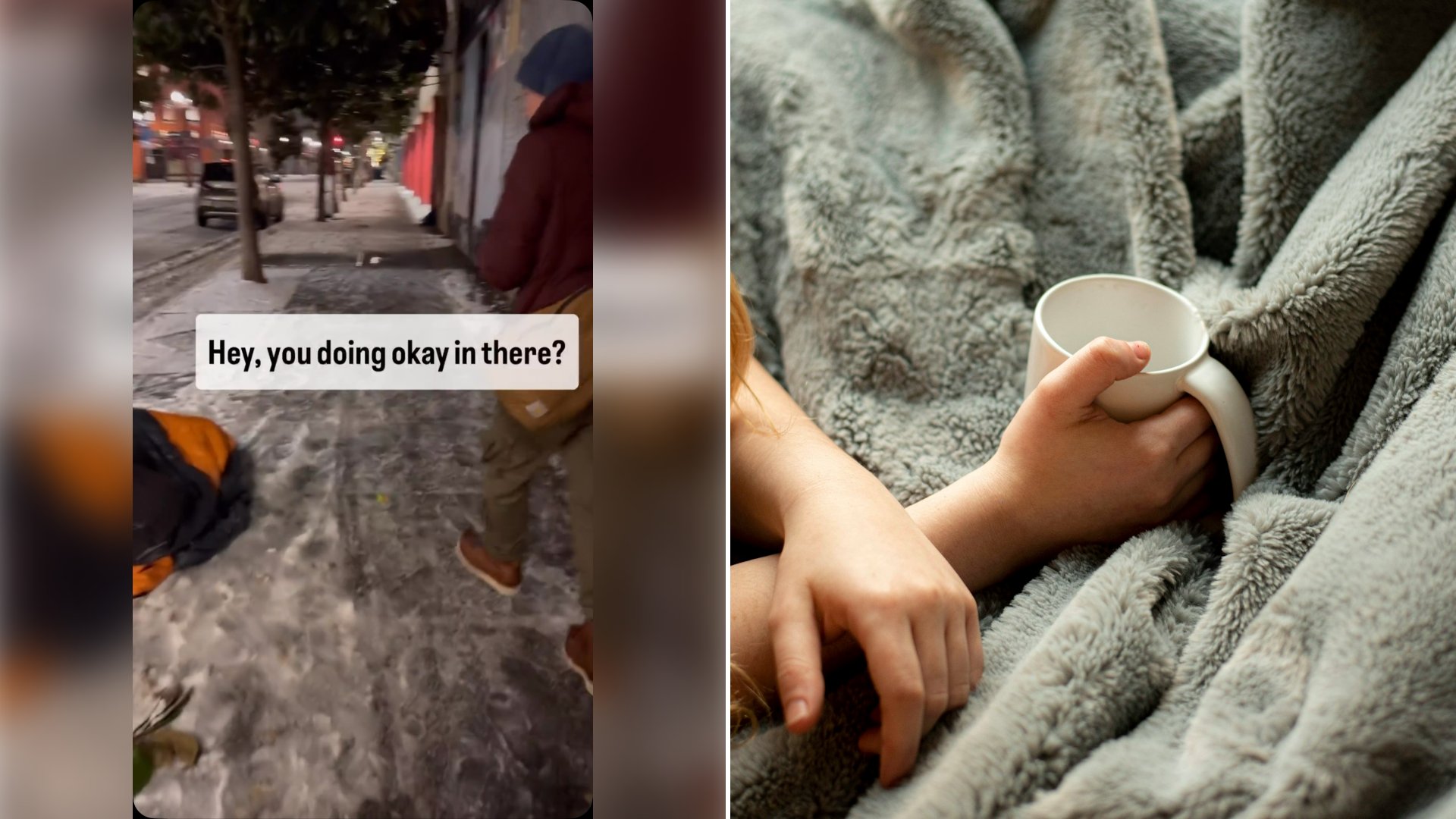
A Portland, Oregon creator who posts as @kevinvdahlgren says he spent the coldest night of the year checking on people sleeping outside and helping get them into shelter. “Winter is quickly approaching. Every year people freeze to death. I stayed the night on the coldest night of the year to check on people and to get them into a shelter,” he wrote in the caption, framing the video as a response to a recurring, seasonal danger rather than a one time gesture.
The video drew a massive response, racking up 337,000 likes and more than 3,100 shares, but its comment section quickly split over how the act of helping was actually carried out and documented. One of the most liked comments raised a concern about the tone used toward the person being helped. “The man holding the camera was kinda talking down to him which is what I experienced a lot when homeless. I know you are trying to help so please understand that there are reasons he was taking his socks off and was barefoot,” the commenter wrote, drawing more than 6,500 likes for a firsthand perspective on how unhoused people are sometimes spoken to even by people actively trying to help them.
A second widely liked comment raised a more fundamental question about consent. “We can help people and also preserve their dignity by not filming them in their hardest moments. Did he consent to being filmed and posted like this? I’m not normally a Karen like this but come on. Thank you for helping but don’t do it like this,” the commenter wrote, a reply that picked up more than 5,600 likes and explicitly framed the disagreement as being about documentation rather than about whether the underlying help was valuable.
Other commenters pushed back hard on that critique, arguing it missed the severity of the situation. “He was in the process of freezing to death, all of you talking about ‘he could’ve been nicer’ like man he probably hasn’t eaten in days or had a shower in god knows how long. He had literally just his shoes on him, that’s it. Let him warm up and actually become a normal human again before judging,” one commenter wrote, drawing nearly 30,000 likes for arguing that criticism of tone or framing was beside the point next to someone’s immediate physical survival.
A separate reply took direct aim at commenters questioning the man’s gratitude or reaction in the video. “People commenting about how ‘he’s not being grateful’ aren’t getting it. who would be grateful for being homeless and freezing? he’s likely embarrassed and overwhelmed, please have some emotional intelligence before commenting bs,” the commenter wrote, a response that drew more than 65,000 likes, suggesting a significant share of viewers read the man’s demeanor in the clip as understandable distress rather than ingratitude.
The debate playing out in the replies reflects a broader, ongoing disagreement about how Good Samaritan content involving unhoused people should be filmed and shared at all. Supporters of the video treated Kevin’s willingness to spend a freezing night checking on people and physically getting them into shelter as the headline fact, arguing that questions about camera angles or tone are secondary to someone surviving a dangerously cold night. Critics in the same comment section argued the opposite is true: that even a genuinely helpful act can cause harm if the person being helped is filmed and posted without a clear say in how they are portrayed, especially while in visible physical distress.
Kevin did not respond directly to the consent question in his caption, nor did he specify in the post itself whether the people shown had agreed to appear on camera. What the comment section makes clear is that the video’s message, that unhoused people are dying from exposure every winter and that direct, in person intervention can prevent it, landed with the overwhelming majority of viewers, even as a vocal portion of that same audience pushed for a more careful approach to documenting the people being helped.
The tension between those two reactions, widespread support for the underlying act paired with pointed criticism of how it was filmed, is likely to keep resurfacing as more creators document real time efforts to help people experiencing homelessness during extreme weather. For now, @kevinvdahlgren’s video stands as both a widely praised example of direct, hands on intervention during a dangerous cold snap and a flashpoint for an unresolved argument about where the line sits between documenting a crisis and exploiting the person living through it.
More from Cultivated Comfort
- Food Creator Tries Balkan Cuisine for the First Time at a One Man Restaurant in Texas, Then Viewers From the Region Step In to Explain Every Dish
- Woman Filming Herself in a Store Parking Lot Says a Stranger Called Her Obnoxious, Replies That She Makes $500,000 a Year, Then Sits in Her Car and Says She Is Shaking
- Man Still Has the Fourth Grade Card Where His Only Girlfriend Confessed a Crush, and After More Than Ten Years of Silence She Messaged His Private Account to Ask Him to Dinner