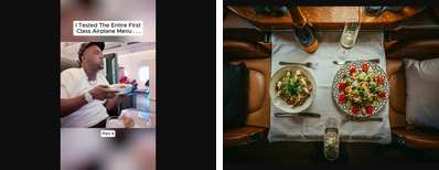
Most people board a flight, pick one meal option, and call it a day. @savorystories31 had other plans. In a video that’s stretched into multiple parts, he sets out to try literally everything on his first class menu, course by course, narrating each bite like a food critic working a tasting menu instead of a guy strapped into seat 2A. He chats with the flight attendants along the way, treating them less like service staff and more like co-stars in the whole operation, which ends up being just as entertaining as the food itself.
It’s a simple premise, but there’s something satisfying about watching someone actually commit to it. Anyone who has flown first class, or dreamed about it, knows the menu is usually treated as an afterthought: you pick the chicken or the pasta, eat half of it, and move on. @savorystories31 flips that completely, turning the one part of air travel most people rush through into the entire point of the flight.
@savorystories31
First class dining has quietly become one of the more interesting subplots in modern air travel marketing. Airlines spend enormous sums partnering with chefs, redesigning tableware, and curating wine lists specifically because the in-flight meal has turned into a selling point in its own right, not just a way to pass the time at 35,000 feet. Some carriers now publish their seasonal first class menus online months in advance, the same way a restaurant might announce a new tasting menu, because frequent flyers genuinely plan their bookings around which route has the better food that quarter.
What makes a full menu run-through like this genuinely useful, beyond the entertainment value, is that it answers a question a lot of people quietly have: is first class food actually worth the hype, or is it just a nicer tray with better presentation? Watching someone go dish by dish, reacting honestly instead of performing enthusiasm for a brand partnership, gives a much more accurate picture than a glossy airline ad ever could. Some items land, some clearly don’t, and that honesty is part of why this kind of content holds attention.
There’s also a practical travel-hacking angle buried in videos like this. Seasoned flyers often pay close attention to which meal course to prioritize when time or appetite is limited, since not every dish on a first class menu is created equal, and a thorough review essentially does the research for anyone wondering whether to ask for a second helping of the appetizer or save room for dessert. It’s the kind of information that used to live only in frequent-flyer forums and now shows up as a three-minute video instead.
Then there’s the relationship with the crew, which ends up being an underrated part of the appeal. A lot of first class content focuses purely on the food or the seat, but the back-and-forth with flight attendants here adds a human element that’s easy to forget about when people fixate on amenities. Good service is often what actually defines a premium flight experience, arguably more than the food does, and watching a passenger engage with staff instead of treating them as invisible adds warmth to what could otherwise be a fairly clinical review.
For most viewers, this kind of video functions less as a travel guide and more as a glimpse into an experience they may never personally have, and that’s part of the appeal too. Luxury travel content works because it lets people vicariously enjoy something out of reach, the same way cooking shows let people “taste” food they’ll never make. A full first class menu tasting, done with genuine curiosity rather than detached luxury-flexing, turns an exclusive experience into something anyone scrolling their phone can enjoy for a few minutes, free of charge and free of the price tag.