

Of all the tipping stories floating around lately, this one may be the strangest. @captain.t.roll says he eats at the same restaurant pretty often and, as a rule, never leaves a tip. This time, though, he looked at his receipt and found something new: a charge of $11.16 that the restaurant labeled a non-tipper fee.
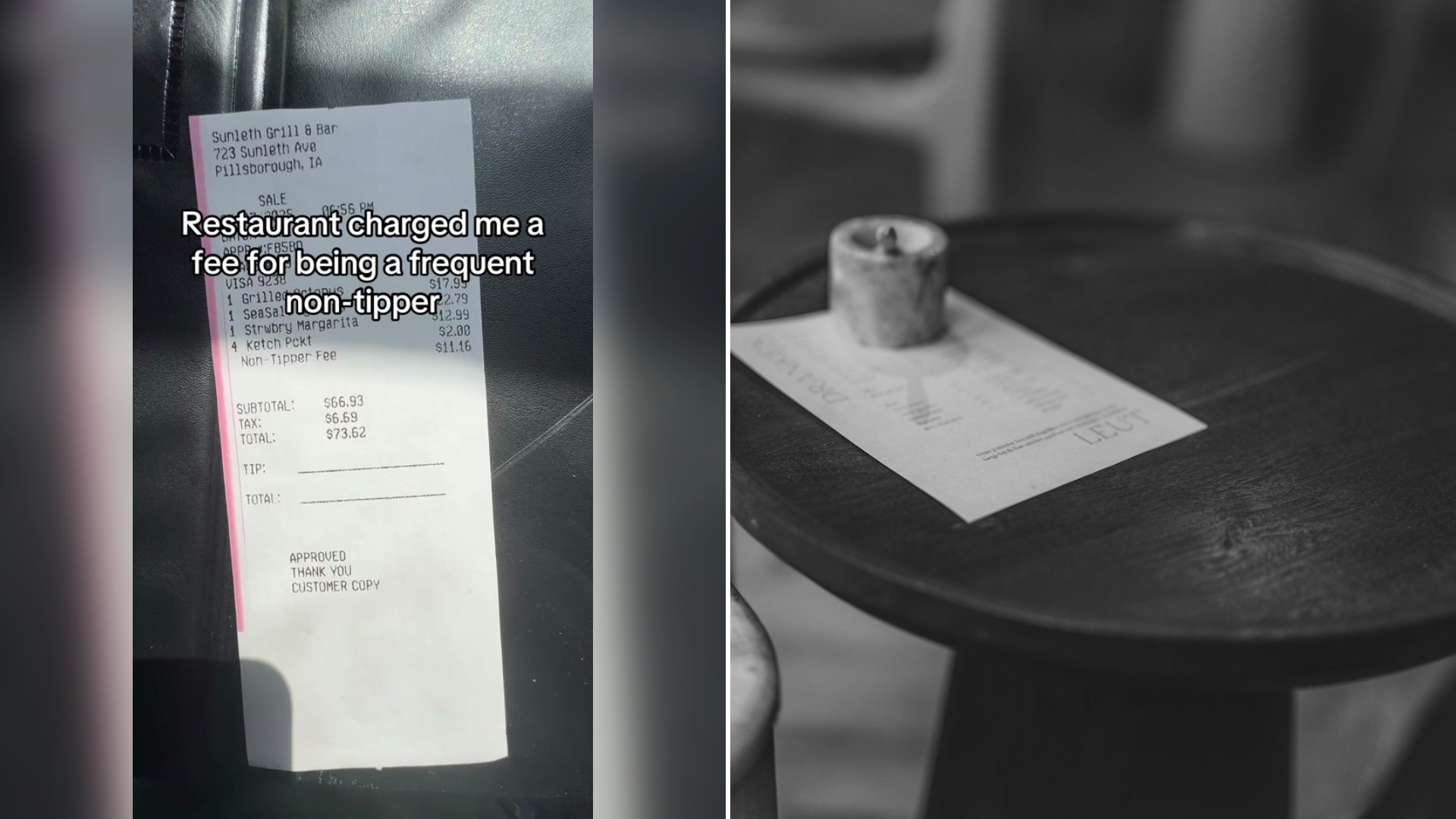
“This is about 10%,” he says. “This is insane.” In his caption, he explains that he had already signed the merchant copy of the receipt and was only looking at the customer copy afterward when he spotted the charge. He says he plans to ask the staff to bring back another copy of the receipt with the fee removed, because, in his words, “this should not be legal.”
@captain.t.roll
What we actually know
The facts here are few, and it is worth stating them plainly. The creator says he is a regular who does not tip. He says the restaurant added an $11.16 charge to his bill because of that. He says it came to roughly ten percent. And he says he signed one copy before noticing the line on the other.
What we do not know is how the restaurant describes the charge. We cannot tell whether the menu or a sign mentioned a fee, whether it applied to every table, or whether it was specific to him. The restaurant has not been heard from, and the creator has not said how the conversation with the staff ended. Those details matter a great deal, because they decide whether this was a clearly posted house policy or a surprise.
Why millions of people are arguing about it
The reason this post drew so much attention is that it touches a raw nerve on both sides of the tipping debate.
Some people see it as reasonable. They point out that a server who spends an hour caring for a table is working for tips, and that a guest who leaves nothing is, in effect, asking the staff to work for free. In their view, a fee that is plainly disclosed simply makes up the difference.
Others see it as backwards. Tips, they say, are supposed to be a voluntary thank you. A charge for not leaving one, particularly one that shows up after the meal, turns the thank you into a requirement. They argue that if a restaurant wants more money, it should raise its menu prices rather than put a penalty on the check.
Both views come from a real place. And both are why the story spread so far.
How server pay works behind the scenes
To see why a restaurant might think about a charge like this, it helps to know how pay works for many servers. In much of the United States, the federal minimum cash wage for tipped employees is $2.13 an hour, and tips are expected to bring their earnings up to the regular minimum wage. Some states require a higher base. In many places, though, a server whose table leaves nothing has effectively worked a portion of the shift for very little.
That does not mean any particular charge is appropriate. It does explain why restaurants have been experimenting with service charges, automatic gratuities, and other fees, and why diners are noticing more of them.
What to know before you dine out
If you ever find an unexpected line on your receipt, a few practical steps can help you sort it out:
- Check the receipt before you sign. Once you have signed, it is harder to question a charge. A careful look at both the total and the lines above it is worth the extra moment.
- Look for posted policies. Menus, table cards, and signs near the door often describe service charges or automatic gratuity. Rules on how clearly a restaurant must disclose mandatory fees vary by state, and some places have tightened them recently.
- Ask a manager, not the server. A manager can explain the policy and adjust the bill if the charge was not properly disclosed.
- Keep your copy. If a question comes up later, your customer copy is your record of what you were charged.
- Contact your card company if needed. If a charge looks improper and the restaurant will not discuss it, your card issuer can walk you through a formal dispute.
There is one more practical point worth noting. The creator signed the merchant copy before reading the line in question, which is a common habit when a server hands over a card slip and waits. It is also why it pays to pause for a few seconds. A signature generally signals that you accept the total, and while a polite request to correct a charge is always fair, it is easier to sort out before the paperwork is finished. Many diners have learned this the hard way with extra drinks, duplicate items, or tips added twice.
A fair question for every table
Whatever your view on tipping, the underlying question in this story is a practical one. Should the price of a meal include the cost of service, or should guests decide for themselves? Some countries build service into the menu price. Others leave it to the diner. The United States has long relied on the second approach, and that is part of why fees and gratuities keep causing confusion.
For the creator in this story, the issue is that the charge appeared after the fact. For the many people who commented, the issue is bigger: what a fair meal costs, and who decides. It is a conversation likely to continue, and one that every diner and every server has a stake in. Until then, the best habit remains the simplest one. Read your receipt, ask questions politely, and treat the people serving you with respect, whether you tip or not.
