Some jobs come with phone calls nobody wants to make. For @mountainmamacabins, one of those calls was about to happen, and she invited everyone along as she got ready to make it. “Come with me to break my Airbnb guest’s heart,” she says. “I have to make a really hard phone call right now, so I’m gonna process it with you guys.”
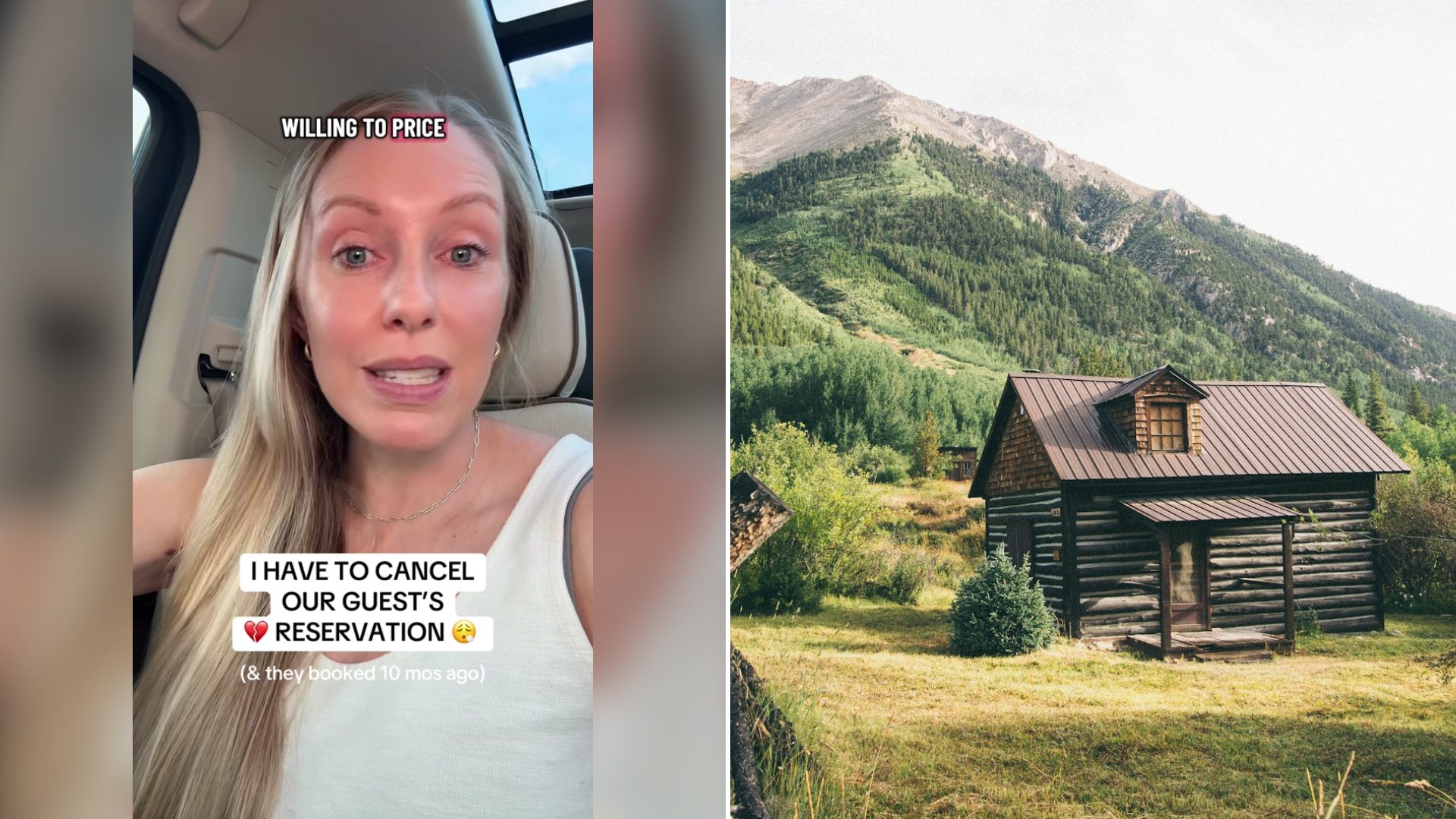
The problem was not her doing. The owner of one of the cabins her company manages had lost his water. His well was destroyed, and no water could get into the cabin. The guests were due to check in in two days, and they had booked the trip ten months ago.
@mountainmamacabins
The middleman has to deliver the news
She explains that this is one of the hardest parts of running a property management company. They are the middleman, and they were the platform where the guest made the booking. That means it falls to them to explain what is happening with the owner and to take any heat that comes with it.
The first step was to see whether any other cabins could take the guests for the full seven nights. It was the middle of the fall season, which is peak time, and out of the 65 cabins listed on their website, none were open for seven nights in a row. One cabin was open for six nights, and it came with a pool. Most people would call that an upgrade, and the price difference was only about fifteen dollars more. She reached out to that cabin’s owner to ask whether he would price match, so the guests could still have a vacation.
Four options for the guests
She walks through the choices she planned to offer. As she describes them, the first is to move for six nights into the pool cabin, with the company matching the price the guests originally paid, even though the pool cabin normally costs more. The second keeps all seven nights, but it means moving partway through the stay, packing up and going to another cabin, with roughly five hundred dollars in extra cost that the company would cover. The third is a full refund, with the guests finding a place on their own. The fourth is a full refund and no trip at all.
Each choice has trade-offs, and she says she has to go through the pros and cons with the guests. The original cabin has features the replacement would not, including a pickleball court, a basketball hoop, and a fire pit, and she believes it has one more bedroom. She admits the toughest part is starting the call. As she puts it, the conversation begins with the dreaded “I have some good news and some bad news,” and she is “literally the phone call you do not want to see” before a vacation.
A hard time for the owner, too
She is quick to point out that the owner is also having a hard time. He has already lost four bookings during the peak of the fall season, and she says there was nothing he could have done. The wells in these mountains reach hundreds of feet underground. She believes his well pump broke, and sediment got into the water, leaving it unusable. You cannot drink it, and you cannot use it the way guests expect to. “I just feel really bad for him,” she says, and notes how unfortunate it is for everyone that this happened at the busiest time of year.
She also credits her past experience. She spent four years in this business before becoming a real estate agent, and she says that experience helps her have hard conversations, including with buyers and sellers now. She ends by promising to keep everyone posted. The account stops before the call, so we do not hear how the guests responded or which option they picked.
What travelers can do when a rental falls through
Most of us will never manage cabins, but any traveler could get a call like this. Here are some good habits:
- Ask for options in writing. Whether it is an email or a message in the booking app, a written list of what you were offered protects both sides.
- Compare the real costs. A move partway through the stay might include packing, extra driving, and lost time. A refund may leave you facing high peak-season prices elsewhere.
- Know the cancellation terms. Booking platforms and managers have policies for situations the host cannot control. Read them before you decide.
- Consider travel insurance. For a trip planned months ahead, a policy can help with costs if something goes wrong.
- Stay kind. The person calling you is usually the one who has to deal with the fallout, and a patient tone often leads to better solutions.
Why a dry well matters
Many mountain and rural homes do not use city water. They rely on private wells with pumps that lift water from deep underground. If a pump fails or a well is damaged, a house can lose running water almost at once, and repairs may take days or weeks depending on what went wrong and how deep the well is. That is why a vacation rental in the hills can be unusable on short notice even if everything else looks fine.
It is also a good reminder for owners to keep up with maintenance. Having a plumber or well service on call, checking pump pressure, and watching for changes in water clarity can help catch trouble early, though no routine check can prevent every failure.
Handling bad news with care
What stands out most is how seriously she took the call. She was honest about the situation, lined up real alternatives before dialing, and thought about the guests who had waited ten months for this trip. Giving people choices, a plan, and a human voice is the best way to deliver bad news. She did not know yet how it would turn out, but she approached it the right way. For travelers, the lesson is just as simple: when plans change, patience and communication usually get you the best possible result.