Buying the biggest size is supposed to be the smart move. You pay a bit more up front, and you get more for your money over time. That is why a shopper posting as @jocelyn_jk was so surprised when her usual order showed up. Her short post about it has been played about 138,500 times and has drawn more than 550 comments.
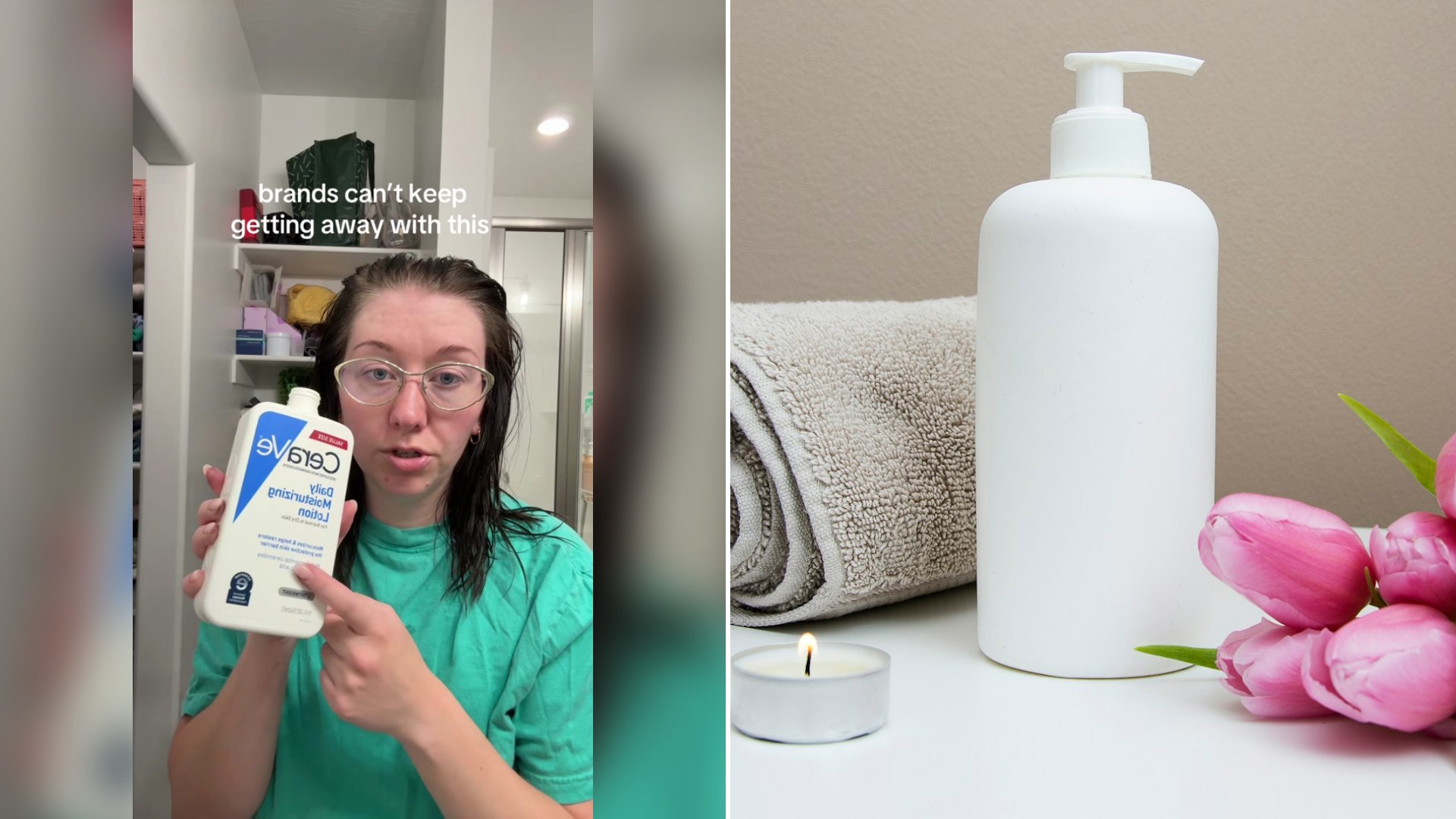
The caption says it all in four words: the shrinkflation is insane.
@jocelyn_jk
What she noticed
In about twenty two seconds, she explains her routine. She uses CeraVe lotion every single day, so she always buys the value size, both so that it lasts longer and so that she gets a better deal. When she ran out, she ordered a new value size and found it held 3 ounces less for the same price. Then she says she wonders if they thought we would not notice.
She does not say how many ounces the old bottle held or how much she paid, so we can only work from what she told us: the same price for three fewer ounces. That alone is enough to make a daily user feel shortchanged, because a loyal customer is the one most likely to catch the change.
How much is three ounces?
The size of the loss depends on the size of the bottle. As an example, and not a number from her post, if a 16 ounce bottle became 13 ounces, you would be getting about 19 percent less lotion. If a 12 ounce bottle dropped to 9 ounces, it would be 25 percent less. In both cases the price on the shelf stays the same, so the cost for each ounce goes up by the same proportion. The first example works out to roughly 23 percent more per ounce, and the second to about 33 percent more.
That is how the Bureau of Labor Statistics looks at it too. The agency explains that it records the size of each product and works out an effective price per unit, so a smaller package at the same price counts as a price increase. Its example is a half-gallon of ice cream that went from 64 ounces to 60 ounces at the same $5.99, which works out to a 6.7 percent increase per ounce. So a three ounce cut on a lotion bottle, depending on its size, could be a much bigger jump than that.
Is this common?
Overall, less common than it feels. The U.S. Government Accountability Office reviewed seven categories of everyday household goods and found that downsizing affected less than 5 percent of the items it examined. But the products that were popular and bought often were more likely to be downsized, and when a product did shrink, its price per unit rose from 12 percent for paper towels to 32 percent for coffee. Those categories do not include skin care, so the report cannot tell us whether lotion has been hit more or less than other goods.
The GAO also found that downsizing is usually not disclosed on the package and that shoppers tend to react less to a smaller product than they do to a higher price. That is the part this shopper is pointing at when she wonders whether anyone expected her to notice.
How to protect yourself when you reorder
- Read the size on the listing before you click buy. When you reorder online, the title, the size line, and the photos can differ from your last order. Look at the ounces in the product details each time.
- Compare the price per ounce. A value size should have the lowest cost per ounce. If it does not, a different size might be the better deal.
- Save your last receipt or order. A saved record of the size you bought last time makes changes easy to spot.
- Check the bottle when it arrives. The net content is printed on the label. If it differs from what you expected, you can ask the seller about a return or exchange.
- Look at store brands and other sizes. Many drugstores sell similar moisturizers at a lower cost per ounce.
- Use the unit price tag in stores. More than a dozen states and territories require unit prices, according to the GAO, and the label makes the comparison for you.
Why the value size is worth a second look
Many shoppers buy a value size on autopilot, assuming it is always the cheapest way to buy. Most of the time it is, which is the reason companies know people will trust it. The smart habit is to treat it like any other price and check it every time. If the unit price of the value size has crept up so that it is close to the regular size, you may be better off with the smaller bottle, or with a sale on a different brand. A daily lotion is an easy product to compare because it is used up on a steady schedule, so a few minutes with a calculator now can save a surprising amount over a year.
Speak up, and keep the receipts
If you are a loyal customer of any brand and the product changes, you can tell the company. The phone number or website printed on the bottle is there for feedback. A short, polite note explaining that you buy the value size every time and noticed three ounces missing is the kind of message a company can act on. It also helps to mention the date you ordered and the size you expected.
Sharing what you notice with friends and family is another way to help people avoid surprises. For a product you use every day, the cost per ounce is worth watching just as closely as the price on the tag.