

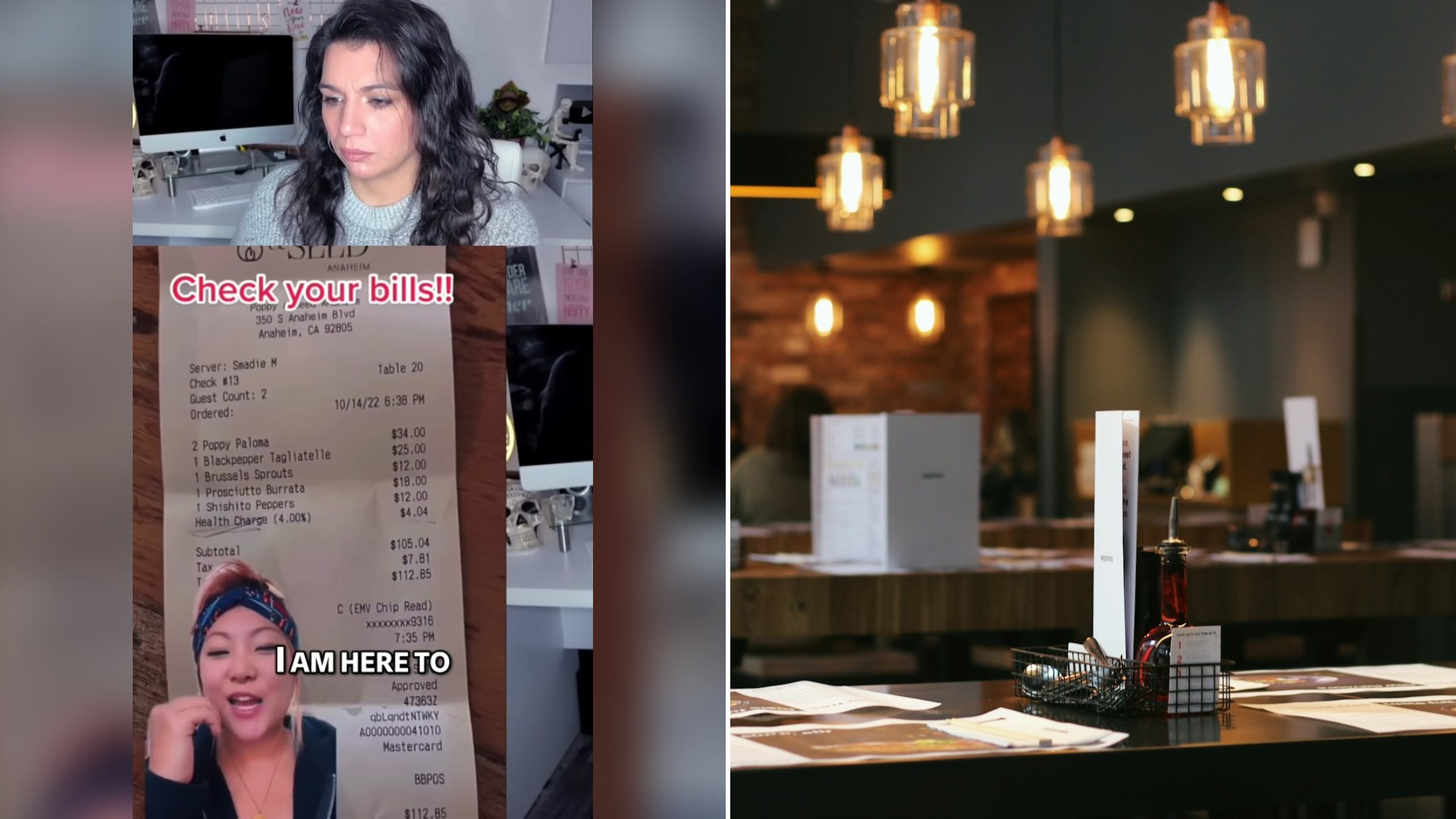
Checking the bottom of a restaurant receipt has become a habit for many diners, and a short message from @lindeyuncensored shows why. She posted online to report what she called another unexpected charge on a bill, and this time the surprise was a line she had a hard time believing.
@lindeyuncensored
A Four Percent Surprise
According to her message, the restaurant bill included a 4 percent health charge. She says she was there to report it as yet another unexpected charge, and her reaction was disbelief. Her question was whether that charge was really meant to let restaurants give health insurance to their employees. In her caption, she described it as a restaurant slipping a hidden fee onto the receipt, one that claims customers should help pay for employee health insurance.
She also tied the moment to a bigger frustration. In her view, the cost of dining out is quietly becoming more ridiculous every day, with extra fees showing up for more and more things. Her advice to everyone was short: always check your receipt. She did not name the restaurant, and her message does not say how the charge was described to her at the table, so those details remain unknown. Nothing from the restaurant was part of what she shared.
Why Restaurants Add Surcharges
Surcharges have become a common sight at restaurants around the country, and they come with many labels. Some places add a small percentage to cover things like benefits for the team, kitchen wages or general rising costs. Owners who use them often say it is a way to support staff without simply pushing menu prices higher. Many customers see it differently and feel the price on the menu ought to be the price at the end.
There are good arguments on both sides, and the rules are not the same everywhere. What a restaurant may add to a bill, and how clearly it has to tell customers, can depend on local and state requirements. Some places are expected to show the charge on the menu or on a sign, while others have more freedom. Because the details vary, the most useful thing for a diner is not to guess, but to ask.
How To Check Your Receipt
Reading a bill carefully takes less than a minute and can catch more than surcharges. A routine helps.
- Start at the top. Make sure every item listed is something you actually ordered, and that nothing is repeated.
- Look at the lines under the subtotal. Taxes, service fees, surcharges and automatic gratuities all tend to hide there.
- Do the percentage math. A 4 percent charge on a 100 dollar bill adds 4 dollars, and the numbers add up fast on a large group check.
- Check whether any charge is calculated on top of another. Sometimes a surcharge is added before tax, which raises the tax too.
- Take a quick photo of the receipt before you leave, in case you want to follow up later.
What To Say If A Charge Surprises You
If you spot something you did not expect, remember that the person at your table probably did not create it. Servers usually follow the restaurant’s policy, and a friendly tone gets the best result. You might say, “Could you tell me what this charge covers, and where it is posted?” That wording asks for information and does not accuse anyone.
If the answer does not satisfy you, ask whether a manager can come over. Managers can explain the policy, show you the sign or menu note, and sometimes remove a charge as a courtesy. If you still disagree, you have choices. You can pay the bill and decide not to return, or you can write to the owner afterward with a calm explanation of what confused you. A clear note often gets more attention than an argument at the table.
If you believe a charge was not properly disclosed under the rules where you live, your local consumer protection office or state attorney general’s office can tell you what applies. Keep your receipt and any photos of the menu or signs, because dates and wording matter. You can also contact your card issuer about a charge you want to dispute, although they will usually expect you to have tried to settle it with the restaurant first.
Tips Are A Separate Question
One thing worth keeping straight is that a surcharge and a tip are not the same. A surcharge goes to the business, and the owners decide how to spend it. A tip is a thank you to the person who took care of you. Some diners worry that fees like this will make them tip less, and some servers may worry about the same thing. If a charge frustrates you, try to separate your feelings about the restaurant from your appreciation for the person who brought your food.
Finding Clearer Prices
Many restaurants now go the other way and advertise that their menu prices include everything. If surprise fees bother you, look for those places and let them know you appreciate the clear approach. Before you sit down anywhere new, scan the menu footer and ask the host if any fees are added. That small step takes seconds and means the final bill holds no surprises.
In the end, her message boils down to a simple rule that is easy to remember. Read the receipt, ask when something looks odd, and spend your money where the price you see is the price you pay.

