The order came to $10.75. That should have been the end of it. But a barista who posts as @jorlala says a teenage girl, probably 15 or 16 by her estimate, turned a simple cash payment into a slow-motion standoff at the counter, one nickel at a time. “I’m concerned for the children of America,” the barista says. “Genuinely.”
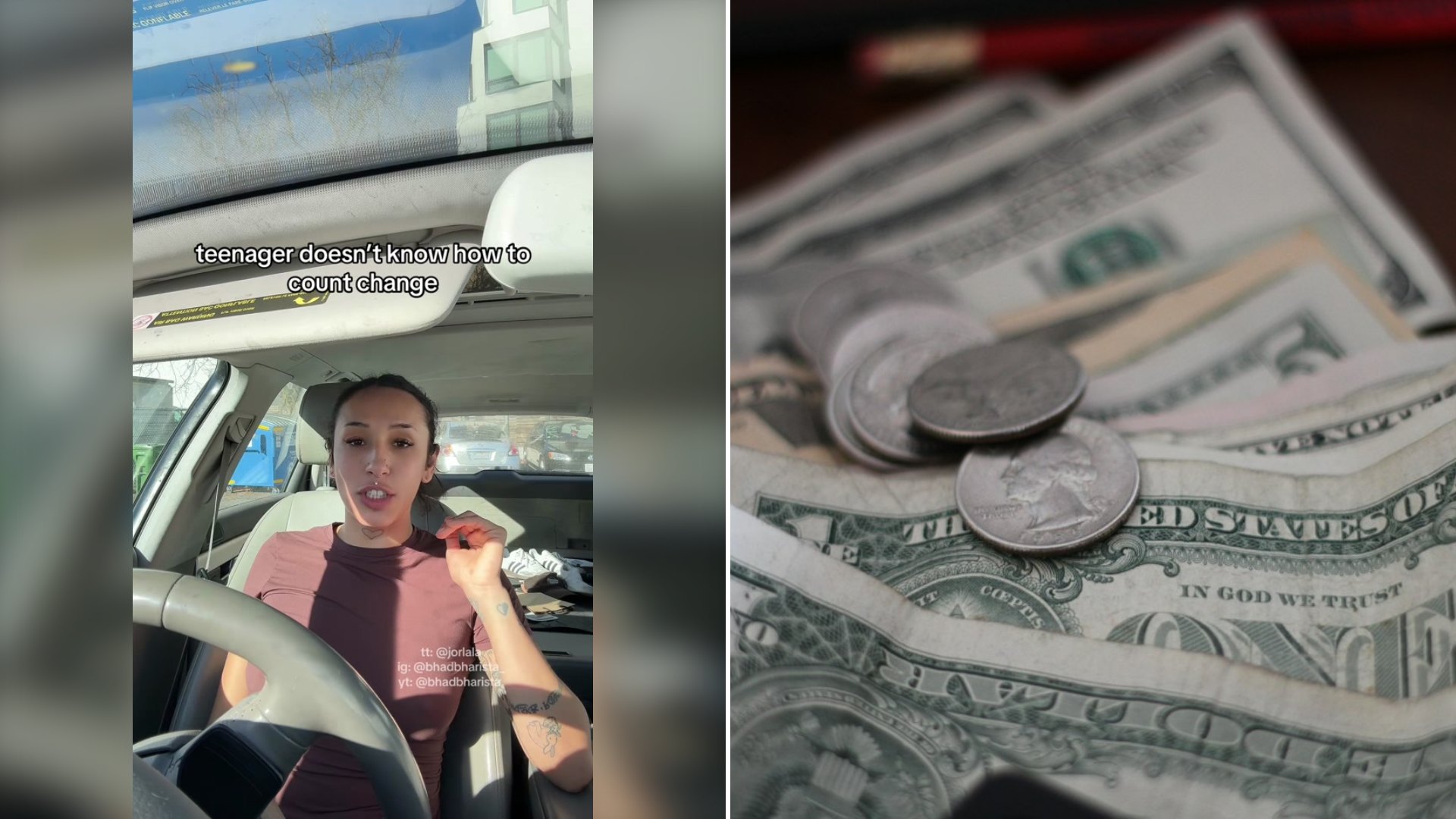
She walks through the moment step by step, and it plays out like a math word problem that never quite gets solved. The girl put down a ten-dollar bill and two quarters and slid them across the counter. The barista pointed out that the total was $10.75. The girl agreed. The barista explained that she had only handed over $10.50.
“Oh, okay,” the girl said. Then she reached into her pocket, pulled out two nickels, and slid those over too.
“We’re staring at each other,” the barista recalls. Then came the question: “Is that enough now?”
It was not. Two nickels add up to ten cents, and she needed twenty-five. The barista told her no, it still was not enough. The girl asked how much more she needed. The barista repeated the total, $10.75. Finally, the girl put a quarter on the counter, and the math worked.
The Nickels Caused One More Round of Confusion
Even then, it was not quite over. The barista took the ten and the three quarters, which covered the bill exactly. The two nickels were still sitting on the counter, and the girl kept staring at them.
The barista told her she could have them back. The girl seemed surprised. “You don’t need those?” she asked.
No, the barista explained, because she had already paid in full. “Are they teaching counting change in school?” she asks, clearly frustrated. “I’m genuinely concerned.” She even wonders aloud whether the next skill to go will be reading a clock.
@jorlala
Plenty of people who have worked a cash register have stories like this one, and many grandparents have noticed the same thing at home. Children who grow up watching adults tap a card or a phone may rarely handle coins at all. Counting change is a skill like any other, and if nobody practices it, it fades or never develops in the first place.
Why Handling Cash Still Matters
It is easy to assume cash is fading out, but it is still part of everyday life. Many small businesses, farmers markets, garage sales, school fundraisers, tip jars, laundromats, and parking meters rely on it. Card readers go down. Phones die. And when someone hands back the wrong change, the person who can count is the one who notices.
Counting money also builds a bigger skill: understanding what things cost. A child who has handed over a twenty and counted back the change has a much better feel for a ten-dollar coffee than a child who has only watched a screen say “approved.”
Easy Ways to Teach Kids and Grandkids to Count Change
If you have young people in your life, you can help without making it feel like homework. A few ideas that work well:
Start with the coins themselves. Lay out a penny, nickel, dime, and quarter and talk about what each is worth. A fun reminder for little ones is that the nickel is bigger than the dime but worth less, which trips up plenty of kids. Then practice making the same amount different ways, such as a quarter versus five nickels.
Play store at the kitchen table. Put price tags on snacks or small toys, give the child a handful of real coins and a few bills, and let them “buy” things. Take turns being the cashier.
Teach the counting-up method. This is how cashiers made change for generations before registers did the math. If something costs $3.60 and you pay with a five, you start at $3.60 and count up out loud: a nickel makes $3.65, a dime makes $3.75, a quarter makes $4.00, and a dollar bill makes $5.00. The change in your hand is $1.40, and you got there without any subtraction at all. It sounds slow at first, but it quickly becomes second nature and helps kids catch mistakes.
Let them pay for real. The next time you are out together, hand a grandchild the cash and let them pay for an ice cream or a small purchase. Have them check the change before walking away. Cashiers are usually patient when they can see a child is learning.
Use a coin jar. Have kids sort and count a jar of loose change into stacks of a dollar. They get practice, and you might find out you have more saved than you thought. Many banks and credit unions will count rolled coins for customers.
Give a small allowance in cash. Money they can hold, count, and spend teaches lessons that a number on an app cannot. When they want something, have them count out whether they have enough.
None of this takes long, and kids often enjoy it more than you would expect. A few rounds of playing store now could save a young person from a very long, very awkward moment at a coffee counter later, and save some patient barista from wondering what is being taught in school.
More From Cultivated Comfort
- 7 Red Flags People Notice Only After Moving in Together
- Couples Married for Decades Get Assumed to Have Long Ago Mastered Every Single Thing About Money and Love, but Most of Them Actually Confess to One Big Regret They Never Fixed in Time
- Premarital Counseling Still Gets Dismissed by a Lot of Couples as a Pointless, Old Fashioned Box to Check Before the Wedding, but Couples Who Actually Sit Through It Get Divorced Far Less Often Later