Buying a suitcase feels like an easy win. You walk down the store aisle, pick the shiny black one that opens like a book, trust the tag that says carry-on size, and roll it to the register happy with the deal. According to travel creator The Terminal Traveler, that is the fastest way to end up kneeling on a hotel carpet every night, paying a fee at the gate, and watching a stranger walk out of baggage claim with your bag.
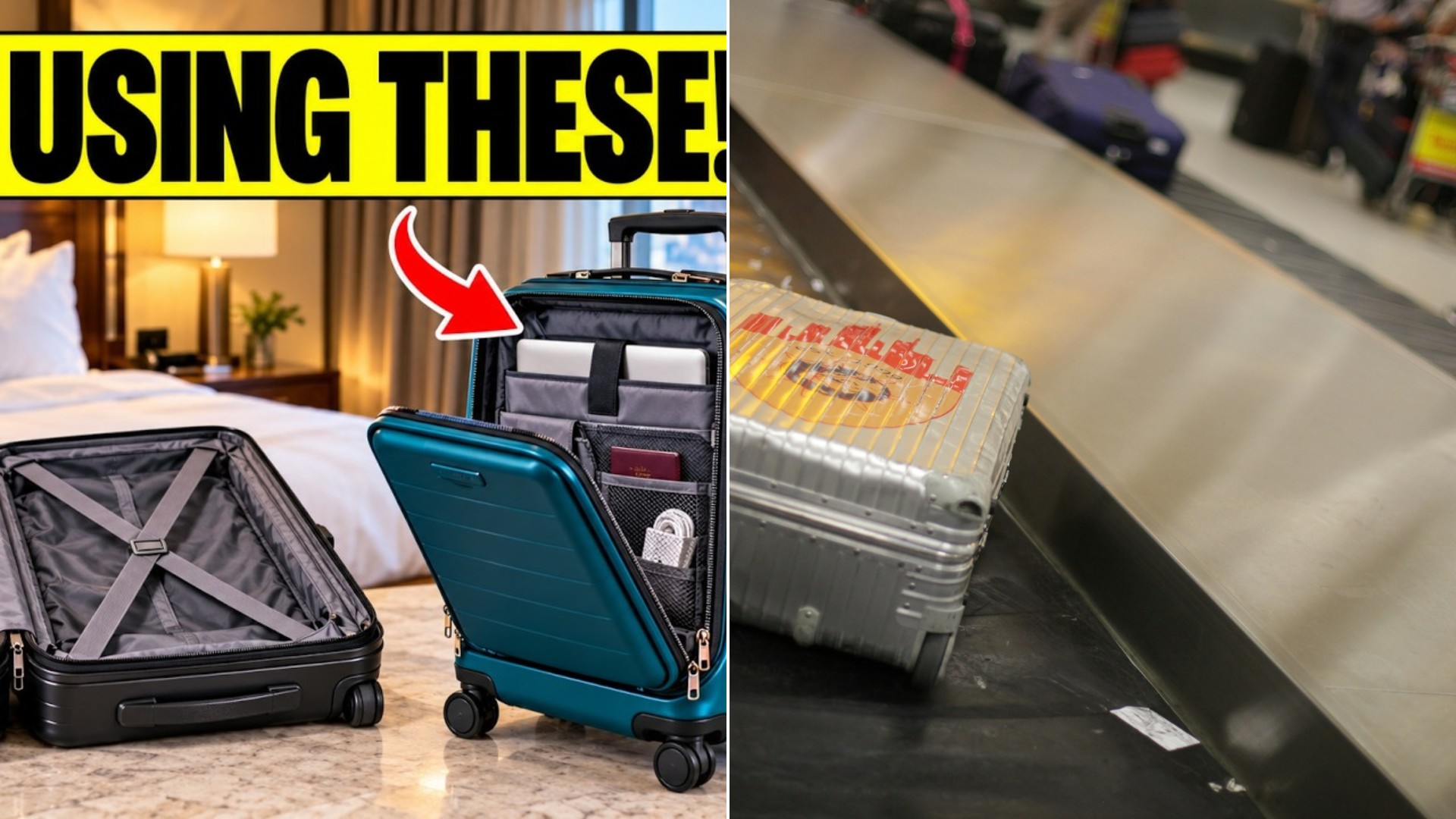
His advice is that the smartest carry-on is not the shiniest one in the store. It is the one built for small hotel rooms, tight overhead bins and crowded baggage belts. He counts down ten things to look for, and a few of them may surprise you.
Number 10, a Bag That Opens From the Top
Most suitcases split down the middle like a book, which means you need floor space for both halves side by side, twice the size of the bag. In a small hotel room there is rarely that much room, so the bag ends up on the bed after a lift of 20 or so pounds, or it stays on the floor and you bend over it every morning and night.
Many frequent travelers switch to a carry-on that opens from the top like a lid, or from the front. The bag stays upright, and you get one deep space at waist height with no kneeling and no lifting. When you shop, look for the words top opening or front opening.
Number 9, a Size That Includes the Wheels
Most big US airlines allow a carry-on of about 22 inches tall, 14 inches wide and 9 inches deep, and that measurement covers the whole bag, wheels and handles included. Many bags sold as carry-on size are measured without the wheels or the handle. The wheels add about an inch, and the handle can add another.
At the gate, a bag that does not fit the metal sizer gets tagged and sent under the plane, and on many tickets you pay for that. So bring a tape measure when you shop. Measure from the floor to the top of the handle with the handle pushed all the way down, then the widest point including the side handle, then the depth including the wheels. If any number is over, put the bag back on the shelf. Overseas and budget airlines often have smaller limits.
Number 8, a Bag That Is Not Heavy Before You Pack It
Pick up an empty suitcase in the store. Many weigh 9, 10 or even 11 pounds with nothing inside, and at some point you will lift it full over your head into the bin. On many airlines flight attendants are not expected to lift your bag for you. He suggests looking for an empty bag of about 8 pounds or less.
His lifting trick is to raise the bag to the top of the seat back first, rest it there, and then push it into the bin in one smooth move, wheels first so the handle faces out. If it is still too heavy, ask to check it at the gate, which many airlines do for free when the flight is full.
Number 7, the Right Wheels
Most new suitcases have four small spinner wheels that glide on an airport floor and let you push the bag upright beside you. But small spinners can snap on a curb, cobblestones or the bump at the edge of a jet bridge, and on a sloping ramp a spinner can roll away the moment you let go. Many experienced travelers still choose two larger wheels set into the back corners.
His rule of thumb is that four spinners are easier on your wrist for airports, cruise terminals and smooth hotel lobbies, while two big wheels usually last longer on old streets. Try the bag in the store, and flip it over to check that the wheels are tucked into the corners rather than sticking out on little legs.
Number 6, a Shell That Bends Instead of Breaks
Even a carry-on does not always stay with you. On a full flight it can be checked at the gate and sent below with other bags. Shiny, stiff hard shells can crack when dropped or crushed. Press on the side with your hand: a good shell bends in and pops right back out, which usually means a tougher plastic such as polycarbonate.
Check the corners too, since that is where a bag takes the hit when it falls off a cart. The best bags have small rubber guards on each corner, like a bumper on a car.
Number 5, Two Pockets Inside the Lid
Picture the security table with a long line behind you, your clothes spilling over the side because you cannot get your liquids bag back in. A well designed bag has two zippered pockets inside the lid, one clear mesh and one waterproof. The mesh pocket holds your quart bag of liquids, passport, charger and reading glasses, so you never open the main part of the bag. The waterproof pocket holds wet things, like a swimsuit or a toothbrush.
To pack, he suggests heavy items like shoes, books and a hair dryer at the bottom near the wheels, then clothes, and on top tomorrow’s outfit and your pajamas.
Number 4, a Cup Holder and a Hook
Imagine the gate with a coffee in one hand and a boarding pass in the other, plus a purse, a neck pillow or a cane. Some newer carry-ons have a small cup holder that folds out from the back and a hook on the handle for a neck pillow or bag. Free hands, he says, are safer hands, especially on a sloping jet bridge. If you use a cane, keep it hooked on the bag handle or tucked against your seat so it does not fall when someone walks by.
Number 3, the Charging Port and the New Battery Rules
Many carry-ons now have a charging port on the outside, so you can connect a battery pack inside the bag and charge your phone at the gate. But he says the rules for power banks got much stricter in 2026. In March the United Nations agency that sets global aviation standards approved new guidance, and US airlines added their own rules.
United now asks passengers to keep power banks in a personal item under the seat, not in the overhead bin. American and Delta limit passengers to two power banks, each no larger than 100 watt hours. Southwest allows only one, and it must stay in plain sight when in use. If your bag has a charging port, the battery has to come out before the bag goes in the bin, and power banks are never allowed in checked bags. Check your airline’s rules before every trip.
Number 2, a Lock Security Can Open
If your bag is checked, even at the gate, security may need to open it, and if your lock is not one they can open, they are allowed to cut it off. Look for a small red diamond symbol, which means the lock is TSA accepted. Look at the zipper too: a good one has two pulls that meet in the middle so you can lock them together. Put a card with your name and phone number inside, right on top, and use your phone number and email rather than your home address.
Number 1, a Color Nobody Else Has
At a busy baggage claim, most suitcases look almost exactly alike, and a tired traveler can grab a black roller by mistake. A bright color is far less likely to be taken and much easier for you to spot. If you love your black bag, a bright strap around the whole bag or a stretchy colorful cover works better than a ribbon, which can tear off. Take a photo of your bag before you leave home and slip a small tracker tag inside.
If you only remember three things, he says, choose a bag that opens from the top or the front, measure it with the wheels and the handle, and pick a color nobody else on the belt will have.
More Stories You May Like
- Check Your Passport Expiration Date Before You Book Because Many Countries Require Months of Validity and It Can End Your Trip at the Airport
- Solo Diner Walks Into Brooklyn’s Hyped Lilia Without A Reservation Spends Almost $157 And Calls Its Pasta The Best Course They Have Had All Year
- 5 Honest Ways to Respond to the Friend Who Always Cancels at the Last Minute Without Ending a Long Friendship Over It in Anger