You walk into a chain steakhouse on a Tuesday night, order a sirloin, and it arrives with two sides and free bread. The bill before tip is somewhere in the 20s, and you leave feeling like you got away with something. According to @BarryExplains0, that feeling is not far off.
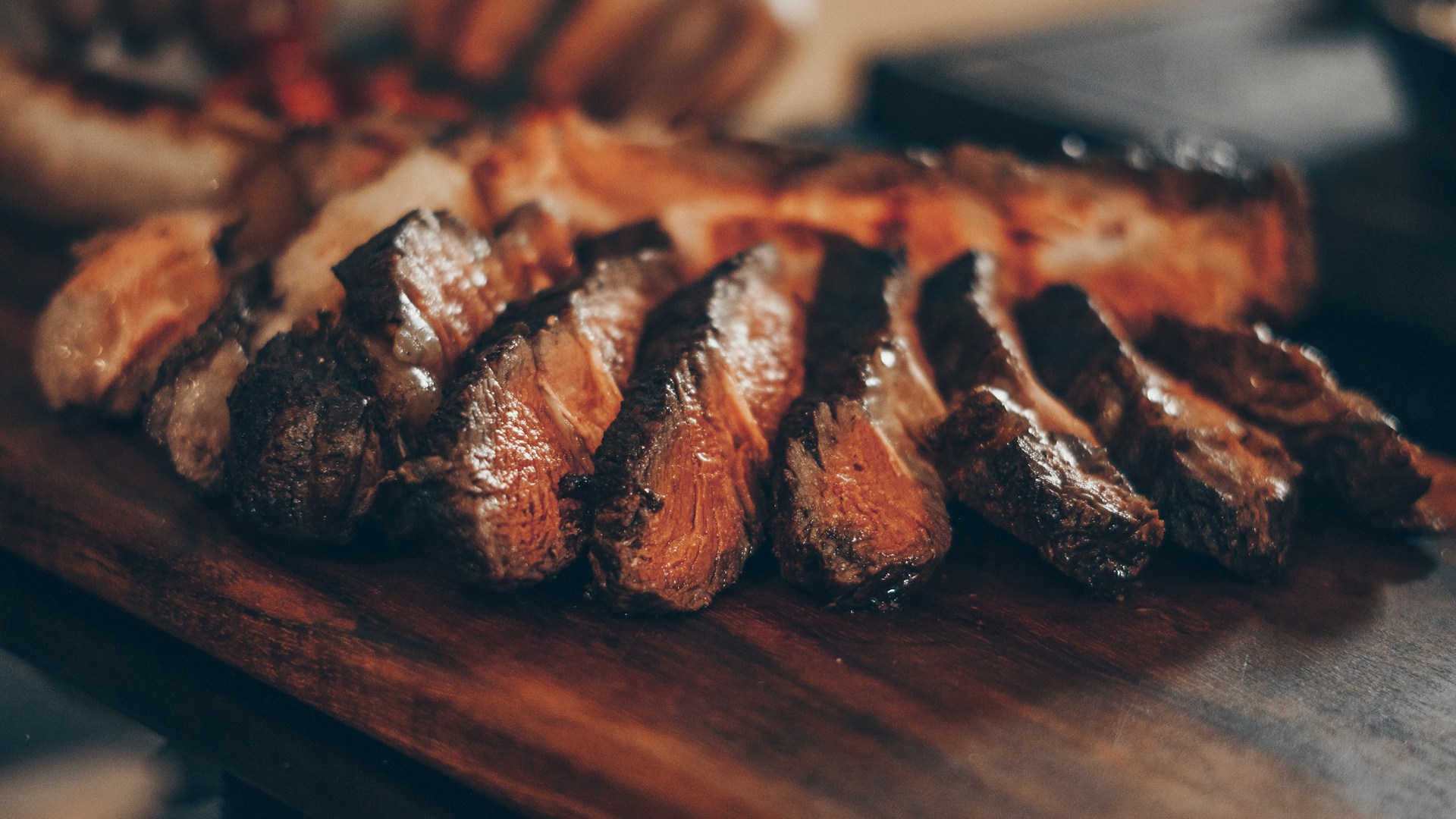
His surprising claim is that the steak is the single worst value item the restaurant sold you that night, and that the restaurant knows it better than you do. He walks through six “levels” of steakhouse pricing to show where your money really goes.
Beef Hit A Record $14.36 A Pound, So The Plate Holds About $4 Of Meat
He starts with what beef costs. The Bureau of Labor Statistics tracks the average retail price of boneless USDA choice sirloin, and in August 2026 it was $14.36 a pound. All uncooked beef steaks together averaged $12.69 a pound in September, and he says both are the highest figures in the history of the series.
A 6-ounce sirloin works out to roughly $5.40 of retail beef. A restaurant buys wholesale and pays less than you do, so he calls it about $4 of meat on the plate.
The Chain Raised Prices Less Than 2% While Beef Costs Jumped 7%
Then he turns to Texas Roadhouse, which he notes is publicly traded and must report its numbers in writing four times a year. In its filing for the quarter ending June 30, 2026, the company reported commodity inflation of 7% driven by higher beef costs.
In that same quarter it raised menu prices by about 1.9%, and it told investors it would add another 1% at the start of the fourth quarter. “That is not a company gouging you on steak,” he says. “That is a company eating the steak inflation on purpose.”
His reasoning is that the steak works as the advertisement, the number on the sign that gets you through the door. The company reported average weekly sales of $177,000 per restaurant that quarter, a record in its 33-year history, with food and beverage cost at 35.4% of sales and a restaurant margin of 16.4%.
The Real Profit Rides Alongside The Sirloin
Those margins, he says, do not come from the steak. They come from the appetizer, the soft drink with free refills and the dessert three people share, none of which cost anything like beef.
“The sirloin is the ticket price. The rest of the table is the show.” He calls this first level honest, and says that if you love it, you are the one customer the pricing is actually designed to please.
Moving Up To The 12-Ounce Steak Lowers The Price Per Ounce And Raises Your Bill
Level two is the upgrade inside the menu, where the 6-ounce sirloin has bigger brothers. Using Bern’s Steak House in Tampa as an example, he shows the filet mignon at $63 for 8 ounces, $72 for 10 and $81 for 12, which works out to $7.88, $7.20 and $6.75 an ounce.
Every size jump lowers the per-ounce price, and he says that is no accident. It is the oldest pricing structure in food service, and it works because it gives you a reason. You are not being greedy, you are being smart.
But the total is the only number that leaves your wallet. “You did not save $18 by moving up. You spent $18 more.” His test is honest and simple: if you will finish it, trading up is real value, and if half goes home in a box until Thursday, you bought a smaller number on a calculator.
“Prime” Is Not As Rare As The Menu Suggests
Level three is the word prime. He explains that a USDA grader looks at intramuscular fat, the little white flecks in the ribeye, so the grade is a fat score and not a measure of the farm, breed or diet.
Citing Texas A&M agricultural economist David P. Anderson in Drovers in June 2026, he says more than 17% of beef graded prime in five of the preceding six weeks, versus 13% a year earlier. The wholesale gap between prime and choice carcasses fell to $13.16 per hundredweight from $21.97 a year earlier.
He is careful to say the premium on loin and rib cuts is larger than that carcass-wide average, so a restaurant does pay more for prime ribeyes. But the direction is clear: prime supply is up and the premium is shrinking. His verdict is that you are paying for a reputation rare beef earned 20 years ago, and he calls level three the weakest buy on the menu right now.
A Plain Baked Potato Costs $9 And Three “Adjectives” Add About $40
At level four, the steak stops coming with anything. At Bern’s, he says, a baked potato ordered alone is $9, creamed spinach is $14 and white truffle macaroni and cheese is $22. Add one sauce, one side and one topper to an $80 steak and you have added roughly $40 without ordering a second thing anyone would call food.
The twist is that Bern’s includes soup, salad, a baked potato, onion rings and the vegetable of the evening with every standard steak, items he says would add up to $31 if sold separately. So the mid-tier chain sells you the potato, while the famous restaurant bundles the whole dinner.
Dry Aging Costs Real Money, And 60 Extra Days Added $28
At level five he is fair to the restaurants. Dry-aged beef ties up cash for weeks and can lose about 20% of its weight to moisture, according to a chef he cites from a Washington State steakhouse. At $30 a pound wholesale, that shrink pushes the true cost to $37.50 a pound before the crust is trimmed.
At Bern’s, a 14-ounce Delmonico aged 5 to 8 weeks is $77, while the same cut aged 100 days is $105. That is $28 for roughly 60 extra days in a cold room. His advice is to treat long aging as a flavor you are testing, not a quality upgrade you are buying.
The $175 Platter Is Only The Beginning
Level six is the large-format board. A 40-ounce dry-aged tenderloin is $175 and a 36-ounce Wagyu tomahawk is $178, and the soup, salad and potato are no longer included. Two people who add the $26-per-person supplement pay $227 for 40 ounces, versus $166 for two 16-ounce dry-aged strips. That is $61 more for the board.
He adds that nobody at the table wants to be the one to say the platter is not worth it, so it is the one item that one person orders and everybody pays for.
The One Question To Ask Before You Order
His ranking: level one is the best value and not close, level two is worth it only if you finish the plate, level three is the weakest buy, level four is where bills get away from people and is easy to decline, level five is a real product with real costs, and level six is theater.
If you take one thing away, he says, ask what the steak price already includes, not the cut or the grade. “That one question moves more money on your final bill than every other choice on the menu put together.”
More Stories You May Like
- Texas Roadhouse Says Its $55 Family Meal Feeds Four To Six People So One Customer Counted Every Roll And Steak In The Order
- That Restaurant Reservation Deposit Or No Show Fee Is Buried In The Fine Print And Missing The Cancel Window Can Cost You
- 7 Restaurant Gift Card Pitfalls Like Expiration Dates, Hidden Balances and Closed Locations to Check Before You Buy or Give One This Holiday