Most of us have boarded a plane, glanced at the exit row and thought, “Extra legroom, lucky them.” Julie Kim says she watched a flight attendant prove that those seats come with homework.
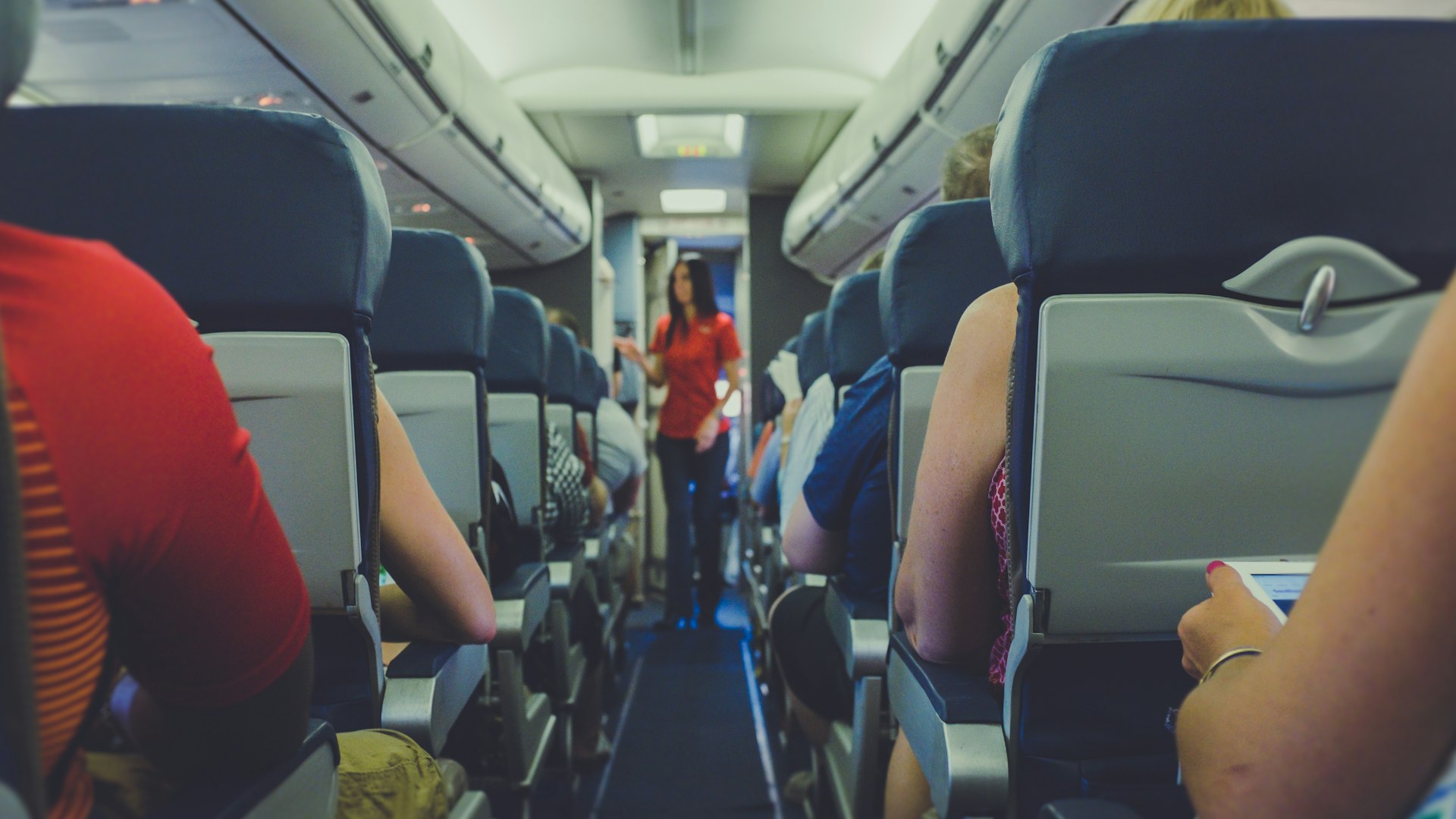
Kim, who posts as @juliekimcomedy, says it was the first time she had ever seen someone fail the exit row interview. She shared the whole scene, and it ended with the best punchline of the flight.
It began with the usual safety briefing, only this one was delivered face to face. The flight attendant gave each person in the row clear emergency instructions, then asked each of them a direct question: “Do you agree to help?”
@juliekimcomedy
Everyone in the row said yes, except for the man in the window seat. That is where the trouble started.
“When Do You Open The Door?” He Allegedly Answered, “When We Land”
The flight attendant did not stop at the yes-or-no question. She quizzed the passengers on what they would actually do in an emergency, including when to open the door.
According to Kim, the man by the window allegedly gave this answer: “When we land.” It is the kind of reply that makes a crew member’s eyebrows go up, because an exit row passenger is there for emergencies.
The attendant did not let it slide. She warned him that if he did not pay attention, she would move him.
The Attendant Briefed Him Again, Then Came Back With A Seat In The Back
Giving the man a second chance, the flight attendant went through the instructions with him again. It seemed like that might settle things.
Later in the flight, though, she came back. This time she had a new seat for him, and it was at the back of the plane.
He Stood Up, Said “I Like The Back Of The Plane,” And Walked Away
What happened next is the moment that sent Kim’s story around the internet. The man got up from his window seat and, according to her, said, “I like the back of the plane.”
He picked a good line to go out on, and Kim clearly enjoyed it.
Kim’s verdict on the crew member was short and enthusiastic: “I love a diligent flight attendant. Queen.”
What The Exit Row Actually Requires Of You
The flight attendant’s questions were not just for show. Exit row passengers are expected to help the crew in an emergency, and the rules spell out who can sit there.
According to FAA requirements, a passenger in an exit row must be at least 15 years old and able to operate the exit. They also need to be able to understand the crew’s instructions and confirm verbally that they are willing to help.
That last part is why the attendant asked each person, “Do you agree to help?” A nod is not enough, since the crew wants a clear spoken answer.
If someone cannot or will not meet those requirements, the crew can move them to another seat. That is exactly what happened here.
Why Airlines Take The Exit Row Seriously
In an emergency, seconds count. The people in those seats are the ones expected to get a door or window exit open quickly so everybody else can get out.
That is why a flight attendant would rather have a quick chat before takeoff than discover a problem when it matters. A short briefing, and a firm answer, can make the difference.
It also explains why crew members tend to be a bit stricter about the exit row than about any other part of the cabin. The extra room is a perk, but it comes with a real responsibility.
How To Be A Good Exit Row Passenger
If you choose or are assigned an exit row seat, a few simple habits will keep you on the crew’s good side.
Listen to the briefing, even if you have heard it a hundred times. The attendant may ask you questions, and the answers should come easily.
Read the safety card in your seat pocket. It shows how the exit works, and a minute of reading beats guessing.
Be honest about whether you can help. If you have a physical limitation, a language barrier or a reason you cannot perform the duties, tell the crew and ask for a different seat. Nobody will think less of you.
Keep the area around the exit clear of bags and personal items, and stay alert during takeoff and landing.
It is a little like a driver’s license check before a road trip. Nobody enjoys the extra questions, but they exist so that everyone on board can travel with more confidence.
And for the rest of us in the middle seats, it is oddly comforting to know that somebody is paying attention.
The Bottom Line From 30,000 Feet
Kim’s story is funny because it is so easy to picture. A calm flight attendant, a confident wrong answer and a man making the long walk to the last row.
But under the humor sits a good lesson. Those seats are for people ready to help, and the crew’s job is to make sure the right people are sitting in them.
As for the man who liked the back of the plane, he got his wish in the end.
More Stories You May Like
- Woman Books Three Separate Flights From Oslo To A Greek Island, Gets Sent Back To The Gate Three Times Before The Cancellation, Then Says She Ended Up Taking The Same Journey Odysseus Took
- American Airlines Passenger Holds Up A Flight Already Delayed 6 Hours By Accusing A Man In First Class Of Taking Her Husband’s Seat, Then Is Told The Seat Went To An Upgrade And Her Husband Is Not Allowed On The Plane
- Husband Leaves His Wallet On A Southwest Flight, Gets It Back In 10 Minutes, Then His Wife Says The $1,200 Cash Inside Was Gone And Hopes ‘Karma Comes Back Around In A Big Way’