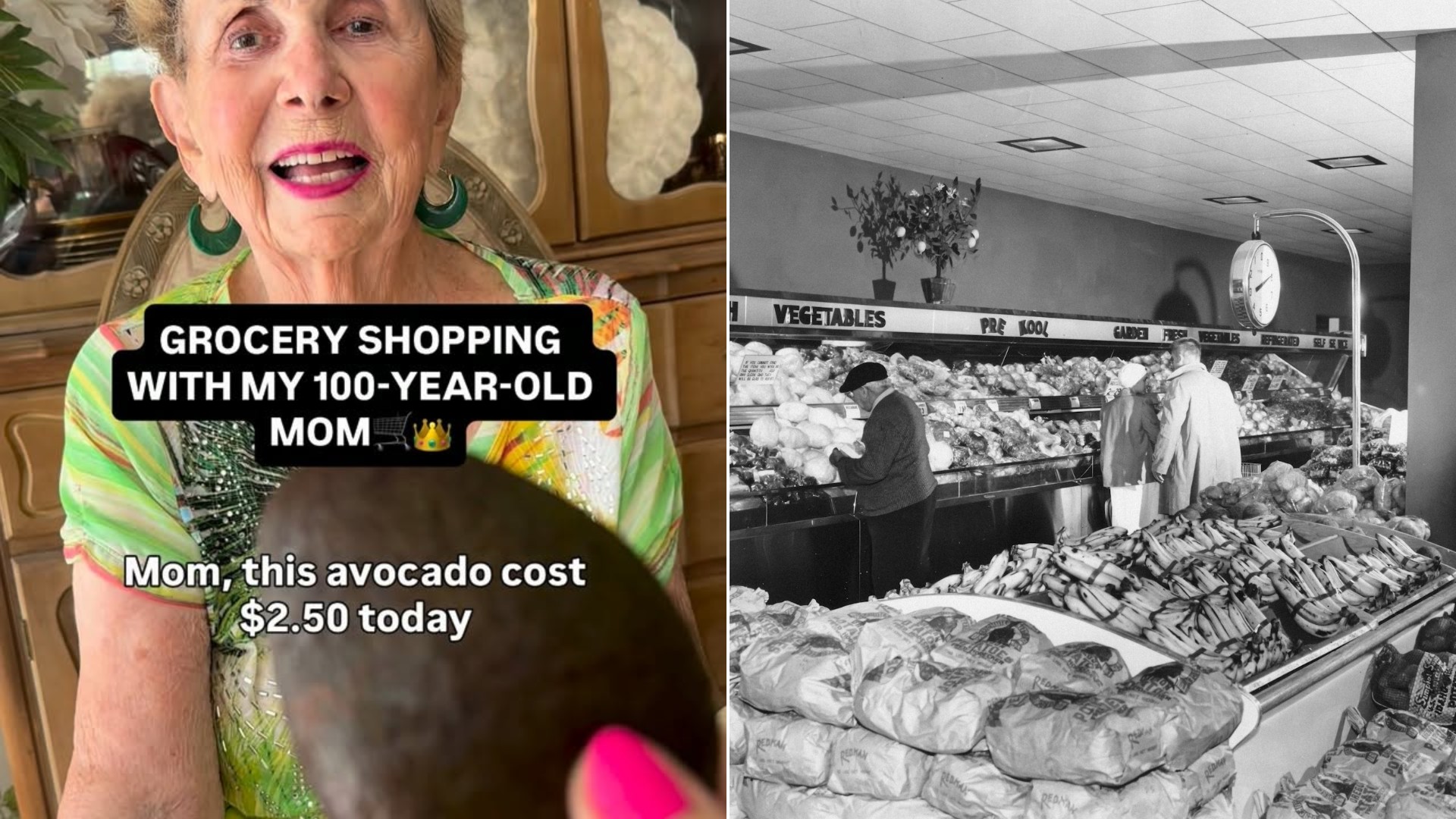
A 100 year old mom went grocery shopping with her daughter, and the daughter asked a simple question. What does a dollar buy now, compared with when you were young? The answer, shared by @queenoftreasures2024, is a lesson in how much the world has changed.
Today’s prices are enough to make anyone wince. Back then, a single dollar could do some real work.
View this post on Instagram
An Avocado Costs $2.50 Today, And It Was 10¢ Back Then
In the reel, the shopping cart tells the story. An avocado today is $2.50, a half gallon of ice cream costs real money, a dozen eggs is $4.99, and a cold brew coffee is $5.50.
The mom remembers a very different price list from the 1940s. An avocado was 10¢, a half gallon of ice cream was 49¢, and a dozen eggs was 69¢.
A Pound Of Coffee Beans Was $1
Coffee gets its own moment. In the 1940s, a pound of coffee beans cost $1, while today a single cold brew from a shop can cost more than that by several dollars.
It is the kind of comparison that makes a room go quiet. The same drink that people grab on their way to work would once have bought a whole pound of beans.
What $1 Bought In 1946 Was A Full Meal With A Tip
The line that gives this story its punch comes next. The speaker, who was 20 years old in 1946, says a single dollar bought a full meal, tip included.
Think of a diner counter, a hot plate in front of you and a few coins left on the saucer for the waitress. Today the same dollar barely leaves the register before it is gone.
The year matters, too. By 1946 the war was over and Americans were coming home, starting families and settling into a new normal after years of rationing and shortages.
Kitchens were run on a tight budget, and cooking from scratch was the rule. Eating out was a treat, which is what makes a full meal with a tip for a dollar such a vivid memory.
Why It Is Not As Simple As Prices Then Versus Now
Before we all fall into despair, it helps to remember that wages were lower too. In the mid 1940s, a typical American worker earned a small fraction of what workers earn today, so those low prices took a bigger bite out of a paycheck than they seem to now.
Economists use inflation measures such as the Consumer Price Index to compare costs over time, and by those measures a dollar in the 1940s has the buying power of well over ten dollars today. That does not make a $4.99 dozen eggs any easier to swallow, but it explains some of the gap.
Eggs also swing wildly. Outbreaks of bird flu and supply problems have pushed carton prices up and down in recent years, which is why a single dozen can feel like a luxury at one visit and a bargain the next.
Ice cream tells the same tale. A half gallon at 49¢ was an affordable weekend treat for a whole family, while today the same tub is something many shoppers pause over before it goes in the cart.
That is why this little reel resonates with so many older viewers: every price on the list triggers a memory of a corner store, a soda counter or a mother counting out coins.
Eating Well On A Budget, The Way Grandma Did
People who lived through that era often knew how to stretch a dollar, and a lot of their habits still work. Here are a few that grocery experts and thrifty families swear by.
- Plan meals around what is on sale rather than shopping from a fixed list.
- Buy store brands, which are often made in the same plants as name brands.
- Cook once and use leftovers twice, in soup, sandwiches or a casserole.
- Compare the unit price on the shelf tag, not just the sticker price.
- Freeze bread, meat and ripe fruit before they go bad.
None of these tricks will bring back a 10¢ avocado, but together they can shave a real amount off a weekly bill.
Another habit worth borrowing is the old-fashioned grocery notebook. Writing down what you pay for the staples you buy every week, such as eggs, milk, bread and coffee, shows you quickly when a price has jumped and when it is time to switch stores or brands.
Shoppers who keep that kind of record often spot sales that others miss, because they know the real price of an item rather than the one on the shelf sign.
What The Older Generation Can Teach Us
Hearing a 100 year old woman compare her youth to the cart in front of her is a powerful thing. It reminds us that a price tag is more than a number, it is a memory of the world when it was set.
Ask your own parents or grandparents what they paid for their first car, their first house, or their first dinner out. You will be surprised by the answers, and you may learn a few kitchen secrets along the way.
For the daughter in this reel, the grocery trip turned into something priceless: an afternoon with her mom, a handful of memories, and a clear picture of what a dollar used to be worth.
More Stories You May Like
- Former Outback Employee Says Staff Eat Half Off At Any Blooming Brands Restaurant With A Guest, Must Tip 20% Of The Original Bill Or Get Reported, And Can Order Any Sides On A Kids Meal
- Chick-fil-A Pulls Its New Chicken And Waffles Sandwich From Most Menus On November 14, But Tampa, Chicago And Raleigh Keep It Plus Four More Waffle Sandwiches In A Test That Starts November 16
- Old Fashioned Chocolate Pie Skips The Pudding Mix And Jell-O And Gets Its Flavor From A Homemade Custard, Hershey’s Cocoa And A Meringue Topping