Most of us glance at a restaurant menu, pick something, and never do the math. One diner decided to do the math at Denny’s, and the numbers did not add up. In a TikTok from @kristaleeann, the side dish upgrades turn into a lesson in how menus are built.
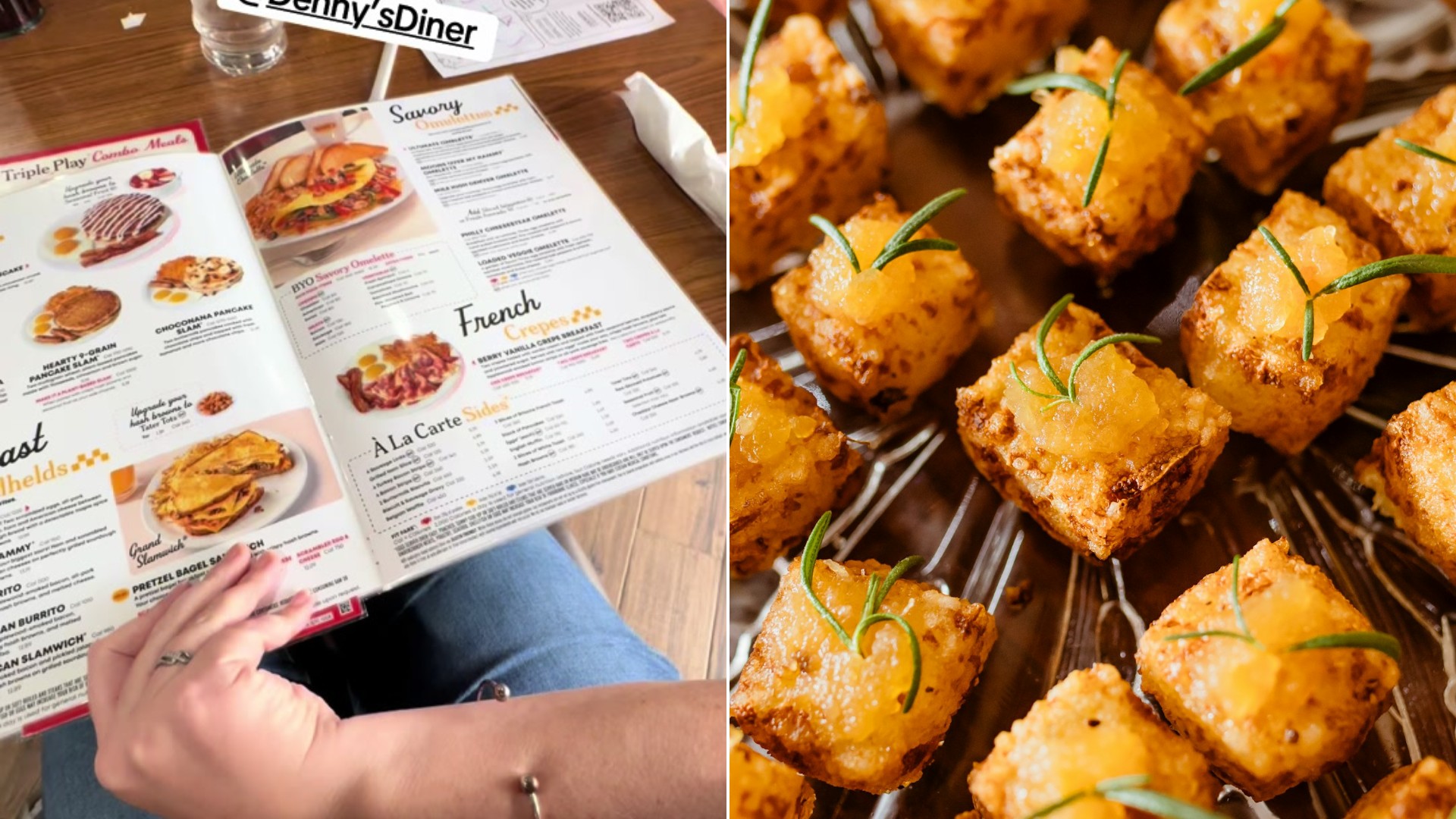
Her summary is short and funny: “the math ain’t mapping.”
@kristaleeann
Tater Tots Cost Only 20¢ More Than Hash Browns On The Menu
Here are the prices she points out. Ordered by themselves, hash browns are $4.59 and tater tots are $4.79, which is a gap of just 20¢.
That seems fair. Tots are a little more work, and a nickel or a dime here and there is not going to start a fight.
The Meal Upgrade Costs $1.39, Nearly Seven Times As Much
Then she looks at what happens when you order a meal and ask to swap your hash browns for tots. The upgrade charge is $1.39.
That is a big jump from 20¢. You are paying roughly seven times the menu difference for the same swap, and that is the part that has her shaking her head.
Tater tots have a fun backstory. They were created in the early 1950s by the founders of Ore-Ida, who found a way to turn leftover potato scraps from their french fry production into a crunchy bite-sized snack that went on to become an American favorite.
Hash browns, meanwhile, are a diner staple, shredded potato fried on the flat-top until crispy. Both are cheap to make, which is why the pricing on the menu is so interesting.
The Fruit Math Is Even Stranger
She does not stop at the tots. Seasonal fruit is $4.69 on its own, only 10¢ more than the hash browns, yet upgrading to fruit with a meal costs $0.99.
So fruit costs less to add than tots, even though the two sides are priced only 10¢ apart on the menu. The pricing is not a straight line, and that is exactly her point.
Why Restaurants Price Upgrades This Way
Restaurant pricing is a mix of cost, habit and psychology. An upgrade is usually set as a round, easy-to-accept number, and managers know that most customers will not stop to compare it with the a la carte price.
There is also a reason some choices cost more than others. Fruit has to be cut and kept fresh, tots come from a freezer bag, and a restaurant may want to nudge you to the side that earns it the most or that it wants to promote.
None of that means anyone is doing something wrong. It does mean the menu is designed, and a few seconds of attention can save you a dollar or more.
Industry people call this kind of thinking menu engineering. Items are placed, named and priced to steer you toward the choices that are best for the restaurant, from the box around the bestseller to the upgrade that looks like a small add-on.
Understanding that does not spoil breakfast. It simply makes you a more informed customer, and it helps you spend your money on what you actually want.
How To Find The Best Deal On A Menu
You can use the same trick next time you eat out. A quick comparison takes less than a minute, and it works at any chain or diner.
- Find the price of the side by itself, and the price of the meal that includes it.
- Ask what the swap fee is before you say yes to the upgrade.
- Compare the upgrade cost with the difference between the two a la carte prices.
- If the upgrade is the pricier choice, consider ordering the side separately.
- Check the app or website for coupons, which often change the math.
Many people never ask, and a polite question to your server is rarely met with anything but a friendly answer.
The Little Charges Add Up
A dollar here and there seems like nothing, but across a family breakfast it adds up fast. Four people each paying $1.39 for an upgrade is $5.56, which is more than a cup of coffee and a tip.
Seniors on fixed incomes feel this most, and many diners have learned to read a menu like a bill. The savviest customers know the price of the main dish, the sides, the drinks and the swaps, and they order accordingly.
It is worth remembering that a restaurant is also a business with rent, wages and food costs to cover. Prices go up, and many families are happy to pay for a good breakfast that someone else cooked.
The point of the math is not to scold anyone. It is to notice when a small choice costs more than it seems, so the decision stays yours.
Why This Video Struck A Nerve
People have been grumbling about restaurant prices for a long time, and a calm, specific breakdown like this one is more convincing than any rant. She does not shout, she just reads the numbers aloud and lets them speak for themselves.
It also reminds us that a price on a menu is a choice. Chains set those numbers on purpose, and customers who notice have a little power to choose differently.
So next time the server asks if you would like to upgrade, take a breath, do the math, and remember what @kristaleeann found. Sometimes the best order is the one where you ask the question first.
More Stories You May Like
- Bartender Says She Makes A Brand New Drink And Takes The First One Off The Bill When A Customer Does Not Like A Correctly Made Cocktail, Margins Are Not More Important Than Hospitality
- Thanksgiving Flights Cost 39% More Than Last Year And Are The Priciest In 10 Years, Yet AAA Says Thanksgiving Day Itself Is The Quietest Day To Travel
- Niagara Falls Restaurant Closed After More Than 50 Years, But One Pumpkin Ice Cream Pie From Its Menu Is Still The Thing People Keep Bringing Up