Butterball is the name most shoppers reach for in the freezer aisle at Thanksgiving. This year, Lovina Zook walked past it at Walmart and picked a different brand she says she likes better.
In a how-to on her YouTube channel, she walks through brining and roasting the bird, starting with a small turkey because her family is not hosting this year. She says the brine recipe comes from volume one of her cookbook.
Her first tip is about time. If you do not have enough of it to thaw the turkey in the refrigerator, she says to submerge it in cold water in a bucket and leave it for 30 minutes per pound.
The Cold Water Trick Thaws A Turkey At 30 Minutes Per Pound
A 12-pound bird would take roughly six hours in a cold water bath using her rule of thumb. Once it is thawed, she says, it is ready for the brine.
She also offers a backup plan for anyone who does not love cooking a whole turkey. You can cut the bird into a few pieces, boil it in salted water for turkey broth, and then make gravy from the broth with the picked meat added back in. She says that is probably what she will do with her own bird.
Honey, Salt And Garlic Make A Brine That Fills A Roaster
For the brine, she starts with hot water from the tap in a pot, then stirs in honey and “quite a bit of salt.” She recommends pink Himalayan salt or real salt, though she says any salt will do.
The pot goes to the stove, where she heats and stirs it until the honey and salt dissolve. Meanwhile she mixes in minced garlic, black pepper and a good amount of Worcestershire sauce.
She makes a double batch because she wants the turkey fully covered. One batch makes 2 gallons of brine and a double batch makes 4 gallons.
The rest of the water is cold, and she even adds ice so the brine cools quickly. The brine must be cold before the turkey goes in, she says.
“At Least 48 Hours” Means The Turkey Must Be In Brine By Tuesday Morning
The bird goes in headfirst, and the amount of brine covers it perfectly. She covers the container and puts it in the refrigerator for at least 48 hours.
That timing matters for the calendar. If you plan to cook on Thanksgiving, she says, the turkey should be in the brine no later than Tuesday morning, though Monday also works.
She filmed hers on a Wednesday morning, planning to bake it on Friday or Saturday. The turkey stayed in the brine until it was time to cook.
Soft Butter And A Rainbow Of Herbs Go On Before The Oven Bag
On cooking day she lifts the turkey out, sets it on a rack over a cookie sheet and lets it drain. The butter she uses is softer than just softened, so she melts some and whisks in more soft butter.
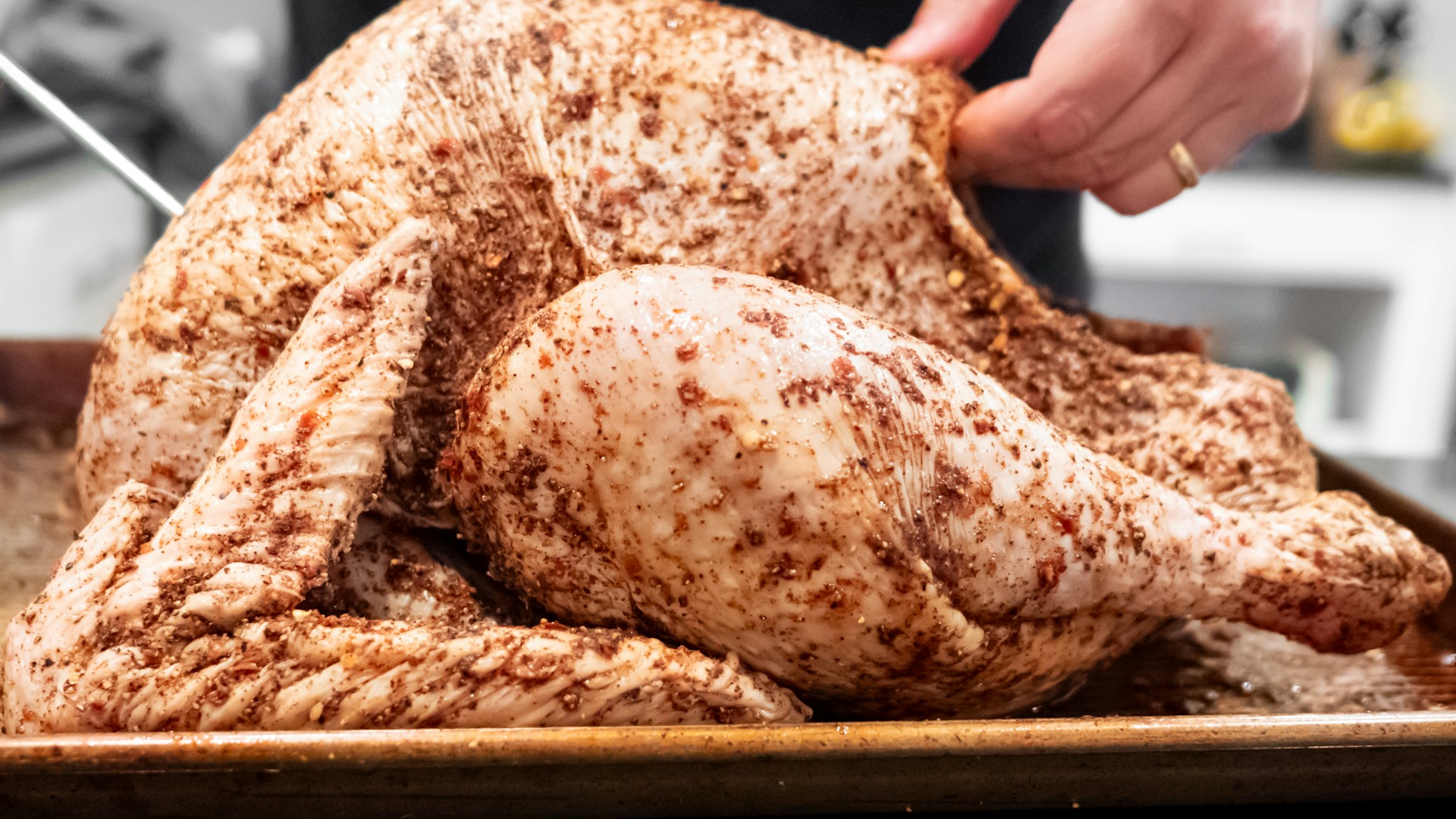
The seasonings are oregano, parsley flakes, smoked paprika, garlic powder, onion powder, thyme, black pepper and rosemary, along with only a little salt because the bird is already brined. If the butter is too firm, she says, knead it in by hand.
She pats the turkey dry with paper towels, back and front, so the butter will stick. Then she places it in an oven bag set inside a roaster.
The package says to add flour to the bag, but she says she has never done it and the turkey always turns out fine. She wears a rubber glove for quick cleanup, lifts the skin to tuck butter underneath and spreads the rest all over.
A 13 Pound Bird Hits The Oven At 350 And Comes Out Juicy
She ties the bag with the oven-safe tie that came with it and cuts six half-inch slits in the top so steam can escape. The 13-pound turkey bakes at 350 degrees for about two to two and a quarter hours.
The target is 165 degrees in the thickest part of the thigh. She says the thermometer shot up to 195 almost as soon as she tested it, so the bird was ready earlier than expected.
After a 10 to 15 minute rest, she cuts into the breast and finds it very juicy. Her review is a single word, “Delicious,” and she says brining helps so much because you can taste the brine in the meat.
She plans to freeze the rest, wrapped in plastic wrap, then thaw it the day before and reheat it in the bag at around 325 degrees on Thanksgiving Day.
What To Take From Her Method For Your Own Turkey
Her approach shows how a few simple choices can make a holiday bird easier. A brine adds moisture and flavor, and butter with herbs helps with browning and taste.
- Plan the calendar backward from dinner, so the turkey is thawed and in brine by Tuesday.
- Use cold water for a faster thaw, and change it as needed to stay cold.
- Pat the skin dry before buttering, so seasoning sticks.
- Check the temperature with a thermometer rather than relying on time alone.
Food safety agencies such as the USDA say a turkey is safe at 165 degrees Fahrenheit, measured in the thickest part of the thigh and breast. They also say cold water thawing requires changing the water every 30 minutes and cooking the bird right after it thaws.
Because brined turkeys are already seasoned, go light on salt in the butter and on any gravy made from the drippings. You will taste the difference.
Her last reminder is the one worth putting on the refrigerator door. Thawed turkey goes into brine by Tuesday if you want a brined bird at Thursday dinner.
More Stories You May Like
- TSA Officers Spot What Looks Like Two Ropes On An X Ray At Ontario Airport, Pause Security Screening, Then Find Two Live Snakes In A Pillowcase And The Traveler Says He Has Flown With Them Before
- Woman Says Her Hinge Date Left Her Standing Alone By A Fire Pit For 10 Minutes To Greet His Ex, Then Chose To End The Night When She Offered To Start Over At Another Bar
- Husband Leaves His Wallet On A Southwest Flight, Gets It Back In 10 Minutes, Then His Wife Says The $1,200 Cash Inside Was Gone And Hopes ‘Karma Comes Back Around In A Big Way’