With Halloween only days away, the candy aisle is busy, and one shopper north of the border has some thoughts about what she found in it. Posting as @veronicacousinsrealtor, she opened a package of Halloween candy and was stunned at how little was inside. Her short post has been played about 108,000 times and has drawn around 500 comments.
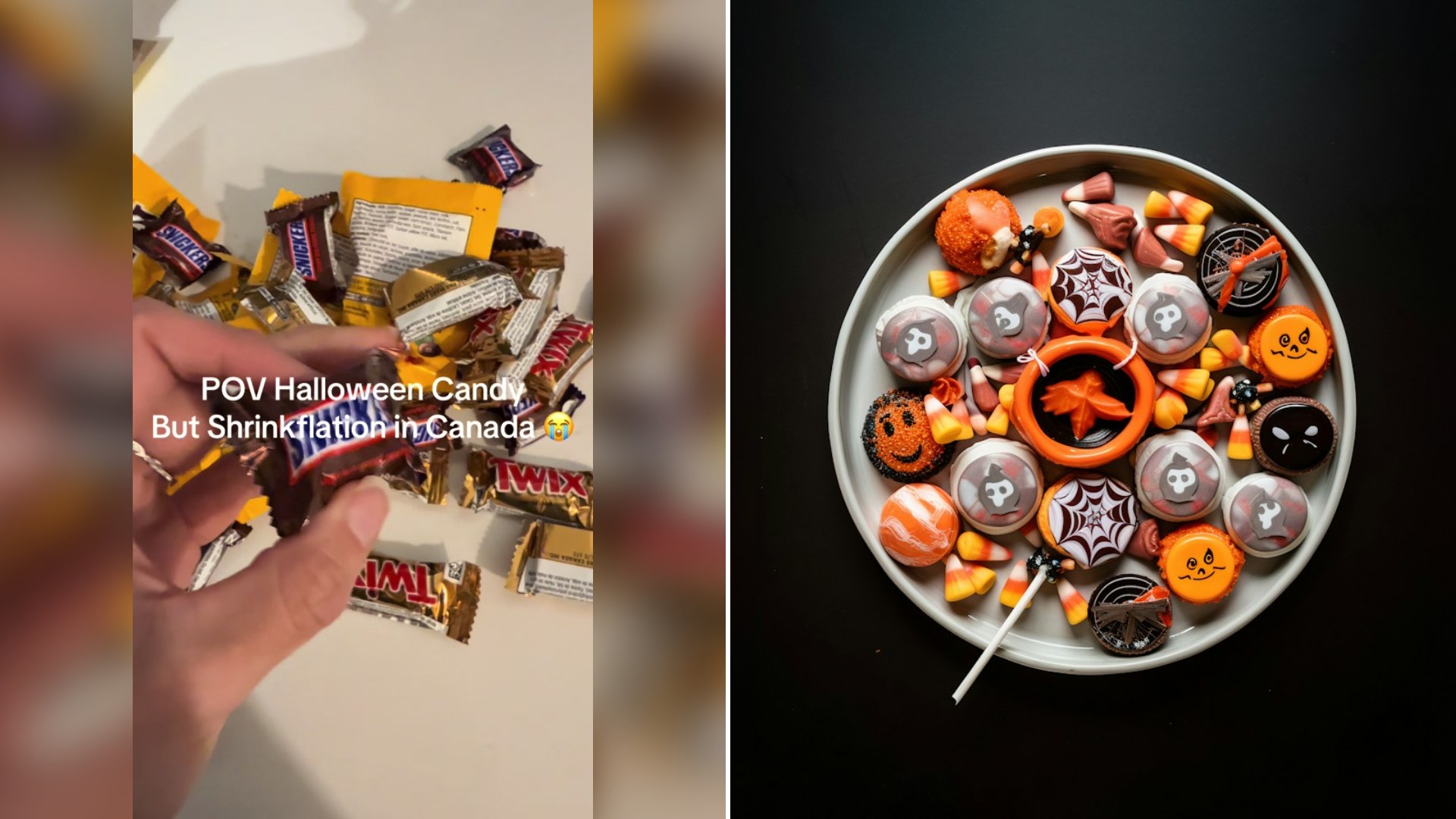
The caption sets the scene: point of view, you buy Halloween candy and you live in Canada, and she asks why everything is half the size. She tagged it with both shrinkflation and stagflation.
@veronicacousinsrealtor
What she showed
The post runs about sixteen seconds. She opens with a shocked reaction and tells everyone to look at how small the package is. She calls it a package of air and says there is nothing in there. Then she counts out loud what is actually in the bag: four M&M’s, one, two, three, four.
She does not tell us the brand of the package, how much it cost, or what it looked like the year before, so we cannot compare it with an earlier version. What we have is her reaction and the caption: in her view, everything on the shelf this season is about half the size it used to be.
Halloween candy is a huge business
Her frustration comes at the busiest candy time of the year. Across the border in the United States, the National Retail Federation’s 2026 Halloween survey projects total spending of $13.5 billion, including $4.1 billion on candy, with 96 percent of consumers planning to buy sweets. Those numbers are for American shoppers, but they show how much money rides on the little treats handed out at the door. When a company trims a few pieces out of a bag, the savings add up quickly.
Canadians have been watching package sizes too. Statistics Canada examined the grocery items in its price index and found that 29.6 percent of eligible items experienced shrinkflation between 2021 and 2023, with the biggest wave in 2022. Name brands accounted for 77.6 percent of those cases. The agency’s list of the most affected foods included margarine, pasta mixes, cookies and crackers, cheese, and cereal. Candy was not named in the part of the report we reviewed, so this is general background, not proof about Halloween bags.
What the rules say about package contents
In Canada, the Canadian Food Inspection Agency explains that when more than one individual candy is sold together, the required labelling must be on the outer consumer package, such as a bag or pack. In other words, the label on the bag is where the official facts live, including the net quantity. A package that looks tiny can still be perfectly legal as long as the information on it is accurate, which is why checking the label matters more than the look of the bag.
In the United States, the Government Accountability Office notes that shrinkflation is typically not disclosed on packaging, and that shoppers tend to respond less to smaller products than to higher prices. That fits what this shopper is describing: the bag simply felt lighter.
Smart ways to buy Halloween candy
- Check the count and the weight. Individually wrapped candy bags often list a piece count as well as a weight. Compare both across brands.
- Do the cost per piece. Divide the price by the number of pieces. A bigger bag at a higher price can be cheaper per treat.
- Try bulk boxes and bins. Warehouse stores and big grocers often sell large bags that cost less per piece, though the unit price on the tag will tell you for sure.
- Mix in a variety. Combining one pricey name brand with a cheaper bag of other treats can keep the bowl full without blowing the budget.
- Buy after Halloween for next year. Candy keeps well, and leftover bags are often marked down on November 1.
- Plan by the numbers. Estimate how many trick or treaters you saw last year, then decide how many pieces you want to hand out to each one.
Do not trust the size words
Terms like fun size, mini, snack size, and share size are marketing language. They tell you how the maker wants you to think about the candy, not how much is inside. The grams or ounces printed on the package, along with the piece count, are the facts to rely on. If two bags both say fun size but one has noticeably more pieces for the same money, the label will show it. Keep a note on your phone of what you paid and how many pieces you got this year, and you will have an easy comparison when the candy shows up on the shelves next fall.
Making the bowl last
If your bag does turn out lighter than you hoped, there are small ways to stretch it without disappointing the neighborhood kids. Keep the bowl by the door and set a limit of one piece per child on busy streets. Add a few non-candy options like stickers, pencils, or small toys. Save the best candy for the early part of the evening, when the smallest trick or treaters arrive. These tricks cost very little, and they spare you a last minute store run on Halloween night, when the shelves are often half empty.
The takeaway
Four candies in a bag is a dramatic picture, and it explains why a quick post struck a chord. Shoppers do not mind paying a fair price, but they want to know what they are buying. Read the label, work out the price per piece, and compare brands before the doorbell starts ringing. That way the only surprise on Halloween is what the kids are dressed as.