Dinner was over, the conversation was flowing, and one diner simply wanted to know about tea. Instead, according to the woman who posts as @karensilvaart, her group at the New York restaurant Ayah was told to get up and move to the bar because their table was needed back in a matter of minutes. She kept her phone rolling as it happened.
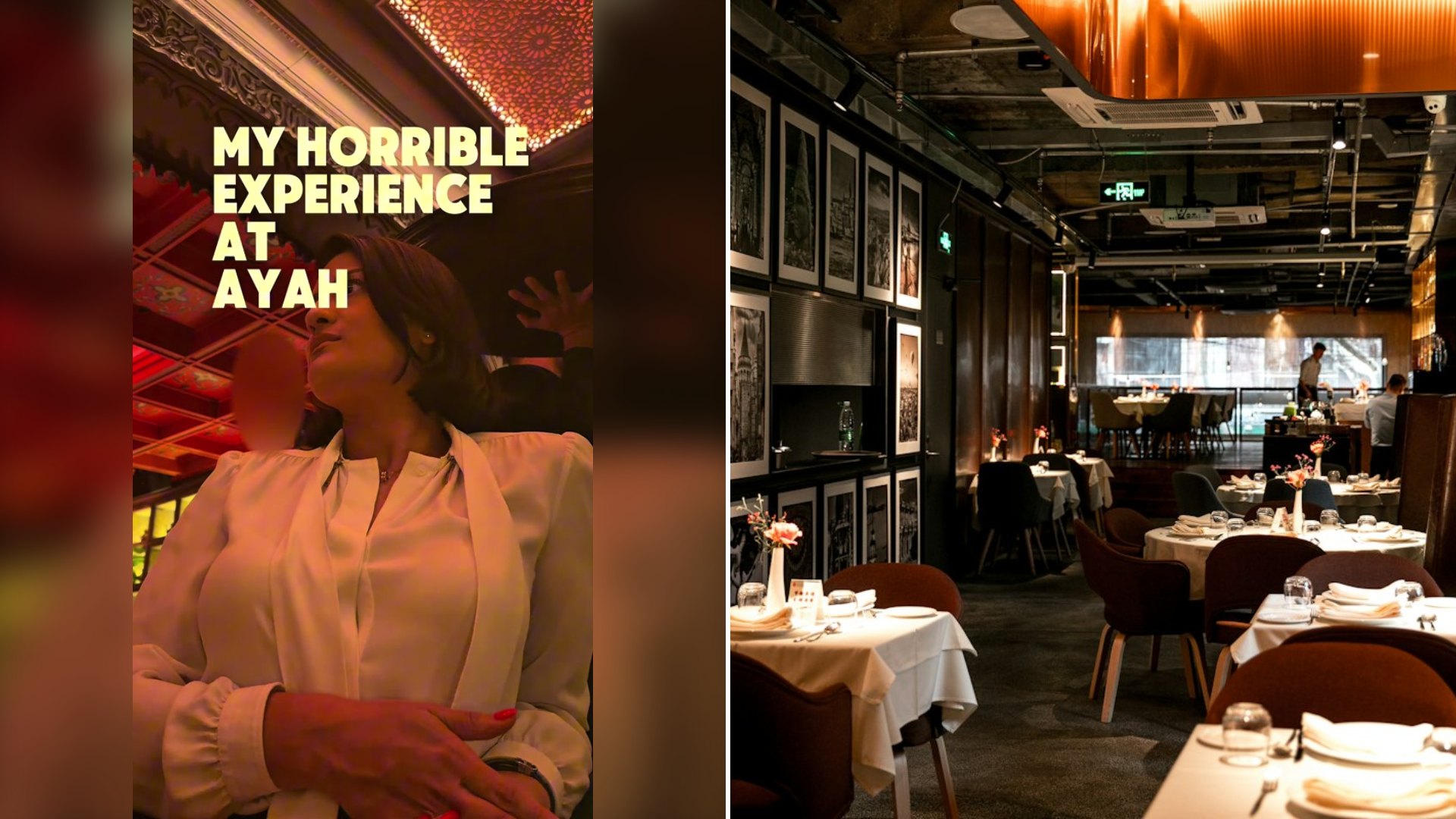
In her caption, she makes clear this is not her usual style. “I’m usually the last person to leave a bad review,” she writes, “but my interaction with a server at Ayah deserves an honest conversation.”
Nine Minutes to Clear Out
The video opens with the group asking whether the restaurant has a nice tea. The server’s answer is about something else entirely. The group can go to the bar, the server says, because the table is needed back. At one point the server says it will be needed in about five minutes, and then that the next reservation is in nine.
The diners sound surprised. One of them asks a reasonable question: how long is the reservation? The server runs through the restaurant’s seating times, which come in set blocks, including 5:30 to 7:30 and 7:30 to 9:30. The table, the server explains, was booked for another party, and that is simply how the reservations work.
The server offers to seat the group at the bar instead. One of the diners can be heard saying they do not need everything, which suggests the group was ready to wrap up rather than order much more.
In her caption, she says the rule itself is not really her complaint. “I’ve dined at plenty of exclusive restaurants, and I understand having table time limits,” she writes. “But please communicate them clearly when customers book or arrive.”
She says she had assumed somewhere between an hour and a half and an hour and 45 minutes would be a reasonable amount of time for dinner. “Apparently, I needed to ask,” she adds. Her biggest issue was the delivery. Her caption ends with a line many diners will understand: “Hospitality includes how you speak to people.”
@karensilvaart
The video shows only her side of the evening. It does not show what the group was told when they booked or arrived, or what happened after they left the table.
Why Restaurants Use Time Limits
Table time limits are common at popular restaurants, especially in big cities like New York, where rent is high and the most sought-after places book up weeks ahead. Many restaurants plan the whole evening around a set number of seatings. If one party lingers half an hour past its slot, the next party may be left standing at the door, and the delay can ripple through the rest of the night.
Two hours is a common window for a party at a busy restaurant, and some places allow less at the bar or for smaller groups. Larger parties or tasting menus may get more time. The policy is usually spelled out somewhere, but often in the fine print of the online booking page or the confirmation email, where it is easy to miss. That is exactly the gap this diner says caught her off guard.
How to Avoid Being Rushed Out of Dinner
Whether you are celebrating an anniversary or meeting old friends for a long catch-up, a few steps can keep your evening from ending abruptly:
Ask when you book. A simple “How long will we have the table?” settles it right away. If you book online, read the confirmation carefully for words like “seating time” or “table for two hours.”
Ask again when you arrive. Hosts can tell you whether there is a party booked right after yours. If there is not, you may have more flexibility.
Book the last seating. If you want a long, leisurely meal, choose the final reservation of the night. There is usually no one waiting for your table afterward.
Order with the clock in mind. If you know you have two hours, put in your appetizers and mains early and save the lingering for dessert and coffee.
Watch for the signs. When the check arrives without being requested, or a server mentions the next seating, that is usually a polite signal your time is nearly up. Asking for the check along with dessert or coffee lets you settle up and leave on your own schedule.
Have a backup plan. If you are asked to move, a nearby cafe or hotel lounge can be a fine place to finish the evening, and it may be quieter.
Complain calmly and directly. If you feel a server spoke to you rudely, ask for a manager before you leave and explain what happened. Restaurants generally want to know when a guest leaves unhappy. If you write a review afterward, stick to the facts, describe what you would have wanted and give the restaurant a chance to respond.
Time limits are a fact of life at busy restaurants. But as this diner points out, a heads-up at the door and a little kindness at the table can make the difference between a guest who leaves happy and one who wants to talk about it.
More From Cultivated Comfort
- Two Men Order Food From a Three Point Four Star Mexican Restaurant in North Carolina to Find Out Why the Ratings Are Low and Walk Away Surprised by Everything but the Rice
- Former Applebees Waiter Who Worked Fourteen Hour Shifts for Two Dollars an Hour Says Servers Today Take Fifteen Minutes to Bring a Sweet Tea and Still Want a Fifteen Dollar Tip
- Restaurant Sign Telling Customers Who Cannot Tip To Stay Home Is Making The Rounds Online And Even The Person Sharing It Says It Might Be Fake