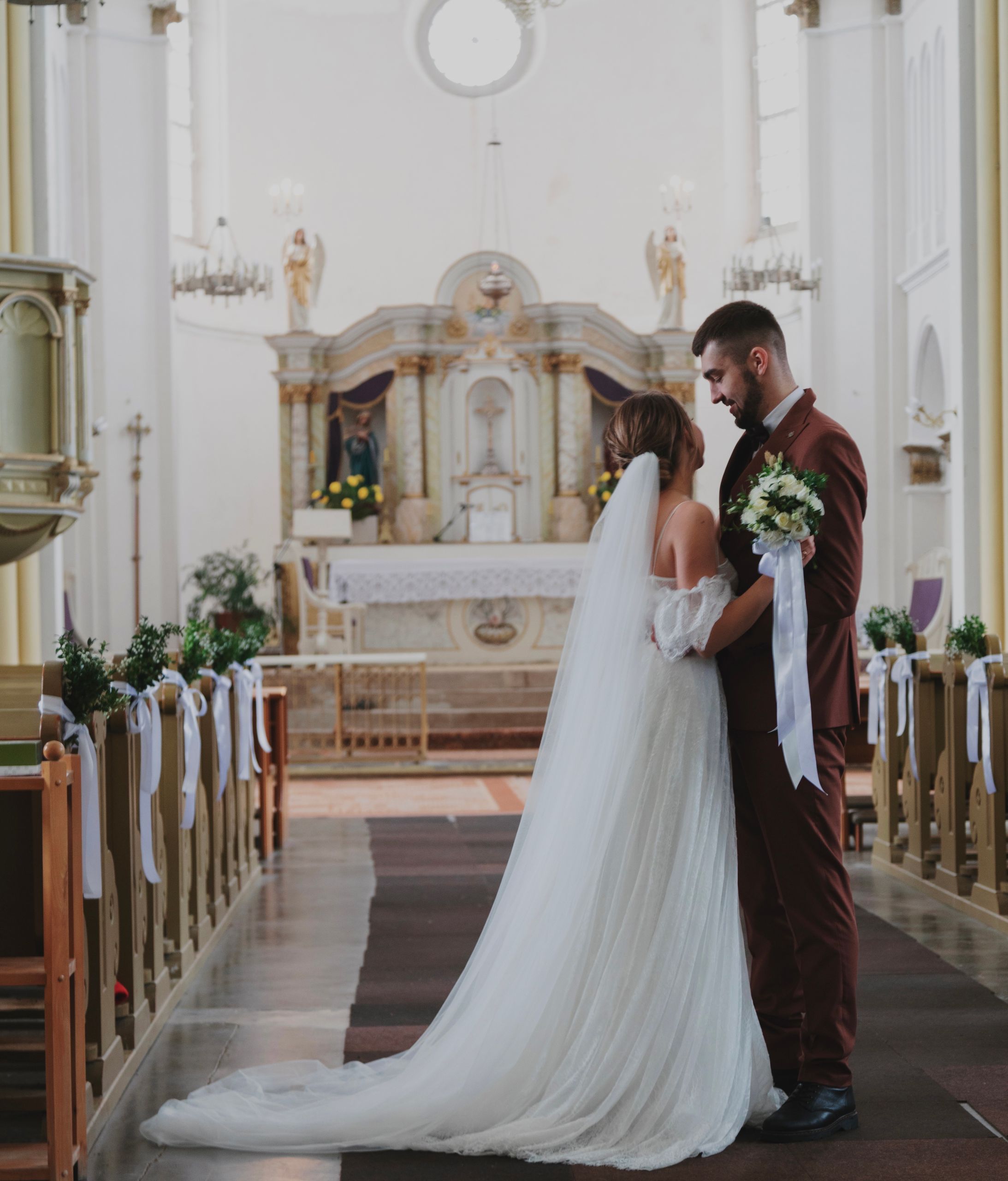
For decades, evangelical Christians have been assumed to divorce at dramatically lower rates than everyone else, a belief built on the idea that shared faith and church accountability insulate a marriage from failure. Long-running research from the Barna Group tells a much more complicated story. Born-again Christians really do cohabitate before marriage far less often than the general population — 25% compared with 33% overall. But once they marry, their divorce rate barely moves the needle: 33% of married born-again adults have gone through a divorce, compared with 34% of non-born-again adults, a gap so small it falls within the study’s own margin of error.

Where the assumption comes from
The belief that religious couples divorce less is not irrational on its face. Evangelical teaching places heavy emphasis on marriage as a lifelong covenant, premarital counseling is common in evangelical churches, and cohabitation before marriage — a well-documented risk factor for divorce in the general population — is actively discouraged. All of that should, in theory, produce a more divorce-resistant population. And on the cohabitation piece, the data backs the theory up completely: born-again Christians cohabitate at meaningfully lower rates than everyone else, a gap Barna’s researchers have documented consistently across multiple survey waves.
The theory falls apart at the marriage stage. Barna’s original research, drawn from seven independent national telephone surveys totaling more than 7,000 interviews, found that born-again Christians and the general population divorce at rates that are, statistically speaking, indistinguishable. A follow-up Barna study conducted between January 2007 and January 2008, surveying just over 5,000 U.S. adults, refined the picture further: self-identified evangelicals specifically had a somewhat lower divorce rate of 26%, but non-evangelical born-again Christians divorced at 33%, matching the national average almost exactly. Combine those two groups into the broader “born-again” category that most survey research uses, and the overall divorce rate lands at 32% — against 33% for everyone else.
The most uncomfortable finding in the data
George Barna, the researcher behind the original study, flagged a detail that undercuts the “faith prevents divorce” narrative even further: more than 90% of born-again adults who had been through a divorce experienced it after they had already accepted their faith, not before. In other words, this is not primarily a story about people carrying pre-conversion baggage into their marriages. The divorces are happening within already-committed, already-faithful marriages at rates nearly identical to the broader population.
That finding matters because it reframes the entire conversation. If evangelical divorce rates were being dragged up mainly by people who converted after a failed first marriage, the “faith reduces divorce” claim could survive with an asterisk. Instead, the data suggests that being an active, committed evangelical Christian does very little to change the odds of divorce once a couple is actually married, even though it does dramatically change the odds of cohabiting beforehand.
Why cohabitation and divorce rates moved in opposite directions
The disconnect between the cohabitation numbers and the divorce numbers is the real story here, and it complicates a popular assumption on both sides of the culture-war divide around marriage. Sociologists have long linked premarital cohabitation to somewhat higher divorce risk in the general population, which made it reasonable to expect that a population cohabiting less — evangelicals — would also divorce less. Barna’s numbers show that link breaking down inside religious communities specifically. Lower cohabitation did not translate into lower divorce. Whatever protective effect abstaining from cohabitation offers elsewhere, it is not showing up in evangelical divorce statistics.
What the numbers actually say about faith and marriage
None of this means faith is irrelevant to marriage, and Barna’s own researchers have been careful not to frame it that way. It means the specific claim — that evangelicals divorce far less often than everyone else — does not hold up against the group’s own long-running data. Marriages inside evangelical communities appear to face largely the same pressures, and end at largely the same rate, as marriages everywhere else. The lower cohabitation numbers are real and consistent. The divorce-rate advantage that popular assumption pairs with them simply is not.
A more honest way to talk about faith and divorce
The uncomfortable part of this data, for anyone invested in the idea that religious commitment functions as a kind of marital insurance, is that it holds up across multiple independent Barna surveys conducted years apart, using different sample sizes and slightly different definitions of “born again.” That consistency makes it harder to write off as a one-time statistical fluke. Whatever it is that leads born-again Christians to cohabitate less — whether that’s theology, community expectations, or something else entirely — that same factor is not translating into a lower divorce rate once a couple actually gets married.
What the data supports instead is a more modest and more honest claim: evangelical Christians approach the path into marriage differently than the general population, skipping the cohabitation step far more often, but once inside a marriage, they are navigating the same everyday pressures — financial stress, incompatibility, infidelity, simple drift — as everyone else, with roughly the same outcomes. That is a less flattering story than the one often told from the pulpit or in premarital counseling sessions, but it is the one the numbers actually support.