Hawaii welcomed 828,959 visitors in April 2026, down 0.5% from a year earlier, and those visitors still managed to spend $1.77 billion in the state, up 4.8% from April 2025, according to the Hawaii Department of Business, Economic Development and Tourism’s monthly visitor statistics. Fewer people showed up. They spent more anyway.
The driver is average daily spending, which climbed to $278 per person in April, up 14.1% year over year, per DBEDT’s own release. Visitors from the U.S. West, historically Hawaii’s largest and most price-sensitive market, actually fell 4.8% to 435,359 arrivals in April, yet that smaller group spent $903.4 million, up 5.7%, averaging $283 a day per person. U.S. East visitors moved the opposite direction on volume, up 16.3% to 209,756 arrivals, and their spending rose even faster, up 18.1% to $530.4 million, at $296 a day per person — the highest daily rate of any major market DBEDT tracks.
Zoom out to the full year-to-date picture and the pattern holds at scale: 3,378,689 visitors arrived in Hawaii from January through April 2026, up 2.7% from the same stretch in 2025, and they spent $7.89 billion, up 8.0%, according to the same DBEDT report. The Hawaii Tourism Authority’s monthly visitor statistics corroborate the shift toward a smaller, higher-spending visitor base.
April wasn’t a one-month blip. Hawaii closed out full-year 2025 with 9.64 million visitors, a 0.6% dip from 2024 and still well short of the 10.4 million arrivals the islands recorded at their 2019 pre-pandemic peak, according to reporting by the Hawaii Tribune-Herald. Yet those 9.64 million visitors spent $21.75 billion, a record in nominal dollars even with arrivals still nearly 760,000 below the 2019 high.
Part of the story is who’s showing up. The U.S. East market’s arrival growth and its market-leading daily spend suggest longer-haul travelers who’ve already committed to a bigger trip budget just to get there, while West Coast travelers appear to be pulling back on frequency even as the ones who do come spend somewhat more per day than they used to.
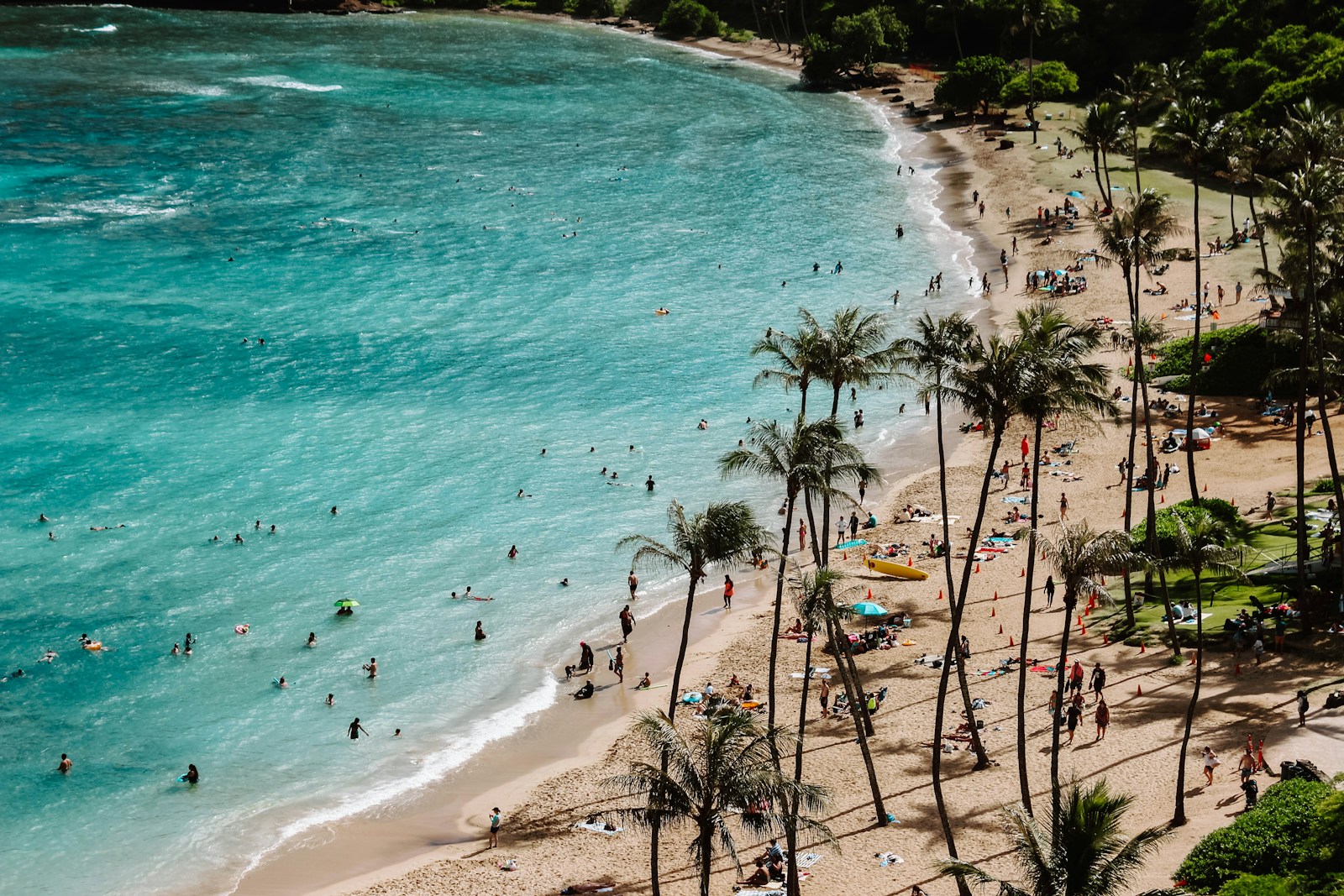
For anyone actually planning a trip, a state drawing fewer but bigger-spending visitors tends to mean less crowding at beaches, trailheads, and restaurants, alongside continued upward pressure on hotel rates and car rental prices. Hawaii’s tourism economy is quietly getting smaller and bigger at exactly the same time.
Cruise arrivals reinforce the same underlying pattern. Cruise passenger arrivals rose 20.4% in April even as air arrivals fell 1.1%, according to the same DBEDT release, and cruise passengers tend to represent a different, often higher-spending segment of visitor than the average fly-in traveler booking a standard hotel stay. That divergence between air and cruise arrivals suggests the shift toward a smaller, higher-spending visitor base isn’t limited to one type of trip.
Hawaii’s tourism economy spent decades chasing visitor counts as the headline metric worth optimizing, building infrastructure and marketing campaigns around maximizing arrivals. The first four months of 2026 suggest the state is quietly optimizing for something else now: a visitor base that spends enough per person to grow the overall tourism economy even while the number of people splitting it shrinks. Whether that’s a deliberate strategy from state tourism officials or simply what happens when rising travel costs price out casual, short-haul trips first, the result reads the same in DBEDT’s own numbers either way.
For anyone weighing a Hawaii trip against the crowded reputation the islands have carried in past years, the current data offers a genuinely different picture than the peak-crowding narratives that circulated a few years ago. Trail permits, beach parking, and restaurant reservations are all, on average, easier to secure than during the arrival peaks of 2018 and 2019 — the tradeoff being a per-day cost that’s climbed enough to offset a meaningful share of that lighter-crowd upside for budget-conscious travelers, even if the overall experience of visiting has genuinely gotten less crowded in the process than it was during the arrival peaks a few years back. Anyone who wrote Hawaii off as too crowded or too expensive after a pre-pandemic trip may find the current version of the islands is a genuinely different experience on the crowding side, even as the cost side has moved in the opposite direction.