Eighty-six percent of LGBTQIA+ daters say consistent communication is what actually lowers their anxiety in a new relationship — not a surprise trip, not a public declaration, according to Hinge’s 2026 D.A.T.E. Report, based on a January 2026 survey of more than 31,000 daters worldwide. The same research found LGBTQIA+ daters are 32% more likely than heterosexual daters to be navigating high levels of uncertainty right now, and 76% say that uncertainty actually sharpens what they need from a partner. The takeaway isn’t caution for its own sake. It’s a dating culture that has quietly rebuilt trust around proof instead of promises.
Slower isn’t the same as guarded
Fifty-two percent of LGBTQIA+ daters told Hinge they’re moving more slowly through the early stages of dating because of that uncertainty, compared with 44% of heterosexual daters, per the 2026 D.A.T.E. Report. Seventy-six percent said they’d rather build a connection gradually than follow any kind of set timeline, versus 64% of heterosexual respondents. LGBTQIA+ daters are also 31% more likely to say they need active reassurance along the way.
None of that reads as risk-aversion once you look at what the slowness is buying people. A slower pace gives daters more data points before they commit emotionally, more chances to watch whether someone’s actions match what they said in the first conversation. That’s a rational response to instability, not a retreat from intimacy.
“Show, Don’t Tell” dating
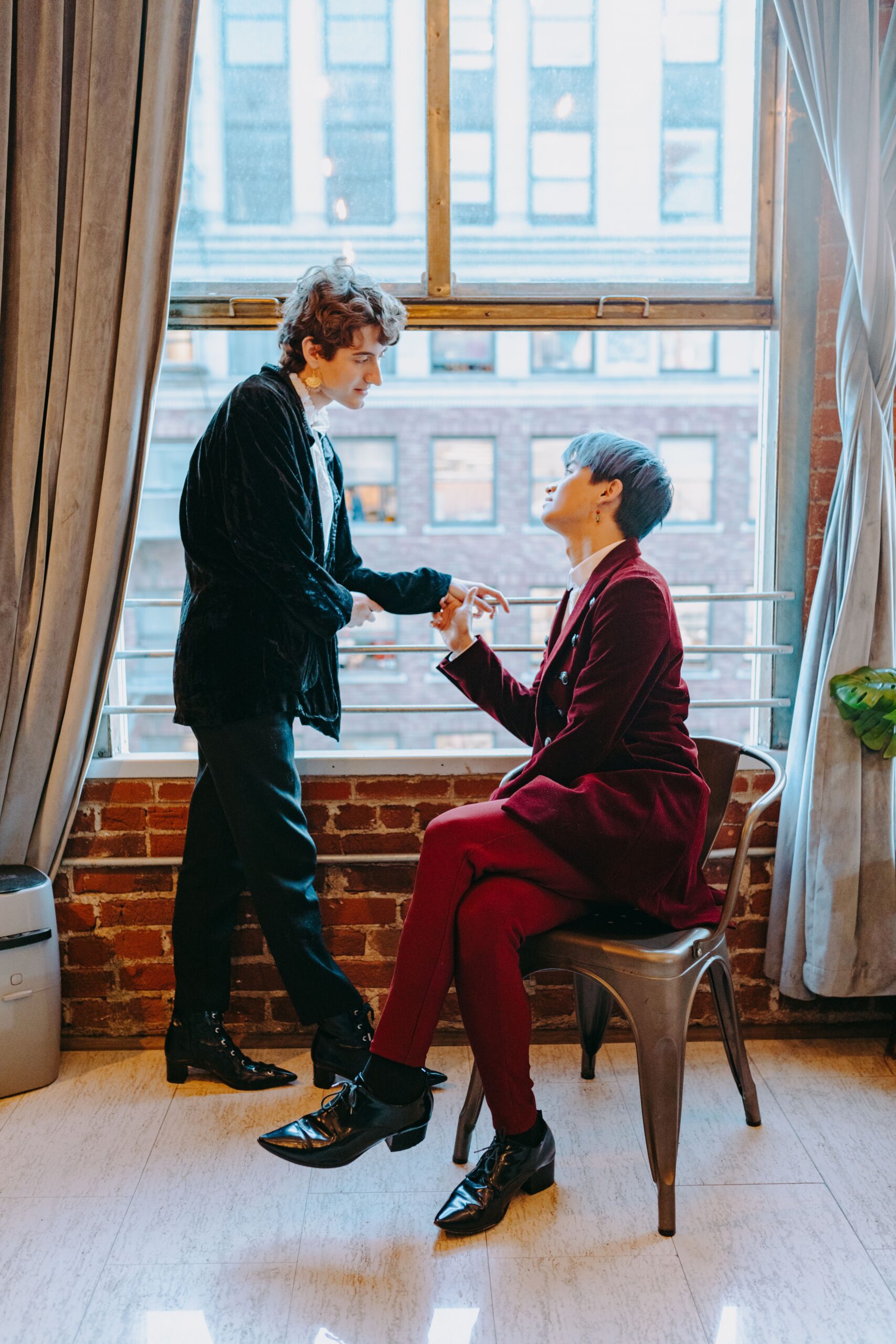
Hinge’s researchers have a name for the pattern: “Show, Don’t Tell” dating, where behavioral consistency outweighs grand romantic gestures, according to the D.A.T.E. Report. Check-ins that actually happen. Small details a date remembered without being reminded. Plans that get kept even when something more exciting comes up. Those unglamorous repetitions are doing more relationship-building work than any single dramatic moment could.
Love and connection expert Moe Ari Brown, LMFT, put it directly in the report: “Words can be aspirational, but behavior over time and relationship feelings provide evidence.” Brown adds that the body picks up on this before the mind does: “Your nervous system registers consistency or inconsistency before your mind catches up.”
That framing lines up with what The Gottman Institute’s long-running research on couples has documented for decades. In a six-year follow-up study of newlyweds, couples who were still married had turned toward each other’s small bids for attention and connection 86% of the time during everyday interactions — versus just 33% for couples who later divorced. Gottman’s research also found that couples who stayed together turned toward one another roughly 20 times more often than distressed couples during ordinary, non-conflict moments. As Gottman describes it, turning toward a partner’s small bid communicates something specific: “I’m interested in you. I hear you. I understand you (or would like to). I’m on your side.” That’s the same currency LGBTQIA+ daters are describing, just measured across decades instead of a single survey cycle.
Friends as the real vetting process
Introducing a date to friends functions differently in this data too. LGBTQIA+ daters are 33% more likely than heterosexual daters to introduce someone they’re seeing to their friends specifically for approval, 20% more likely to weigh how well a date fits into their existing friend group, and 18% more likely to make the introduction so their friends will understand them better as a person, per Hinge’s findings. Friends often operate as chosen family in these networks, which raises the stakes of that introduction well above a casual meet-the-crew dinner. Getting that nod matters more than a label on the relationship does.
What gets discussed first, and what waits
Before the future ever comes up, LGBTQIA+ daters said they prioritize understanding a partner’s values (84%), gauging their own comfort level (80%), and clarifying intentions (77%), according to the 2026 D.A.T.E. Report. Life goals ranked lower at 59%, and the traditionally “serious relationship” markers, family plans (28%) and finances (26%), trailed well behind. The ordering itself is the finding: values and safety come first because they’re what makes every conversation after that trustworthy.

What emerges across all of this isn’t a generation of daters who’ve gotten more careful because they’ve gotten more cynical. It’s a generation that has learned, often the hard way, that a grand gesture can be performed by almost anyone for almost any reason, but showing up the same way on a random Tuesday, week after week, is much harder to fake. That’s what’s actually being tested now, and it’s why the small, repeatable stuff has become the whole relationship.