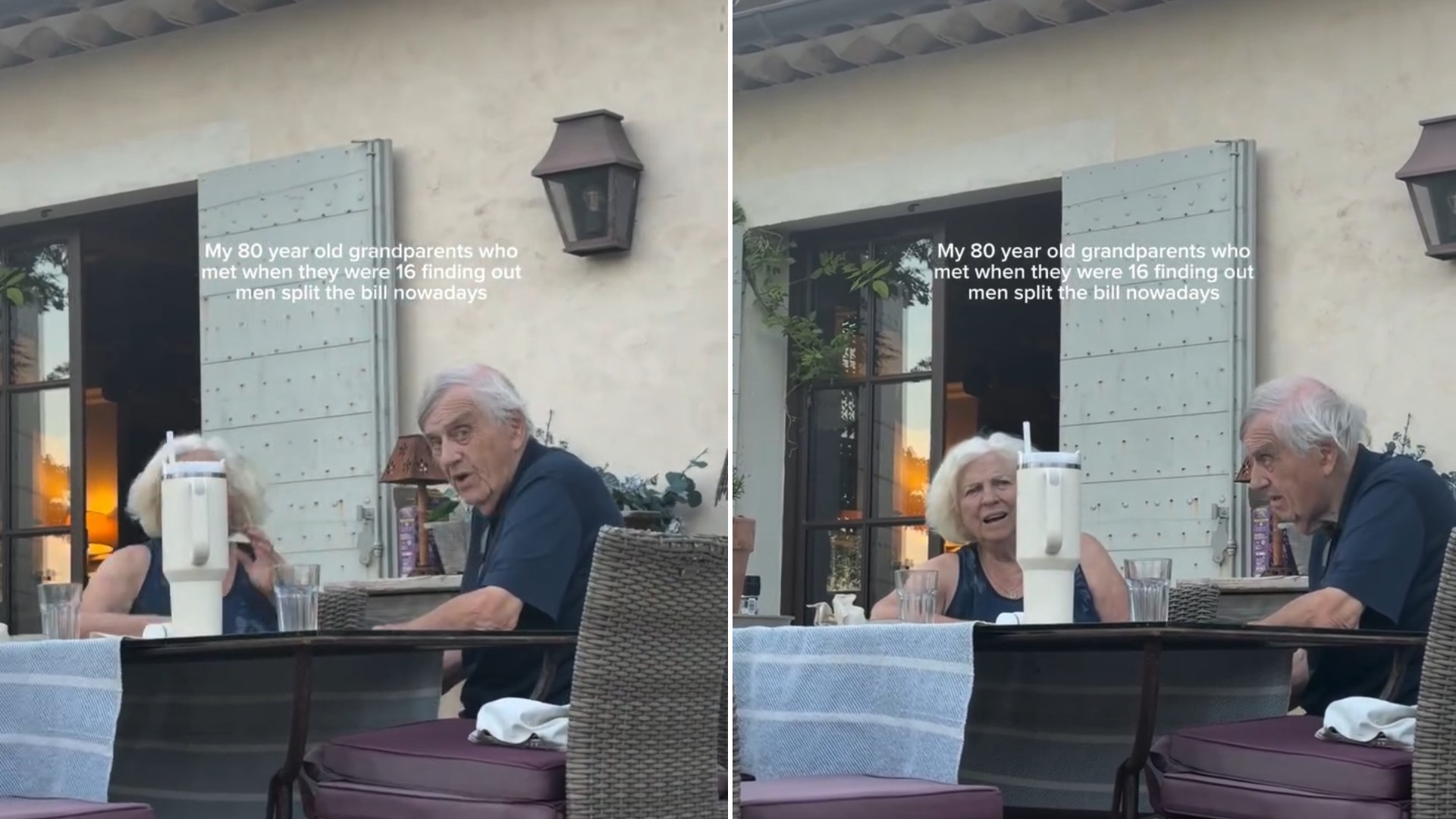
Ask a grandparent how dating worked in their day, and you’ll likely hear that the routine was simple: the man called, and he paid the bill without much discussion afterward. Ask a twenty-something the same question today, and you’re more likely to hear about splitting a check down to the itemized total on an app. That gap between generations is exactly what a small but growing genre of social content has started mining, and a reel from creator foster.mann, who has built an audience of 15K followers, captures it well. The creator’s own caption sums up the premise directly: “Grandparents react to modern dating bill-splitting norm.”
The Setup Behind the Genre
The format is simple enough to explain in a sentence: sit an older relative down, describe how dating actually works now, and film the reaction. Grandparents-react content has spread across platforms because the format asks for almost nothing beyond a willing relative and a phone camera, no script or crew required. The bill-splitting version works particularly well because paying for a date is one of the few dating customs that almost every older adult has a strong, immediate opinion about.

That immediacy is part of the appeal. Unlike questions about texting etiquette or dating apps, where older generations sometimes have no frame of reference at all, who pays for dinner is a topic every grandparent lived through personally. They dated before contactless payments existed, before splitting a check by scanning a code was even an option. Their reactions tend to be unfiltered because the subject isn’t abstract to them. It’s a memory.
What Actually Changed
For much of the twentieth century, the expectation in heterosexual dating was uncomplicated: the man paid, full stop, and the practice was rarely questioned out loud. That norm has loosened considerably over the past two decades, as dual-income relationships, dating apps, and shifting ideas about financial independence have made splitting the bill a routine part of a first date for many younger couples. None of that history needs footnotes for a grandparent to react to. They watched the shift happen in real time, even if they didn’t always participate in it themselves.
What makes the reaction genre compelling isn’t shock value. It’s the small, specific details that surface once an older relative starts talking through the logistics of a modern date. Some describe how paying was tied up with broader courtship rituals that don’t really exist anymore. Others land somewhere more practical, pointing out that splitting a bill wasn’t really an option when they were young, since cash was the only form of payment and calculating an even split at the table wasn’t nearly as simple as tapping a phone.
Part of a Wider Genre
Bill-splitting is just one entry point into a much larger category of generational-reaction content. Similar videos have grandparents weighing in on dating app profiles, ghosting, and the general pace of modern courtship, and the bill-splitting angle tends to stand out because it’s the rare topic where an older relative’s opinion feels earned rather than performative. They aren’t reacting to a concept explained to them secondhand. They’re comparing it to something they actually did, dozens of times, decades ago.
That authenticity is likely why this narrower slice of the genre keeps resurfacing across different creators and different platforms. A grandparent explaining dating-app swiping can come across as bewildered commentary on something they’ll never fully understand. A grandparent explaining who used to pay for dinner comes across as someone describing their own dating life, just with a modern norm laid next to it for comparison.
Why the Format Keeps Working
Videos like this one succeed because they turn a debate that plays out constantly online — over who should pay on a modern date — into something with an actual generational anchor point. Instead of two strangers arguing over dating norms in the abstract, viewers get a grandparent’s lived memory set directly against the current default. That contrast does more work than any explainer post could, since it isn’t theoretical. It’s someone who dated in one era being told plainly how a completely ordinary interaction now looks.
The bill-splitting question isn’t likely to get fully resolved by any single reel, and couples will keep making their own calls about how to handle a check depending on what feels right for their relationship. But the appeal of watching a grandparent react to the modern version of that decision is that it puts today’s dating norms in a frame most people rarely see them in — as one stop along a much longer, ongoing shift in how couples handle something as small, and as loaded, as who reaches for the check.