When a woman posted on a relationship forum in early 2025 describing how her boyfriend punched the steering wheel and screamed “shut up” at her during a drive, the responses were immediate and overwhelming. Thousands of commenters told her the same thing: that was not just an argument. That was a warning. Her account, shared in a popular AmIOverreacting thread, struck a nerve because so many people recognized the scenario from their own lives.
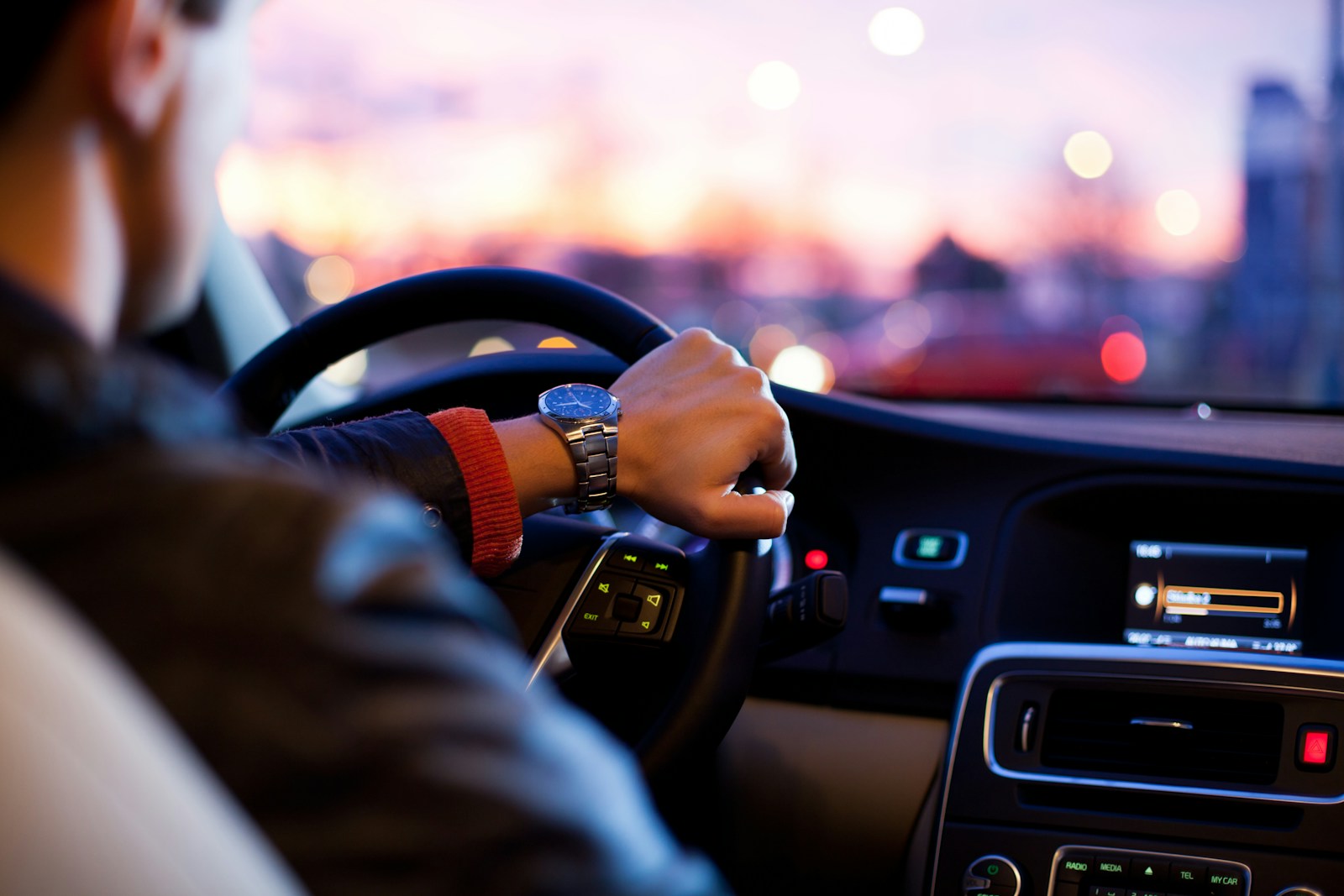
The story raises a question that relationship counselors and domestic violence advocates hear constantly: when a partner lashes out physically at an object, especially while operating a vehicle, is that a red flag for future violence, or just a bad moment?
Why a car makes everything more dangerous
A slammed cabinet door at home is alarming. A slammed steering wheel at 55 miles per hour is something else entirely. The passenger cannot leave. They cannot create distance. And the person expressing rage is simultaneously responsible for keeping everyone alive.
The Virginia Department of Motor Vehicles warns in its Nine Actions driver safety guidance that sudden overcorrections, such as jerking the steering wheel or slamming the brakes, can send a vehicle into oncoming traffic or off the road. That guidance is written about inexperienced drivers, but the physics apply to anyone whose hands leave controlled position on the wheel, whether from panic or from punching it.
The National Highway Traffic Safety Administration has identified aggressive driving as a factor in a significant share of fatal crashes. According to the NHTSA’s aggressive driving overview, behaviors like speeding, erratic lane changes, and loss of vehicle control contribute to thousands of deaths each year. A driver who is emotionally flooded enough to strike the steering wheel is, by definition, not fully focused on the road.
What domestic violence experts say about hitting objects
Punching a wall, throwing a phone, slamming a steering wheel: these acts often get minimized as “not real violence” because they are directed at objects, not people. But domestic violence researchers see them differently.
The National Domestic Violence Hotline identifies destruction of property and intimidation as forms of abuse, not precursors to it. Hitting an object in the presence of a partner functions as an implicit threat: “Look what I could do to you.” The hotline’s framework makes clear that a person does not need to be struck for the behavior to qualify as abusive.
Research supports this classification. A 2017 study published in the Journal of Interpersonal Violence found that partners who destroyed property or punched objects during conflicts were significantly more likely to escalate to physical violence over time. The pattern is well-documented enough that many domestic violence risk assessments specifically ask about object-directed aggression.
This is the context missing from most online debates about steering wheel incidents. The question is not whether one slap of the dashboard “counts.” It is whether the behavior fits a broader pattern of using physical force to control a partner’s emotions and silence their voice.
The “selective control” problem
One of the sharpest observations in online discussions of these incidents comes from people who notice that the angry partner rarely behaves this way in front of a boss, a police officer, or anyone with authority over them. In a widely referenced r/relationships thread, a woman described a husband who drove recklessly to frighten her during arguments but drove calmly in every other context. Commenters pointed out the obvious: he could control himself. He simply chose not to with her.
Lundy Bancroft, author of Why Does He Do That? Inside the Minds of Angry and Controlling Men, has written extensively about this dynamic. Bancroft argues that abusive anger is not about losing control but about exercising it. The partner who punches the steering wheel and then tells his girlfriend she is “overreacting” is making two moves at once: demonstrating physical force and then invalidating her fear of it.
That combination, the outburst followed by dismissal, is what many people in these situations find most disorienting. It leaves the passenger questioning their own perception. Was it really that bad? Am I being dramatic? The woman in the original Reddit post described exactly this: her boyfriend acted as though nothing significant had happened, which made her doubt her own alarm.
Is one outburst enough to leave?
Not everyone treats a single incident as a dealbreaker, and relationship counselors generally agree that context matters. In a separate Reddit discussion, commenters debated whether a boyfriend slamming an object during a tense moment warranted ending the relationship. Some argued that anger is a normal human emotion and that a single outburst, especially one not directed at a partner, does not define a person.
That perspective has limits, though. What distinguishes a forgivable lapse from a red flag is almost always what happens next. A partner who pulls over, acknowledges the behavior without excuses, and takes concrete steps to address it (therapy, anger management, a genuine commitment to never repeating it) sends a fundamentally different signal than one who deflects blame or insists the other person provoked them.
The loveisrespect.org screening tool, developed by the National Domestic Violence Hotline for young adults, asks whether a partner has ever frightened you with their driving or destroyed property during a disagreement. Both behaviors appear on the checklist not because they guarantee future physical violence, but because they are statistically correlated with escalation and because they create a climate of fear that is itself harmful.
What to do if you have felt unsafe in a car with a partner
For anyone who has experienced a moment like the one described in that Reddit post, a few things are worth knowing.
First, your fear is valid. Feeling unsafe with someone who controls a two-ton vehicle while raging is not an overreaction. It is a rational response to a genuine hazard.
Second, one incident does not obligate you to leave, but it does obligate you to pay attention. Track whether the behavior repeats, whether your partner takes responsibility, and whether you find yourself modifying your own behavior (staying quiet, avoiding certain topics, managing their mood) to prevent another outburst. That pattern of self-editing is one of the earliest signs that a relationship has shifted from conflict to control.
Third, resources exist. The National Domestic Violence Hotline (1-800-799-7233) offers confidential support 24/7, including for people who are not sure whether their situation qualifies as abuse. You do not need to have been hit to call.
The woman whose boyfriend punched the steering wheel and told her to shut up was not asking the internet for permission to feel afraid. She was asking whether her fear made sense. Thousands of people told her it did. If you have had a similar moment, their answer applies to you, too.
“`
More from Cultivated Comfort:
- 7 Retro Home Features That Builders Should Bring Back
- 7 Antique Finds That Are Surprisingly Valuable Today
- 7 Forgotten Vacation Spots Your Parents Probably Loved
- 6 Boomer China Patterns That Are Selling Like Crazy Online

As a mom of three busy boys, I know how chaotic life can get — but I’ve learned that it’s possible to create a beautiful, cozy home even with kids running around. That’s why I started Cultivated Comfort — to share practical tips, simple systems, and a little encouragement for parents like me who want to make their home feel warm, inviting, and effortlessly stylish. Whether it’s managing toy chaos, streamlining everyday routines, or finding little moments of calm, I’m here to help you simplify your space and create a sense of comfort.
But home is just part of the story. I’m also passionate about seeing the world and creating beautiful meals to share with the people I love. Through Cultivated Comfort, I share my journey of balancing motherhood with building a home that feels rich and peaceful — and finding joy in exploring new places and flavors along the way.