There is a reason slow cooked dinners feel so special. Hours of patience go into the pot, and then comes the moment the lid finally comes off. One home cook captured that feeling with a Dutch oven sealed shut and a question that every food lover understands.
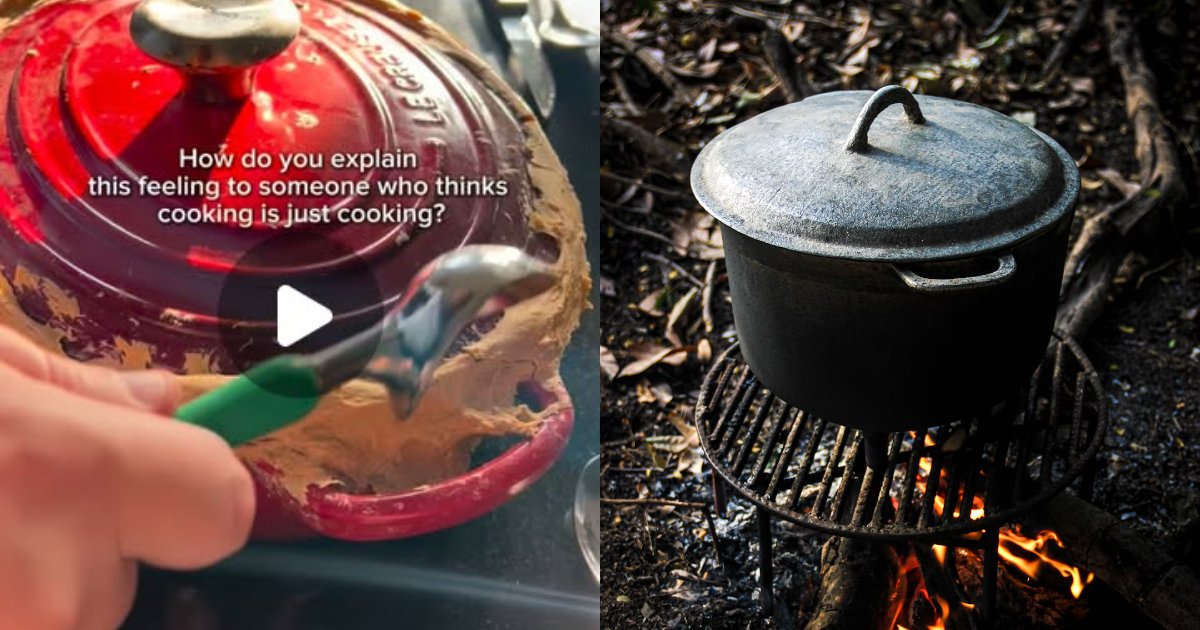
The dinner was shared by @cookingwithgolda on Instagram, with the caption asking how you explain this feeling to someone who thinks cooking is just cooking.
Breaking the Seal
The story starts with a red enameled Dutch oven whose lid has been sealed around the rim with a baked flour paste. The cook uses the back of a small metal scoop to scrape and chip away the hardened crust, and the sound of the scraping is the only thing you hear apart from a slow, soulful song. It is an old kitchen trick that locks steam inside the pot and keeps everything tender.
The Reveal
With a gloved hand, the cook lifts the lid, and steam pours out. Inside is a rich braise of bone in meat sitting in a deep broth with aromatics. A few bits of the crust fell inside, and the cook says casually that they can be removed. Then comes a quiet, satisfied hum as the meat is tested with a spoon and fork. It pulls right off the bone and flakes apart in the warm liquid.
Plating the Comfort
The final plate is a full one. White rice and green beans sit beside braised onions and the tender meat. A crispy, golden brown potato patty goes on top of the rice, and a big spoon ladles the glossy braising juices over everything. The recipe itself is not spelled out, so the story is really about the feeling of a slow cooked meal coming together.
Slow Cooking Takeaways
- Seal the lid if you like. A simple flour and water paste around the rim traps steam, though a heavy fitting lid does a similar job.
- Let time do the work. Bone in cuts become tender and flavorful when they braise gently in broth.
- Serve with something for the juices. Rice, potatoes or bread make sure no flavor is left behind.
- Add a crisp element, like the potato patty here, to balance the soft braise.
- Take your time at the table. A meal like this is meant to be enjoyed slowly.
How Braising Turns Tough Cuts Tender
Braising is one of the oldest and most forgiving ways to cook. Tougher, bone in cuts are rich in connective tissue, which is firm when raw. Held for a long time in gentle, moist heat, that tissue slowly softens into gelatin, which is why a braise ends up silky and why the meat can pull away from the bone with a fork. The bones and the cooking liquid also add body, so the sauce at the bottom of the pot is as valuable as the meat itself.
The Basic Method, Step by Step
- Pat the meat dry and season it well. Dry surfaces brown better than wet ones.
- Sear it in a hot, heavy pot until deeply colored on all sides, then set it aside. This step builds flavor.
- Soften onions and other aromatics in the same pot, scraping up the browned bits from the bottom as they cook.
- Return the meat and add liquid, such as broth, until it reaches about halfway up the sides. The top should stay exposed so it roasts rather than boils.
- Cover tightly and cook at a low, steady temperature, either on the stove at a bare simmer or in a moderate oven, until a fork slides in with almost no resistance.
- Rest the meat, skim excess fat from the liquid and spoon the juices over the top to serve.
Safety and Care Notes
Braised dishes cook long past the minimum safe temperatures for meat, but good habits still matter. Keep raw meat away from ready to eat foods, wash cutting boards and hands after handling it, and refrigerate leftovers within two hours of serving. Reheat them until steaming hot all the way through. An enameled Dutch oven is also a long term investment, so let it cool before washing, use wooden or silicone utensils to protect the surface and avoid sudden temperature shocks.
Common Questions
Do I need a flour seal? No. It is a traditional extra, and a heavy lid that fits well does the same job in most kitchens.
Can I make a braise ahead? Yes. Many cooks say braises taste even better the next day, and chilling makes it easy to lift off the solid fat from the top.
What should I serve it with? Anything that welcomes sauce works well, including rice, mashed potatoes, crusty bread and simple green vegetables.
Credit for the original post goes to @cookingwithgolda on Instagram.