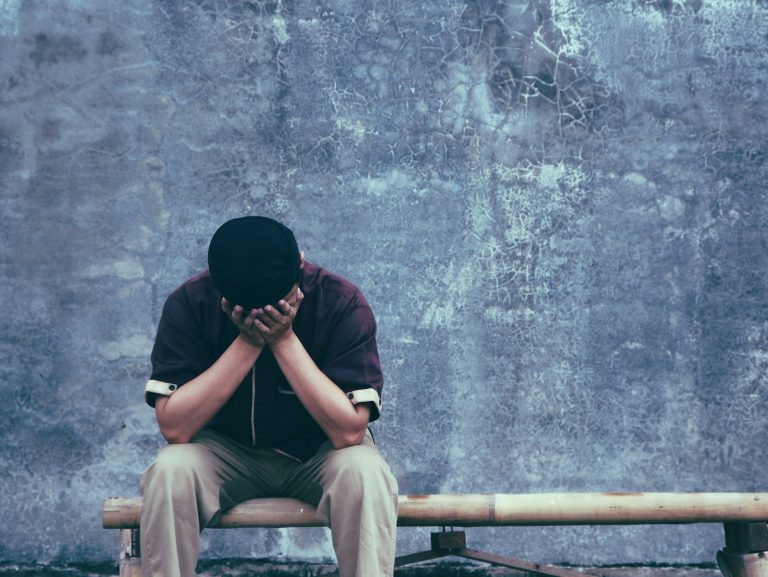
In March 2026, a post on Reddit’s r/TrueOffMyChest struck a nerve with thousands of readers: a young woman described how, after 15 years of close friendship, she was quietly left out of the “getting ready” ritual before her best friend’s 21st birthday. She only learned afterward that the same inner circle had been mocking her in a group chat.

The post collected thousands of upvotes and hundreds of comments, many from people who recognized the scenario from their own lives. It also resurfaced a question that psychologists say is far more common than most people realize: why do long-standing friendships collapse around major milestones, and why does the person left behind so often feel blindsided?
Why the pregame hurts more than the party
Being excluded from a celebration stings. Being excluded from the preparation beforehand can feel worse. The pregame, where outfits are chosen, photos are taken, and inside jokes are minted, is where intimacy is performed and recorded. When someone who believed they held best-friend status is absent from that room, the photos that surface later become evidence of a demotion they never agreed to.
That pain is not just emotional shorthand. Researchers at UCLA’s Social Cognitive Neuroscience Lab have found that social exclusion activates the same neural pathways as physical pain, specifically the dorsal anterior cingulate cortex and the anterior insula. Being left out of a group ritual is not a metaphor for injury; the brain processes it as actual hurt. This helps explain why so many people in similar situations describe the experience in visceral, physical terms: a gut punch, a weight on the chest, a feeling of being winded.
A parallel story surfaced in a Reddit social skills thread where a user described being uninvited from a longtime friend’s wedding while newer acquaintances kept their spots. Commenters there offered a blunt consensus: the exclusion was not a logistical oversight. It was a signal that the relationship had already been downgraded, whether or not anyone had said so out loud.
The second blow: discovering the group chat
For many people who shared similar stories in the Reddit thread, the exclusion was only half the wound. The other half came when they discovered that the friend group had not simply moved on without them but had actively ridiculed them in private messages.
This pattern is well-documented in research on relational aggression, a term psychologists use for behavior that damages someone’s social standing or relationships rather than causing direct confrontation. A 2014 study published in the journal Aggressive Behavior found that relational aggression among young women often intensifies during periods of social transition, precisely the kind of transition a 21st birthday represents. The study noted that gossip and exclusion frequently serve as tools for reinforcing in-group boundaries, not just as casual cruelty.
One commenter in a thread on r/women described years of working in female-dominated environments where she repeatedly thought she had found a genuine friend, only to learn that the person had been disparaging her to others. Another user in a separate post wrote about becoming “very sensitive” to subtle shifts in group behavior after being burned by someone they considered their one safe person. The betrayal, both writers noted, was not the gossip itself but the realization that trust had been performed rather than felt.
The 21st birthday as a social sorting event
Long-term friendships often coast through adolescence on shared history and routine. But developmental psychologists have long observed that the early 20s are a period of unusually rapid identity change. Robin Dunbar, the Oxford evolutionary psychologist known for research on social network size, has found that people replace roughly half of their close social circle every seven years, with turnover accelerating during life transitions such as starting university, entering the workforce, or reaching legal adulthood.
Turning 21 is one of those transitions. In countries where 21 marks legal drinking age or expanded social access, the birthday often coincides with a shift in how someone sees themselves and who they want around them. A FriendshipAdvice thread put it plainly: “The reality is that you’re just not a priority.” The commenter described how people unconsciously rank their relationships, responding quickly to those they fear losing and letting others wait indefinitely. When a milestone event forces those rankings into the open, the person who has been quietly deprioritized often experiences it as a sudden rejection, even though the drift may have been underway for months.
That does not make the pain illegitimate. It means the 21st birthday did not cause the fracture. It revealed one that was already there.
Why milestone events expose hidden hierarchies
Birthdays, weddings, and graduations force people to do something they normally avoid: rank their relationships publicly. Who is on the guest list? Who is in the getting-ready room? Who appears in the photos that will define the memory? For the person planning the event, these choices may feel like logistics. For those left out, they read as verdicts.
The Reddit user who lost a wedding invitation after 15 years of friendship, and the young woman shut out of her best friend’s 21st pregame, experienced the same mechanism. The event did not create the hierarchy. It made the hierarchy visible. Observers in both threads noted that the exclusions were usually preceded by smaller signals: unanswered texts, postponed plans, a growing sense that conversations had become shallow. By the time the milestone arrived, the host was simply formalizing a decision that had already been made in private.
This is consistent with what sociologists call “friendship decay,” the gradual weakening of a bond when active maintenance stops. Without regular, reciprocal investment, even a 15-year friendship can quietly downgrade to acquaintanceship. The milestone event just makes the downgrade impossible to ignore.
What comes next: boundaries over blame
Once someone realizes they have been excluded and disparaged, the instinct is often to search for what they did wrong. Therapists who specialize in relational trauma say that impulse, while understandable, usually leads nowhere productive. The more useful question is not “Why did they do this?” but “What do I want my friendships to look like going forward?”
Several commenters in the original thread described a shift from self-blame to boundary-setting. One wrote about becoming far more selective with emotional investment after realizing they had been pouring energy into a relationship that was not being reciprocated. Another described finally accepting that loyalty is not a contract: offering it does not obligate the other person to return it.
Clinical psychologists who study adult friendship, including Miriam Kirmayer, a Montreal-based therapist and friendship researcher, have noted that the early 20s are often when people first learn to distinguish between friendships built on proximity and habit and those built on genuine mutual care. That distinction can be painful to discover, but it is also, Kirmayer has argued, one of the most important social skills a person can develop.
The young woman left out of her best friend’s 21st did not lose a friendship that night. She learned where it had actually stood for a while. What she does with that clarity is the part of the story that matters most.
More from Cultivated Comfort:
- 7 Retro Home Features That Builders Should Bring Back
- 7 Antique Finds That Are Surprisingly Valuable Today
- 7 Forgotten Vacation Spots Your Parents Probably Loved
- 6 Boomer China Patterns That Are Selling Like Crazy Online

As a mom of three busy boys, I know how chaotic life can get — but I’ve learned that it’s possible to create a beautiful, cozy home even with kids running around. That’s why I started Cultivated Comfort — to share practical tips, simple systems, and a little encouragement for parents like me who want to make their home feel warm, inviting, and effortlessly stylish. Whether it’s managing toy chaos, streamlining everyday routines, or finding little moments of calm, I’m here to help you simplify your space and create a sense of comfort.
But home is just part of the story. I’m also passionate about seeing the world and creating beautiful meals to share with the people I love. Through Cultivated Comfort, I share my journey of balancing motherhood with building a home that feels rich and peaceful — and finding joy in exploring new places and flavors along the way.