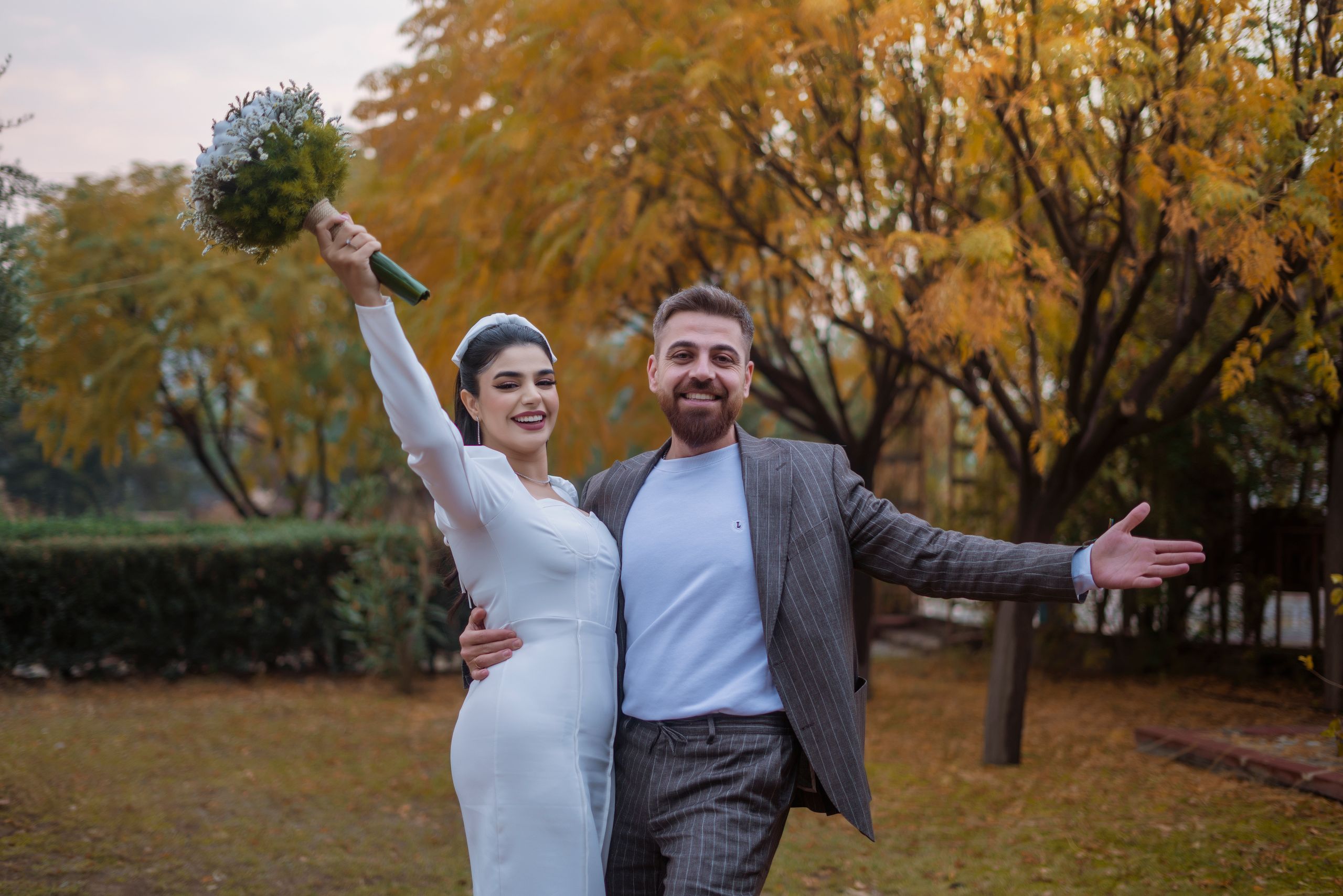
Millennials spent the better part of a decade as the wedding industry’s headline generation, the couples who normalized Pinterest boards, destination weddings and five-figure budgets, and whom vendors spent years learning to court. That handoff is now complete. The Knot Worldwide’s 2026 Real Weddings Study found Gen Z now makes up 41% of the U.S. wedding market, officially overtaking millennials as the largest generational share of brides and grooms, and the way this generation plans a wedding looks nothing like the decade that came before it.
The numbers behind the handoff
The Knot Worldwide surveyed 10,474 U.S. couples who married in 2025 for the study, recruited through The Knot’s and WeddingWire’s own membership base, one piece of a research program the company says draws on more than 100,000 couples’ input annually, according to the official release. Roughly 2 million U.S. couples married in 2025, spending a combined $100 billion on their weddings, with the average couple paying about $34,000 for a wedding with 117 guests, hiring 13 vendors along the way, and landing on a cost-per-guest figure of $292, up $8 from the year before. “The wedding industry continues to be remarkably resilient,” Esther Lee, editorial director at The Knot Worldwide, said in the announcement. “No matter the economic climate, couples continue to prioritize celebration and are investing accordingly. What is new is that today’s couples are leading with intention, blending creativity and innovation to design celebrations that reflect their values and are uniquely theirs.”
Self-written vows, sustainability, and AI at the planning table
Gen Z’s imprint shows up most clearly in how personal these ceremonies have become. Sixty-one percent of couples in the study wrote their own vows rather than reciting traditional or officiant-supplied language, and 32% intentionally built religious, ethnic or cultural elements into their weddings. Sustainability made a real dent, too: 28% incorporated eco-conscious choices into their planning, and 22% sourced products locally rather than defaulting to whatever a vendor had on hand. Then there’s the technology shift. Thirty-six percent of couples used AI tools somewhere in their planning process, nearly double the adoption rate from a year earlier, mostly for early-stage inspiration, quick questions and drafting vendor communications before double-checking the details on trusted platforms, per the study.
Even the rings look different
The generational shift extends to the engagement itself. Lab-grown diamonds now account for 61% of center stones in engagement rings, a 239% increase since 2020, with couples paying an average of $4,600 for stones averaging 1.9 carats, a fraction of what a comparably sized mined diamond typically runs. Nearly 90% of proposals still happen with a ring already in hand, so the format of the moment hasn’t changed even as the stone inside it has.
Vendors are adjusting too
None of this is happening in a vacuum on the couples’ side alone. With the average couple hiring 13 vendors and spending nearly six figures fewer than headlines sometimes suggest but still a serious $34,000, wedding professionals are the ones absorbing the shift in real time, fielding requests for AI-drafted mood boards one week and locally sourced florals the next. The study’s own framing treats this less as a fad than as a baseline expectation moving forward: a generation that grew up customizing everything from playlists to social feeds is applying the same instinct to the biggest party it will likely ever throw, and vendors who can’t flex between a fully scripted traditional wedding and a couple who wrote their own vows in a backyard are the ones most likely to get left out of the $100 billion market entirely.
What the shift actually means
Put the numbers together and a pattern shows up that’s less about age and more about approach. Gen Z couples are treating their weddings as something to build from scratch rather than a script to follow, picking the traditions that mean something to them and skipping the ones that don’t, and 75% of couples in the study said the expense was ultimately worth it. Millennials didn’t just hand the wedding market off to the next generation; they handed off a set of habits, and Gen Z kept the parts that made financial and personal sense while rewriting almost everything else along the way.