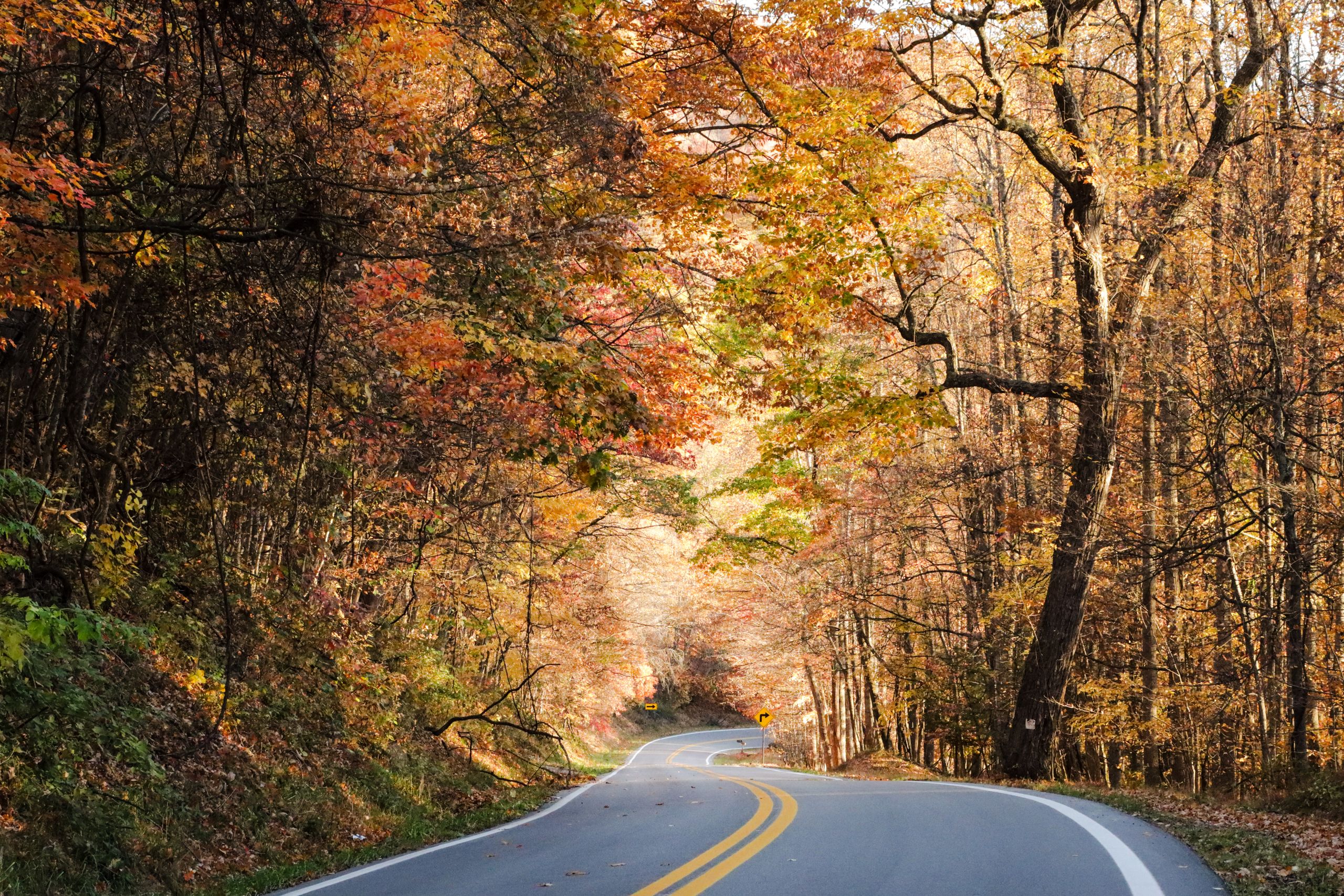
The Blue Ridge Parkway pulled in 16.5 million visits in 2025, more than any other unit in the entire National Park System, according to the National Park Service’s own 2025 visitation report. It is a genuinely beautiful drive, and every fall it gets more attention than the rest of the country’s scenic byways combined. But the Blue Ridge isn’t the only mountain road that turns spectacular in October, and the ones that don’t make anyone’s default list often deliver the same payoff with a fraction of the traffic.
Talimena National Scenic Byway — Oklahoma and Arkansas
This 54-mile route runs from Talihina, Oklahoma to Mena, Arkansas through the Ouachita Mountains and Ouachita National Forest, and it is almost never mentioned in national fall-foliage roundups despite crossing Rich Mountain and Winding Stair Mountain with more than 15 scenic overlooks along the way, according to Oklahoma’s official tourism site, TravelOK.com. Peak color typically lands the last week of October through the first week of November, later than most East Coast routes, which makes it a genuine option for travelers who missed New England’s window.

M-119 “Tunnel of Trees” — Northern Michigan
Roughly 20 miles of state highway hugging Lake Michigan’s shoreline between Harbor Springs and Cross Village, M-119 is narrow, unlined and shaded by an overhead canopy that gives the road its name, per Emmet County’s official M-119 Tunnel of Trees site. It’s the only state road in Michigan without a center line, a quirk that keeps speeds low and makes it one of the few scenic drives where you’re as likely to pull over for a Lake Michigan overlook as for the foliage itself. Fall is the route’s busiest season, and locals recommend weekday drives to avoid the crowds it does attract.
Cherohala Skyway — Tennessee and North Carolina
This 42.95-mile federally designated National Scenic Byway climbs from about 800 feet to 5,300 feet in elevation between Tellico Plains, Tennessee and Robbinsville, North Carolina, according to the Federal Highway Administration’s America’s Byways program. That elevation swing means the drive passes through several color zones in a single trip — valley hardwoods, then high-altitude stands that turn earlier — with Tennessee’s official tourism office pointing to mid-October as the peak window. It sits less than two hours from the Great Smoky Mountains, the country’s most-visited national park, yet draws a fraction of the traffic on the same weekends.

U.S. Route 6 — Northern Pennsylvania
Nicknamed the “Grand Army of the Republic Highway,” this stretch of Route 6 runs across the top of Pennsylvania through the Pennsylvania Wilds, one of the largest undeveloped forest regions in the Northeast. It parallels but rarely overlaps with the interstates most leaf-peepers default to, threading through small river towns and state forest land instead of the more heavily marketed Poconos or Finger Lakes routes just to its north and west. The corridor crosses several state forests in its Pennsylvania Wilds section, where sugar maples and black cherry stands turn early, typically peaking in the first half of October — a couple of weeks ahead of the more famous routes to the south.
Timing the trip right matters as much as the route
Because these four byways sit at different elevations and latitudes, their color windows don’t line up on the same calendar. Talimena runs latest, into early November; the Cherohala Skyway’s high sections can peak two to three weeks before its own valley floor because of the elevation swing; Michigan’s Tunnel of Trees and Pennsylvania’s Route 6 both tend to crest in the first half of October. Checking a specific route’s own regional forecast — rather than a single national “peak week” — is the difference between arriving at the color and arriving a week after it’s already dropped.
What all four routes share is distance from the interstate exits that funnel most fall traffic toward the same half-dozen destinations. None require a four-wheel-drive vehicle or a wilderness permit — they’re paved, signed, and built for exactly this kind of trip. The trade-off for skipping the famous names is a windshield view without a line of brake lights in front of it, and a foliage season that, on these roads, still has plenty of room left in it.