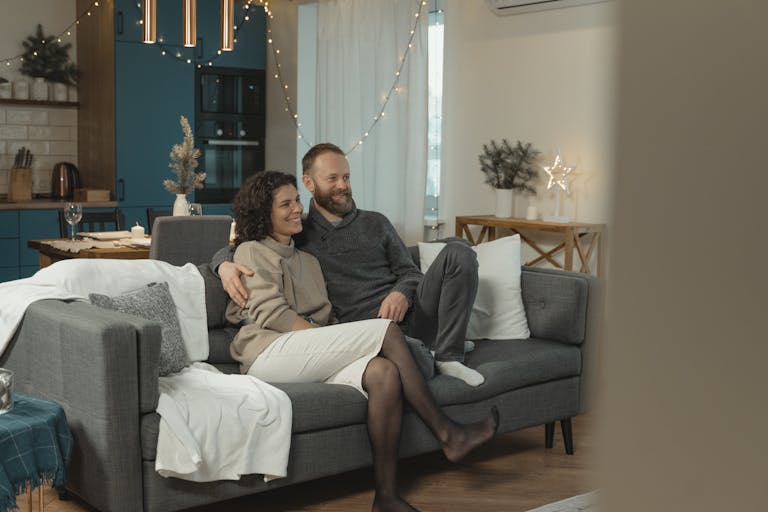
Across 1,304 pairs of friends and romantic partners in Germany and New Zealand, a new dyadic study published in Personality and Social Psychology Bulletin found the same pattern again and again: when researchers compared how much influence people thought they held over someone close to them against how much influence that partner or friend actually reported feeling from them, people came up short almost every time. Not by a little, and not in one country or relationship type. Across friendships, same-gender couples, and heterosexual couples on two continents, the average person’s private read on their own pull in the relationship ran well below the number their partner or friend was actually giving them.
The Study Behind the Number
The research, led by Robert Körner of the University of Bamberg and Nickola C. Overall of the University of Auckland, combined four separate dyadic samples into one dataset: 305 friendship pairs and 481 heterosexual couples recruited in Germany, 87 same-gender couples also in Germany, and 431 heterosexual couples in New Zealand, for a combined 1,304 pairs, according to the study listing on the publisher’s site. Every participant separately rated how much influence they believed they had over their partner or friend’s decisions, moods, and behavior, while that same partner or friend independently rated how much influence they actually felt. Because both sides answered without seeing each other’s responses, the researchers could run what relationship scientists call a truth-and-bias analysis, a method that separates how accurate a self-view is from the direction it tends to err in, as the study’s PubMed listing confirms. The paper appeared online in January 2026 and is published open access under a CC BY-NC license, so the full methodology is publicly readable rather than sitting behind a paywall.
Why Almost Everyone Guesses Low
The researchers frame the underestimation as built-in caution rather than low self-esteem. Assuming you have more sway than you actually do is the riskier mistake: it can lead you to push too hard or misread how much room you have to ask for what you want. Assuming you have less is the safer error, even if it isn’t the accurate one. That logic showed up most clearly in who underestimated the most. People scoring higher on what the researchers call self-protection motives, a cluster tied to attachment anxiety and wariness about being let down, underestimated more than people who felt secure. People scoring higher on power motives, including attachment avoidance and a stronger desire for dominance, showed the same pattern. Commitment worked in the opposite direction: the more committed someone felt, the smaller their underestimation, suggesting a sense of security, not just self-regard, is what lets people see their own standing clearly.

Men Underestimate More Than Women, Especially at Home
One of the more specific findings involves gender. Within the heterosexual couples in both the German and New Zealand samples, men underestimated their influence over their partner more sharply than women underestimated theirs, and the gap between men’s romantic relationships and their friendships was wider than the equivalent gap for women. In other words, the same man who reads his standing with a close friend fairly accurately can still consistently undersell how much say he actually has with a romantic partner. The same underestimation showed up in same-gender couples and in friendships too, just less pronounced than in mixed-gender romantic pairs.
The Cost of Feeling Powerless That Isn’t Real
Why any of this matters comes down to what a mistaken sense of powerlessness tends to do to a relationship. Prior research this study builds on links a felt lack of influence to suppressing your own needs and goals rather than voicing them, and in some cases to lashing out to reclaim a sense of control, alongside broader declines in well-being, which is why the authors argue perception, not just reality, deserves scrutiny. If a meaningful share of that felt powerlessness is a systematic misread rather than an accurate account, then some of the accommodating, walking-on-eggshells behavior people bring into friendships and partnerships may be responding to a gap that exists mostly in their own head, not in how their partner or friend actually experiences them.
What the Numbers Add Up To
Put together, the four samples point to something worth sitting with the next time you catch yourself holding back a request, an opinion, or a boundary because you assume the other person holds most of the cards. Across 1,304 pairs, the person on the other end of that friendship or relationship was, on average, reporting more influence from you than you gave yourself credit for. That doesn’t mean every relationship is secretly balanced, and the study doesn’t claim power imbalances aren’t real. What it does suggest is that your own sense of how much you matter to the people closest to you is a biased instrument, tilted toward caution, and shaped by how anxious, how power-motivated, or how committed you happen to feel. The safest assumption, according to the data, isn’t that you have less power than you think. It’s that you probably have more.

As a mom of three busy boys, I know how chaotic life can get — but I’ve learned that it’s possible to create a beautiful, cozy home even with kids running around. That’s why I started Cultivated Comfort — to share practical tips, simple systems, and a little encouragement for parents like me who want to make their home feel warm, inviting, and effortlessly stylish. Whether it’s managing toy chaos, streamlining everyday routines, or finding little moments of calm, I’m here to help you simplify your space and create a sense of comfort.
But home is just part of the story. I’m also passionate about seeing the world and creating beautiful meals to share with the people I love. Through Cultivated Comfort, I share my journey of balancing motherhood with building a home that feels rich and peaceful — and finding joy in exploring new places and flavors along the way.