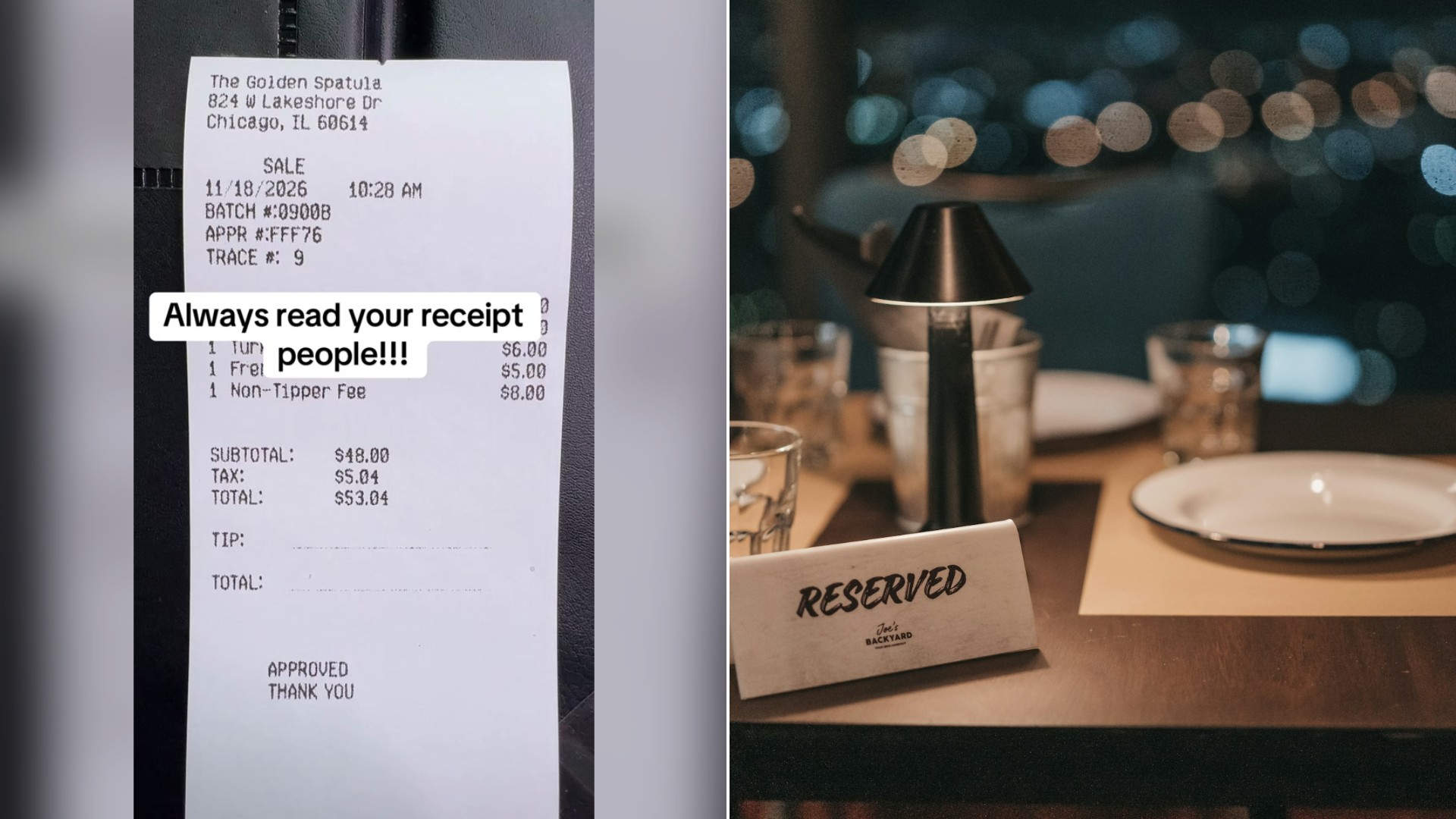
He had eaten at the place plenty of times. He knew the staff, knew the menu and knew how the check usually looked. Then one day a brand new line appeared on his receipt: a “non-tipper fee” of $8.
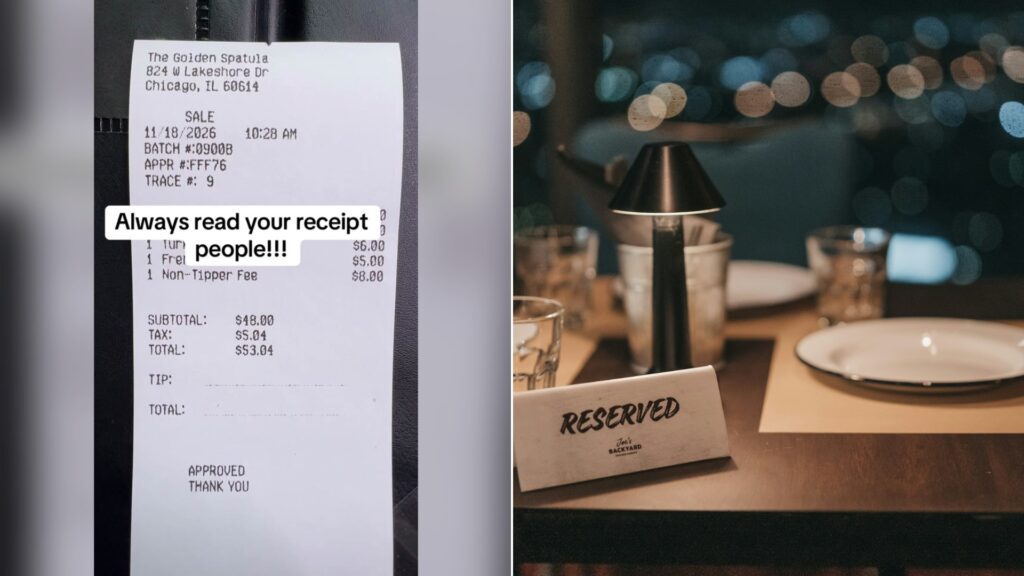
The diner, who posts as @captain.t.roll, held the receipt up to the camera and made his feelings plain. “You can’t force a tip on people,” he says. “Tipping is optional.”
@captain.t.roll
“This Is The First Time I’m Ever Seeing This On My Receipt”
He says he comes to this restaurant pretty often. That is what makes the new charge so jarring to him. After many visits with nothing of the kind, an $8 fee showed up out of nowhere.
The timing bothered him too. He points out that he had not even had a chance to tip yet. A tip line sat right there on the receipt, empty, and the fee was already printed above it.
So he asked the waitress what the fee meant. Her answer was direct, and he repeats it on camera.
The Waitress Explains That “We Noticed You Never Leave A Tip”
According to him, she told him the staff had noticed that he comes in quite often and also noticed that he never leaves a tip. “So our manager instructed us to add this fee to your receipt,” she said.
In other words, the restaurant had been keeping track of him. A regular who never tipped had been spotted, and the manager decided to bill him for it.
The diner finds the logic hard to follow. “Tipping is optional, so I don’t see how it’s fair that they can just add on a fee for being a non-tipper,” he says. “It just doesn’t make any sense to me.”
He Says He Will Subtract The $8 And Make The Restaurant “Figure It Out”
He did not stop at complaining. He announced a plan: “I’m not leaving a tip, I’m subtracting this $8, because I’m not letting them do that to me.”
As he sees it, the restaurant will have to sort out the difference on its own end. “You can’t just charge somebody a fee just because they don’t tip,” he says.
His caption widens the question. “Do servers actually pay attention to who tips and who doesn’t?” he asks. His own receipt suggests that at least one place does. He closes with his view of the matter: “Just do your job better and stop being so entitled.”
Where Tipping Ends And Fees Begin
Whatever side you take, this story touches a sore spot for many diners. Tipping in the United States is a custom, not a law, and customers tend to feel nickeled and dimed when extra charges appear.
It helps to understand why the custom exists. Under federal law, employers may pay tipped workers a cash wage as low as $2.13 an hour, as long as tips bring them up to the standard minimum wage. Some states require more, but in many places a server’s income leans heavily on what customers leave.
That is why a lot of servers care deeply about who tips and who does not. It is also why a restaurant owner might want to find some way to protect staff from a table that never leaves anything.
The difference between a service charge and a tip matters here. A service charge listed on the menu or posted at the door is part of the price, and diners can decide whether to stay and order. A fee that is added after the meal, as this diner describes, is a very different experience.
What To Do If A Surprise Fee Shows Up On Your Check
If you spot something unfamiliar on a bill, a few steps can save you a headache.
- Ask politely what the charge is and who decided on it. The server is usually just following instructions.
- Ask to speak with the manager if the explanation sounds shaky. Request that any fee be shown on the menu or posted where you can see it before you order.
- Photograph the receipt. Rules on added fees differ by state, and having proof helps if you later dispute the charge with your card company.
- Decide whether you want to return. A place that surprises its regulars may keep surprising them.
On the other side of the counter, restaurants can avoid this kind of blowup by being open about pricing. A sign at the door, a line on the menu or a quick word at the host stand lets everyone know what to expect before they sit down.
For the diner who made this video, the bigger point is about fairness. He says he is a regular who never got a word of warning, only a bill with a charge for something he considers optional. His answer was to take the $8 off the total himself.
The debate is sure to keep going at kitchen tables across the country. Some people believe a tip is a reward for good service and nothing more, while others see it as the real wage that keeps a restaurant staffed. A receipt like this one forces both camps to say exactly where they stand.
More Stories You May Like
- This Old-Fashioned Cranberry Fluff Is Not A Salad At All, And Cooks Still Cannot Agree If It Belongs On The Thanksgiving Table As A Side Dish Or A Dessert
- Chipotle Employee Rings Up The New Smoked Brisket Bowl At $15.20, Adds Extra Brisket For $8.45 More, And With Tax That One Bowl Costs $26.25
- Woman Books A Paris Stay Online, Then Stands On The Street With Her Suitcases For Five Hours After Nobody Shows Up To Let Her In, Until She Says We Finally Have A Room