There is a conversation that happens in the back of every restaurant in America. It happens at the service station and by the coffee machine, and it is about the table that just walked in. Gus spent 31 years running restaurant kitchens, and he says he heard all of it. Now he is 68, retired for two years, and he is telling the rest of us what servers whisper about older diners.
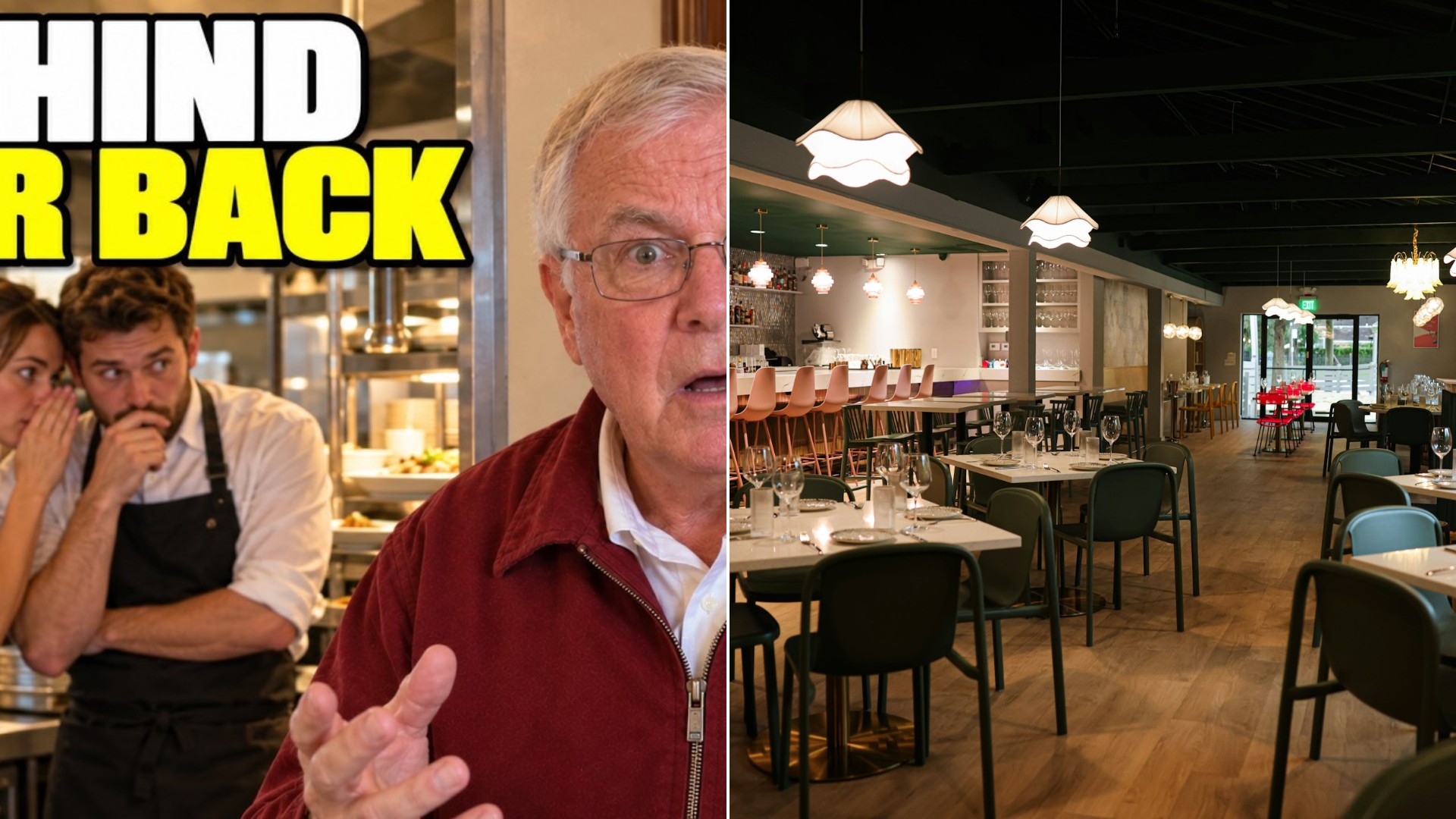
His message is not meant to make anyone angry. As he puts it, most of what gets said back there is a guess made in four seconds by a tired 23-year-old on a second shift. Some of it is unfair. Some of it has a real reason that nobody ever explained. Once you know the reason, he says, it stops stinging.
In his video on Dining with Gus, he counts down 15 things servers say. Here are the ones that matter most, and what he suggests you do about them.
The complaints, and the real reason behind them
“That table is going to camp.” Servers are not paid by the hour in any meaningful way, Gus says. They are paid by the table, so a table that sits for two hours costs them a second table’s worth of income. It is arithmetic, he says, not dislike. His advice: linger all you want, because you paid for the chair. But go at an off hour, mostly the afternoon and before 6, or leave a little extra on the way out.
“They will want separate checks.” Splitting a check after everything is rung in can tie a server up at a terminal for 10 or 15 minutes. The fix takes four seconds: say “separate checks” the moment you sit down, so each order goes on its own ticket.
“They are going to send something back.” Gus says a plate returned in the first couple of minutes is a normal part of a shift, and in 31 years he never saw anyone do anything to food that came back. What kitchens resent is learning at the end of the night that a guest ate something cold and said nothing.
“They cannot see the menu.” That is not your eyes, Gus says. It is the menu. Restaurants print small, light type on dark paper and keep the dining room dim because designers decided it looks upscale. Ask to have the lights brought up at your table, and ask whether there is a large print menu, since he says plenty of places keep one at the host stand and never offer it.
“They change everything on the plate.” A ticket with four changes is harder on a busy line, he admits, but modifications are a normal part of the job. The key is to give them all at once when you order. What makes a cook groan is the plate that comes back twice.
“They are not ordering drinks.” Alcohol is where a check grows, and a server’s tip grows with the total. Gus says nobody owes a restaurant a cocktail. If you want to even it out, tip a point or two higher.
“They are bad tippers.” He calls this the sentence that does the most damage and says it rests on a misunderstanding. Many servers tip out a percentage of total sales to the bartender, busser and food runner, and in many places that comes off the full sales number. When a table uses a senior discount or coupon and tips on the lower total, the server can end up short. His fix costs a couple of dollars: figure your tip on what the meal would have cost before the discount.
The senior discount itself, he adds, costs the server nothing. Ask for it every time. And cash? He says a cash tip goes into a server’s pocket that same shift without a card fee, so if you are a cash person you have been doing someone a quiet favor. Hand it to them directly rather than under a plate.
“It is too loud.” You are right, he says, and the room was built that way. Hard floors, bare walls and no tablecloths are cheaper, and loud rooms make people eat faster and leave. Ask for the music to come down and for a corner booth, or pick your hour, since 5 p.m. is a different room than 8 on a Saturday.
The ones you may never have imagined
The last few on his list are the ones he most wants you to hear. Servers sometimes quietly trade for the older couple who walk in at 5 o’clock, he says, because those guests know what they want, put the phone down, and treat the server like a person. Servers say that one table is the only one that looks at them, and some have told him that table was why they got through the shift. A “regular” is a title that is earned: someone is watching the door for you, and the cook who never sees the dining room knows your name. He says he watched a young server come off the floor with tears in her eyes because an older man patted her hand and told her she was doing a good job.
His number one: nearly every one of these is said about a table the server has not met yet. Four minutes after the table actually talks to its server, he says, those sentences are gone.
His honest admission, and your homework
Gus admits he heard these comments in his own restaurants and did not correct them often enough. A pre-shift meeting is five minutes long, he says, and something is always broken. He wishes he had said, “that is somebody’s mother.”
His homework is easy. Next time you dine out, ask your server’s name in the first 30 seconds and use it once before you leave. He promises it changes the whole table.
More Stories You May Like
- Mom Packs up Four Kids Early After a Hotel She Trusted Put Them in a Room with Bed Bugs and Tells the Whole Story
- Servers Are Berating Customers over Tipping Fatigue and the Whole Dining Experience Has Turned into a Fight Nobody Signed up For
- Chef Walked Out Mid Shift After Her Head Chef Was Caught Spying on Her and Then the Company’s Top Executive Chef Called Offering Her Own Kitchen