

Sometimes the smallest household purchase tells the biggest story. @emmalinechilds shared a simple tale about a basket, a roll of toilet paper, and a suspicion that the rolls she buys have been quietly changing. The caption on her post sums up her mood in four words: “Shrinkflation has no bounds.”
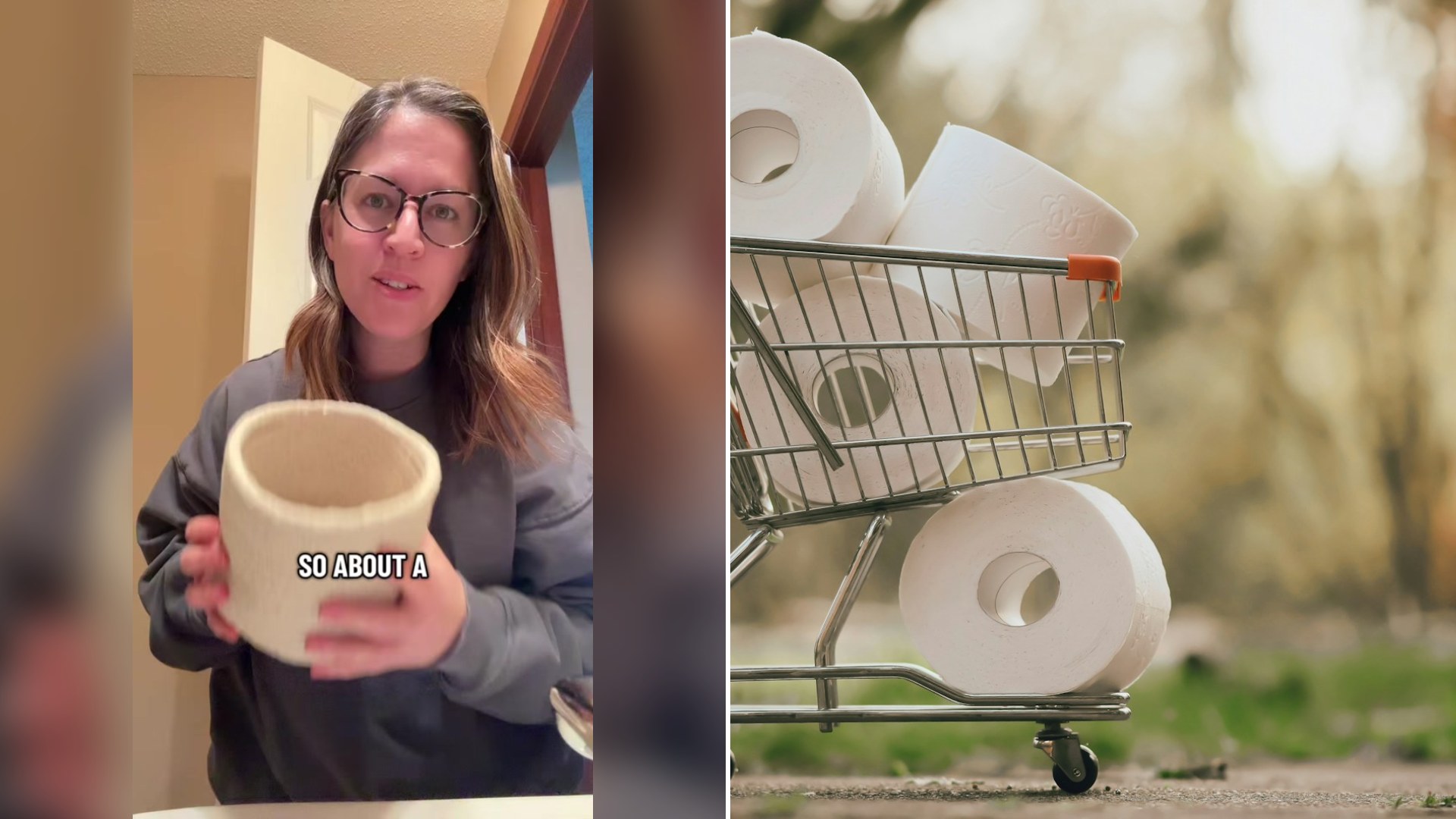
It started about a year ago, when she bought a basket to hold a spare roll of toilet paper in her guest bathroom. She brought it home, went to put in a roll of Costco’s Kirkland bath tissue, and realized right away that it was far too big. It was never going to fit.
@emmalinechilds
A basket that did not fit the big rolls
She says she was a little disappointed, but she liked the basket. Her guest bathroom does not need a lot of supplies, so she came up with a workaround. She bought a small package of smaller toilet paper that would fit inside it, and that did the job for a good while.
Recently, she ran out of the small rolls. So she went downstairs to grab one of her normal Costco rolls, a completely unopened roll of Kirkland bath tissue, and decided to try something. In her words, she wanted to see “if this totally unopened roll of Kirkland bath tissue would fit” in the same basket that rejected it a year earlier.
She closes by noting, a little dryly, that it is also more expensive now. Her account ends right there, as she gets ready to try the squeeze. What the roll does in the basket is left for her followers to see in her post, so we will not guess at the outcome. What we can say is what she was getting at: she suspects the roll she is buying today is not the same as the one she bought a year ago.
What shrinkflation actually means
The word is a blend of “shrink” and “inflation.” It describes a product that gets smaller, or contains less, while the price stays the same or goes up. A bag of chips might lose a few ounces. A carton of ice cream might shrink. A pack of paper goods might hold fewer sheets or feature a narrower roll.
Companies do this because it is less noticeable than a price increase. Shoppers usually remember what a product costs, but not exactly how big it was. A change of an ounce, a few sheets, or a slightly smaller package can slip past most of us.
That is why a household anecdote like this one resonates. A basket is a handy measuring tool. If a roll was too big last year and might fit this year, that is a clue worth a second look, even though a single basket is not proof by itself.
Why toilet paper is easy to get wrong
Toilet paper is one of the trickiest items to compare, because there are many ways a roll can change without anyone noticing:
- The roll itself can get smaller. A narrower or thinner roll can look similar on the shelf, especially when it is stacked in a large package.
- The sheet count can change. The number of sheets per roll can drop even if the number of rolls stays the same.
- The sheet size can shrink. A sheet that is a little shorter or narrower means less paper overall.
- The marketing names can mislead. Terms like “mega,” “double,” or “family” rolls are not standardized, so one brand’s mega roll may not match another’s.
- The package count can stay put. A package that still says 30 rolls does not guarantee that each roll holds what it once did.
How to check what you are really paying
You do not need a basket to find out. Here are a few easy steps any shopper can use, whether it is toilet paper or anything else:
- Look at the unit price. Most grocery and warehouse shelf tags list a price per unit, such as per 100 sheets or per ounce. That figure lets you compare sizes fairly.
- Read the total sheet count. Many packages print the total number of sheets or the total square footage. This is a more honest figure than the roll count.
- Keep an old package. If you stock up on something you buy often, hold on to the label so you can compare it with the next one.
- Compare brands. Store brands and name brands each change at different times, so checking both can show you the best value.
- Take notes on price. A quick note in your phone about what you paid and what you got makes changes easy to spot later.
Why this struck a nerve
A lot of folks feel they are paying more each year and getting less at the checkout. Hearing someone else describe a small, specific moment, like a roll that no longer sits the way it used to, puts words to something they have been noticing too. It is not about one roll. It is about the feeling that the little things we rely on are changing in ways we are not told about.
It is also a good reminder that being a careful shopper is not the same as being a stingy one. Looking at the unit price, reading the label, and noticing when something feels different are simple habits that protect your budget. And if you ever stand in your bathroom wondering why a familiar item seems to have changed, you are not imagining things. Checking it against what you remember, or against a basket that did not fit last year, is a perfectly fair place to start.
