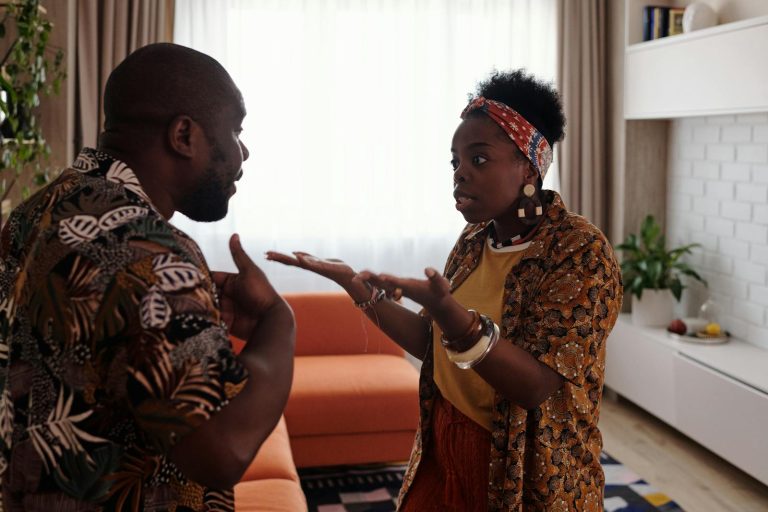
He told her for months she wasn’t “wife material.” Then, two weeks after she started dating someone new, he was deep in her new boyfriend’s tagged photos at 2 a.m., firing off texts about how she “moved on too fast.” The contradiction is so common it has become its own category of post-breakup complaint, and it says far more about the person doing the monitoring than the person being watched.

According to a 2020 study published in Aggressive Behavior, nearly 75% of young adults reported monitoring an ex-partner’s social media after a breakup, with a significant subset engaging in what researchers classified as “interpersonal electronic surveillance.” When that surveillance follows a relationship where one partner explicitly refused commitment, the dynamic shifts from ordinary curiosity into something more controlling.
What the “not wife material” line actually does
On its surface, telling a partner they’re not “wife material” sounds like honesty. In practice, it often functions as a power move. The phrase lets one person enjoy the benefits of a relationship (companionship, intimacy, emotional support) while reserving the right to leave without guilt. The partner on the receiving end is placed in a permanent audition they were never going to pass.
Dr. Ramani Durvasula, a licensed clinical psychologist and professor at California State University, Los Angeles, who specializes in narcissistic personality dynamics, has described this pattern extensively. In her work on narcissistic relationships, she explains that devaluing a partner while keeping them close is a hallmark of narcissistic attachment: the person is useful but never “enough,” which keeps them off-balance and easier to control. The commitment is withheld not because the partner lacks something, but because withholding it preserves the power imbalance.
This framing also provides retroactive cover. If the relationship ends, the person who refused to commit can point back to their earlier disclaimer: “I told you from the start.” That rewrite erases months or years of mixed signals, late-night calls, and behavior that looked a lot like a relationship in everything but name.
Why the ex who “didn’t want you” is now watching your every post
When that same person later begins tracking a former partner’s new relationship online, the behavior often stems from what psychologists call “threatened egotism.” A 2019 study in the Journal of Social and Personal Relationships found that individuals with higher levels of narcissistic traits were more likely to engage in surveillance of an ex-partner’s social media, particularly when the ex appeared to be thriving. The researchers noted that the monitoring was driven less by lingering love and more by a perceived threat to self-image.
Rachel Maclynn, a chartered psychologist and founder of the matchmaking consultancy The Vida Consultancy, has spoken about this pattern in broader terms. She notes that obsessing over a partner’s ex or new partner “often stems from insecurity and fear of comparison,” especially the fear of being replaced by someone perceived as better or more desirable. For the ex who once refused commitment, seeing a former partner happy with someone else can feel like a verdict on their own worth, which is exactly the kind of judgment they avoided delivering when they had the chance.
Social media makes this surveillance frictionless. There’s no need to drive past someone’s house or call a mutual friend. A few taps deliver real-time updates: new couple photos, location tags, comment threads full of congratulations. Each data point can feed a narrative of betrayal (“How could they move on so fast?”) that conveniently ignores the months of emotional limbo that preceded the breakup.
The “moving on too fast” complaint is about control, not care
Accusing a former partner of moving on too quickly is one of the most common post-breakup grievances, and one of the least logical. If someone spent the relationship insisting they didn’t want a future together, they forfeited any claim to the other person’s timeline the moment the relationship ended.
Yet the complaint persists because it serves a purpose. Dr. Craig Malkin, a clinical psychologist at Harvard Medical School and author of Rethinking Narcissism, has written about how people with narcissistic tendencies often try to control the narrative of a breakup long after it’s over. The goal isn’t reconciliation. It’s ensuring the story stays flattering: they left, the other person was devastated, and any new relationship is a “rebound” that proves the ex hasn’t really healed.
When a former partner moves on quickly and visibly, that narrative collapses. The new relationship becomes evidence that the breakup wasn’t as devastating as the narcissistic ex needs it to be, which can trigger what Malkin describes as “narcissistic injury,” a disproportionate emotional response to a perceived slight against one’s self-image.
This is where the behavior can escalate. An ex might send pointed messages to mutual friends, leave passive-aggressive comments on social media, or reach out directly with guilt-laden texts (“I can’t believe you’re already with someone else”). The surface message is hurt. The underlying function is an attempt to reassert influence over someone who has stopped providing attention.
When checking up crosses into stalking
There’s a meaningful difference between glancing at an ex’s profile once out of curiosity and systematically monitoring their online activity, their new partner’s accounts, and their social circle over weeks or months. The latter can constitute cyberstalking, which is a criminal offense in all 50 U.S. states and under federal law (18 U.S.C. § 2261A).
The National Intimate Partner and Sexual Violence Survey, conducted by the CDC, found that approximately 1 in 6 women and 1 in 17 men in the United States have experienced stalking at some point in their lives, with the majority of victims reporting that the stalker was a current or former intimate partner. Digital surveillance, including unwanted monitoring of social media, email, and location data, is now one of the most common forms this takes.
Warning signs that post-breakup social media behavior has crossed a line include:
- Creating fake or secondary accounts to view profiles after being blocked
- Contacting a new partner directly to share unsolicited information about the ex
- Showing up at locations discovered through social media posts or check-ins
- Sending repeated unwanted messages referencing specific posts or stories
- Enlisting friends or acquaintances to relay information or monitor accounts
If any of these behaviors are present, the situation has moved beyond “drama” and into territory that warrants documentation and, potentially, legal action.
What to actually do about it
The instinct to engage, to explain, to prove the new relationship is legitimate, is understandable but almost always counterproductive. Responding to an ex who is monitoring and complaining gives them exactly what they’re seeking: continued access to your attention and emotional energy.
Practical steps that experts and legal advocates recommend include:
- Restrict, don’t just block. Blocking notifies the other person. On Instagram, restricting an account silently limits what they can see without alerting them.
- Audit your privacy settings. Review who can see your posts, stories, tagged photos, and location data. Tighten settings on all platforms, not just the one where you’ve noticed surveillance.
- Document everything. Screenshot messages, note dates and times of unusual account activity, and save any communication that feels threatening or harassing. This creates a record if legal action becomes necessary.
- Talk to your new partner. Make sure they’re aware of the situation so they can adjust their own privacy settings and aren’t blindsided by contact from your ex.
- Seek legal advice if the behavior escalates. Many jurisdictions allow protective orders that cover electronic communication and social media contact. The National Domestic Violence Hotline (1-800-799-7233) can help assess risk and connect callers with local resources, even if the relationship was not physically abusive.
The core principle is straightforward: someone who told you that you weren’t enough doesn’t get to decide how or when you move forward. The fact that they’re watching doesn’t mean you owe them a performance. It means they haven’t done the work of letting go, and that’s their problem to solve, not yours.
More from Cultivated Comfort:
- 7 Retro Home Features That Builders Should Bring Back
- 7 Antique Finds That Are Surprisingly Valuable Today
- 7 Forgotten Vacation Spots Your Parents Probably Loved
- 6 Boomer China Patterns That Are Selling Like Crazy Online

As a mom of three busy boys, I know how chaotic life can get — but I’ve learned that it’s possible to create a beautiful, cozy home even with kids running around. That’s why I started Cultivated Comfort — to share practical tips, simple systems, and a little encouragement for parents like me who want to make their home feel warm, inviting, and effortlessly stylish. Whether it’s managing toy chaos, streamlining everyday routines, or finding little moments of calm, I’m here to help you simplify your space and create a sense of comfort.
But home is just part of the story. I’m also passionate about seeing the world and creating beautiful meals to share with the people I love. Through Cultivated Comfort, I share my journey of balancing motherhood with building a home that feels rich and peaceful — and finding joy in exploring new places and flavors along the way.