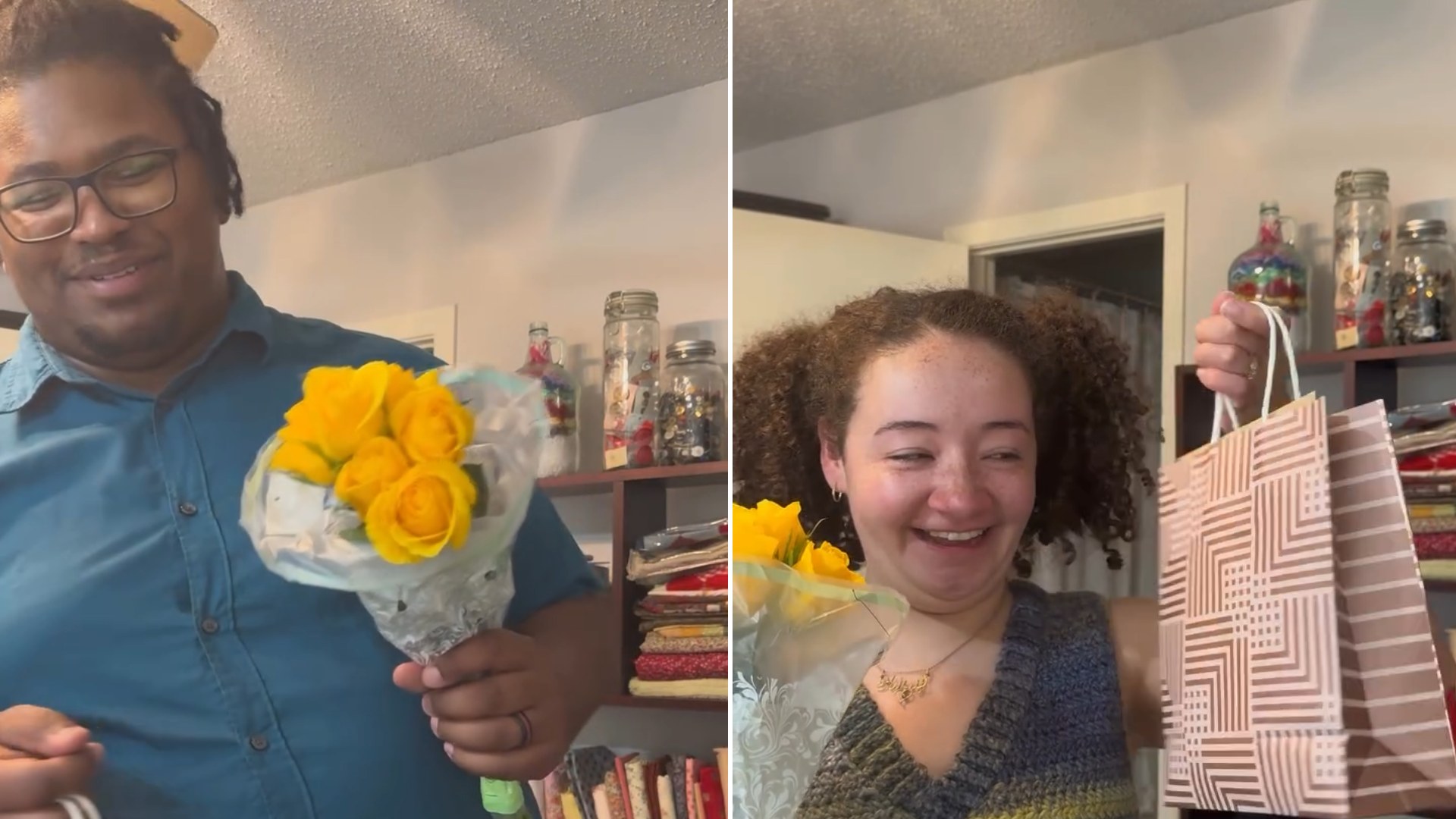
Grand proposals tend to dominate the relationship side of the internet: the flash mob, the stadium jumbotron, the ring hidden in a five-course dinner. Those moments are built for an audience from the first second, choreographed with a camera crew’s instincts even when no professional is involved. A much quieter video from creator kraftsbykelseydene is proving that a relationship moment doesn’t need any of that scale to resonate. Her boyfriend shows up with flowers not to mark an anniversary or celebrate good news, but right after she’s received something painful. The caption she posted alongside it says only what happened, plainly: “Partner surprises with flowers after sad news,” she wrote on her Instagram reel, which has been watched and shared by thousands despite an account of just 700 followers.
A Gesture With No Audience in Mind
What separates this video from a viral proposal is that nothing about the original moment was staged for an audience. The flowers weren’t bought with a camera roll in mind; they were bought because someone needed comfort, and comfort is what her boyfriend brought. The footage exists almost as a byproduct of the moment rather than the point of it, which is a meaningful difference from content built specifically to be filmed. That distinction is often what viewers respond to first, even before they know any details about the couple or the news itself.
Why Timing Changes Everything
A bouquet delivered on a good day is a nice gesture. The same bouquet delivered in the middle of a hard one reads completely differently, because it says the giver was paying attention to something other than the calendar. Grand proposals are planned weeks or months in advance, with logistics and guest lists and a predetermined outcome everyone already expects. A gesture like this one has none of that lead time. It requires noticing, in real time, that someone you love is struggling, and responding before the moment passes. That kind of attentiveness is harder to fake and, it turns out, much harder to forget.
There’s also something disarming about watching a private, unguarded reaction instead of a rehearsed one. A person receiving flowers after bad news isn’t performing gratitude for a camera; they’re simply relieved not to be alone with the bad news anymore. Viewers can tell the difference, and it’s part of why a video like this can outperform far more elaborately produced content.
Comfort as Its Own Love Language
Relationship advice often talks about love languages as though they’re fixed categories, but a moment like this shows how fluid they actually are in practice. Flowers are usually filed under gift-giving, yet here they function much closer to acts of service or simple presence — the point isn’t the bouquet itself but the fact that someone left what they were doing to make sure their partner wasn’t sitting with hard news alone. That’s a different kind of effort than planning a proposal months in advance. It’s a decision made in minutes, under no obligation, with nothing at stake except whether the other person feels less alone afterward.
Small Gestures, Measured Differently
Grand gestures are often measured by scale: how many people watched, how expensive the setup, how surprising the reveal. Quiet gestures get measured by something else entirely — whether the person on the receiving end actually needed what they got. A ring in a jumbotron proposal answers a question that was probably already settled between two people. Flowers after devastating news answer a much more immediate one: is someone showing up for me right now, when it isn’t convenient and there’s nothing to celebrate. That’s a lower bar in terms of production and a much higher one in terms of what it actually demonstrates about a relationship.
What Thousands of Viewers Are Actually Responding To
The reach a small account like kraftsbykelseydene’s has gotten from this video says something about what people are hungry for in relationship content right now. Not every meaningful moment needs choreography, a proposal planner, or a following in the hundreds of thousands. Sometimes the most resonant thing two people can share on camera is simply evidence that one of them showed up for the other on an ordinary, difficult day — no script, no countdown, just flowers and timing that mattered more than anything else in the frame.