There’s a particular kind of honesty that solo backpackers eventually bring to their content, once the highlight-reel version of travel stops feeling like the whole story. One creator captured exactly that shift in a video filmed from inside a budget hostel dorm in Guatemala, showing her real nightly routine: tucking herself into a mosquito net for protection in a room with no air conditioning, the kind of detail that never makes it into a glossy travel montage.
The video leans directly into the gap between perception and reality. As @maddieftravelss explains, her caption plays on the contrast between the people who tell her they wish they could travel with her and the actual, unglamorous conditions she’s navigating on any given night, heat, bugs, thin mattresses, and all. It’s a small, funny, and quietly pointed piece of content, the kind that resonates because it pulls back the curtain on a lifestyle that gets romanticized constantly online, without ever pretending the romance isn’t real too.
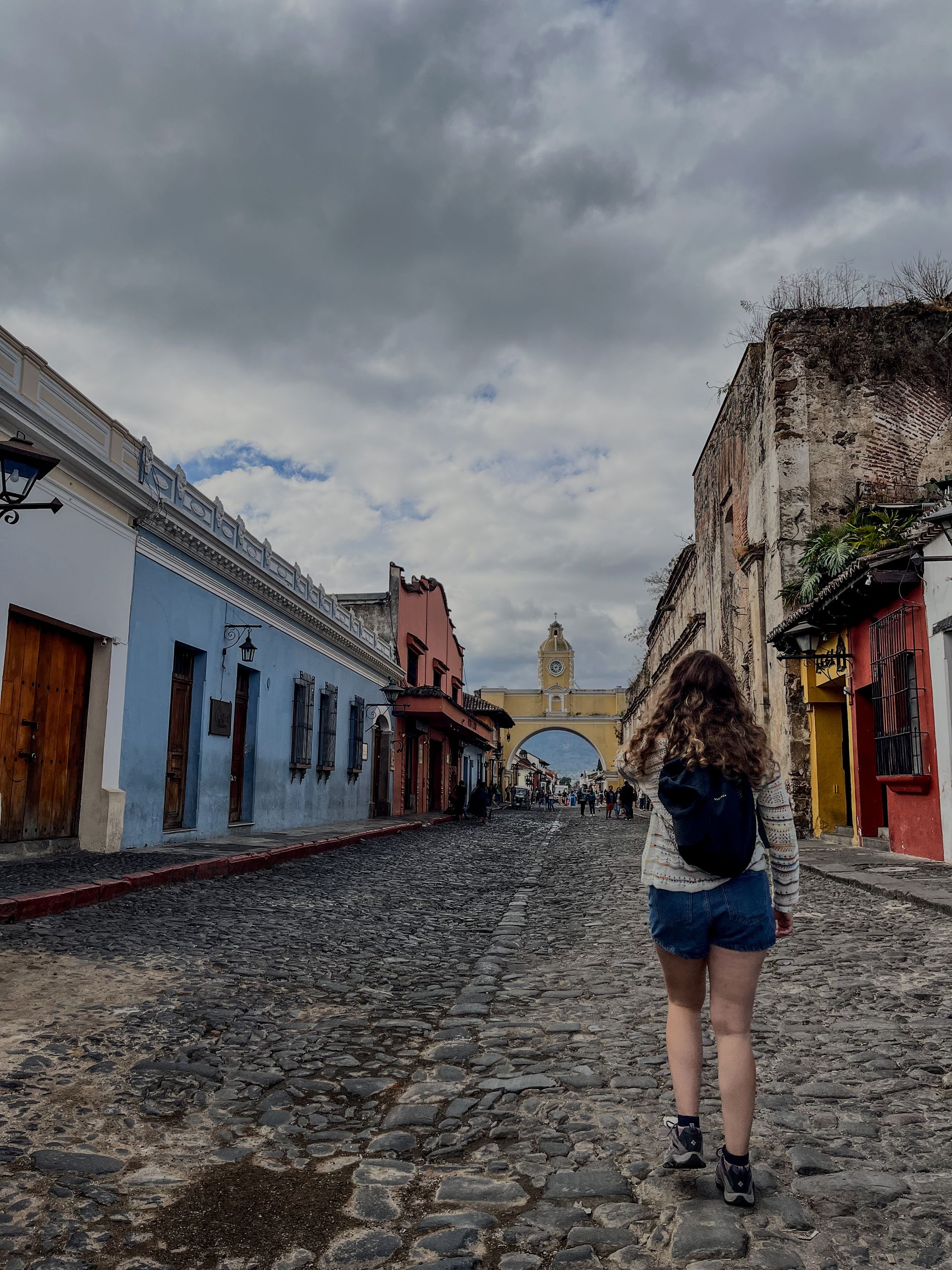
image: Woman walks down a cobblestone street, past colorful buildings. photo credit: unsplash
View this post on Instagram
Solo backpacking through Central America has surged in popularity over the past several years, driven in large part by exactly the kind of aspirational content this video is gently poking fun at. Feeds full of hammocks, waterfalls, and golden hour photography make the lifestyle look effortless, but the reality for most budget travelers involves a lot more logistics and discomfort than the highlight reel suggests. Hostels, chosen for their low nightly rates rather than their amenities, routinely lack air conditioning in regions where nighttime heat and humidity make sleep a genuine challenge, and mosquito nets remain one of the most basic, essential pieces of gear for travelers moving through mosquito-heavy climates.
That gap between the fantasy and the logistics is exactly what makes this kind of content valuable to people actually considering a similar trip. Aspiring backpackers scrolling through curated travel photography can walk away with an inflated sense of how comfortable independent travel really is, only to be caught off guard by their first sweaty, sleepless night in an un-air-conditioned dorm. Videos like this one function as an informal, unfiltered orientation, letting future travelers see the actual conditions ahead of time rather than discovering them the hard way on their first night abroad.
There’s also something worth noting about the specific choice to travel this way at all. Choosing a hostel dorm over a private, air-conditioned room isn’t usually about a lack of options; it’s frequently a deliberate trade-off that budget travelers make in order to stretch a limited travel fund across more destinations and more time on the road. Every dollar saved on accommodation is a dollar that can go toward transportation, food, or simply extending a trip by another week, and for travelers prioritizing duration and breadth of experience over comfort, a few uncomfortable nights under a mosquito net is a fair price to pay.
For anyone weighing their first solo backpacking trip, this video offers a useful, if lighthearted, reality check. Packing a personal mosquito net, researching the climate and insect exposure of a destination in advance, and mentally preparing for nights without air conditioning can make the difference between a trip that feels like an ongoing struggle and one that simply comes with expected trade-offs. The people telling her they wish they could travel with her may be picturing the sunsets and the passport stamps; what the video makes clear is that the real, everyday texture of that life includes a lot more sweat and mesh netting than most people imagine, and that the two things, the beauty and the discomfort, tend to travel together.
That honesty is, in its own way, a kind of gift to anyone following along from home. It doesn’t discourage the dream of solo travel so much as it grounds it, replacing a filtered fantasy with a fuller, more useful picture of what independent travel on a budget actually looks like night after night, which is ultimately far more valuable to a future traveler than another perfectly lit photo of a beach at sunset.
It’s also worth pointing out how much this kind of content reshapes the conversation around what counts as a successful trip in the first place. A perfectly comfortable, air-conditioned itinerary isn’t actually the goal for most long-term budget travelers; it’s a trade-off most of them have already consciously decided against, in favor of a longer, richer trip built on lower nightly costs. Viewed that way, a sweaty night under a mosquito net isn’t a failure of the trip at all. It’s simply the visible cost of a choice that’s already paying off in every other way, one extra week, one extra country, one extra story that wouldn’t have been possible with a pricier, more comfortable itinerary instead.
There’s a final, practical piece of advice worth pulling from a video like this: pack light, but pack smart. A compact, personal mosquito net weighs almost nothing and takes up very little space in a backpack, yet it can be the single difference between a sleepless, miserable night and a functional one in a hostel with no air conditioning. Budget travelers heading to hot, humid, or mosquito-prone regions would do well to treat it as a non-negotiable item on their packing list, right alongside a headlamp and a reliable pair of walking shoes, precisely because moments like the one captured in this video are far more common on the road than most people expect before their first trip.