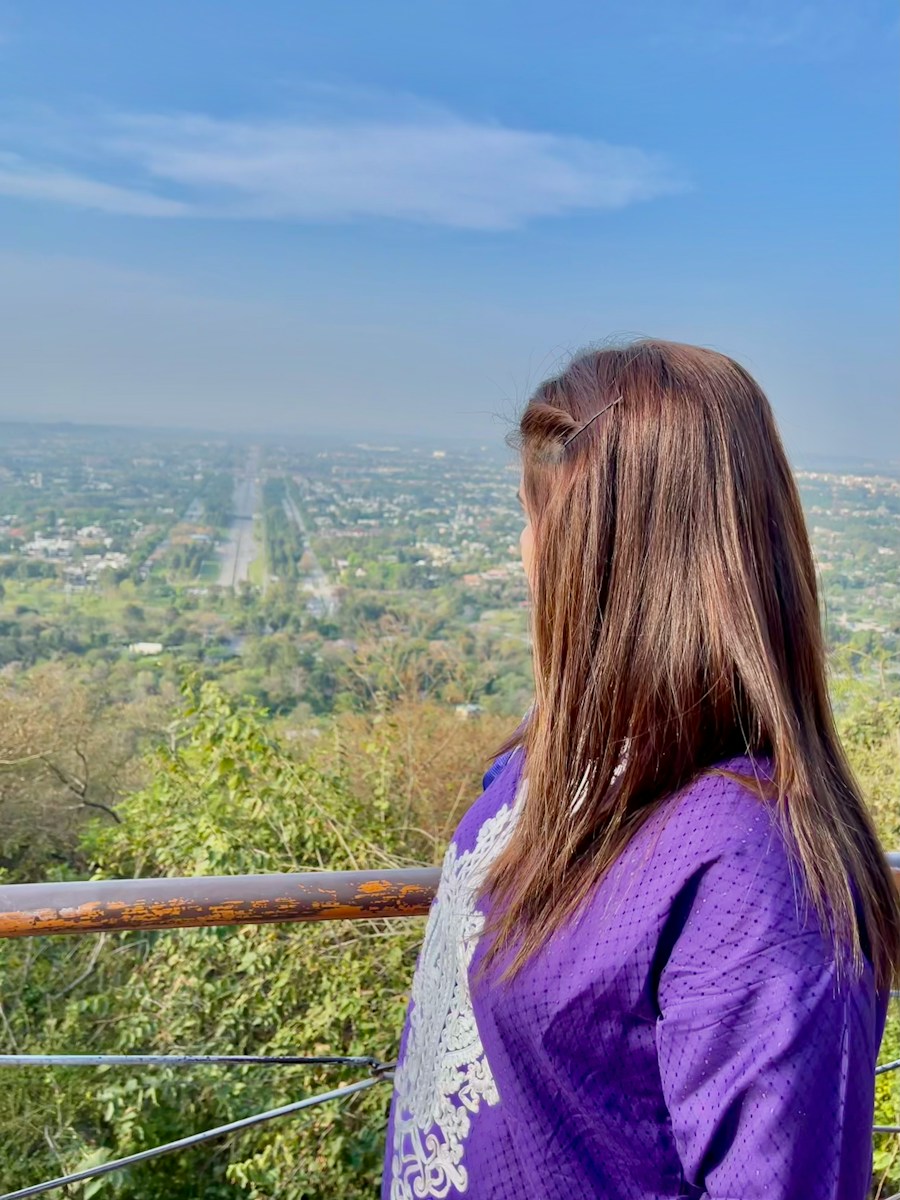
Solo female travel advice tends to converge on a fairly consistent set of rules, and near the top of almost every list is some version of: don’t get in a vehicle with a stranger. One traveler making her way alone through Pakistan chose to break that exact rule on camera, filming herself accepting an invitation from a local man she met on the road, a decision that directly contradicts the safety guidance most solo travelers are given before they ever leave home.
What follows isn’t a cautionary tale, but the opposite: a real-time record of the interaction and the tour that resulted from it, as @meikehijman embraced an encounter that plenty of travel safety guides would tell her to avoid outright. The video doesn’t pretend the decision was risk-free, but it also doesn’t frame it with regret. Instead, it presents the moment as it happened, leaving viewers to sit with the tension between conventional safety advice and the reality that some of travel’s most memorable experiences come from exactly the kind of spontaneous trust that guidebooks warn against.
image: woman in green and brown hijab. photo credit: unsplash
View this post on Instagram
Pakistan has increasingly drawn attention from independent travelers in recent years, often praised for its dramatic landscapes and a level of hospitality that visitors describe as remarkable, even by the standards of countries known for welcoming tourists. That reputation for hospitality is central to understanding why a moment like this unfolds the way it does. In many communities along popular travel routes through the region, offering a passing traveler a ride, a meal, or an impromptu tour isn’t viewed as unusual; it’s a fairly ordinary expression of local custom, even when it looks, from the outside, like exactly the kind of scenario safety guides caution against.
That tension, between standardized safety advice built for a global audience and the specific, lived reality of hospitality customs in a particular region, is one that experienced travelers often have to navigate directly, without a universal rulebook that applies cleanly everywhere. Blanket advice like never accept a ride from a stranger exists for good reason and has clearly protected countless travelers from real danger. But it’s also, by necessity, a broad generalization that can’t account for every cultural context, and travelers who spend enough time on the road often develop their own more nuanced judgment for when to bend a rule and when to hold firm to it.
None of this is a suggestion that solo travelers should abandon caution or ignore their instincts; if anything, videos like this one work precisely because the creator’s read of the specific situation, not a rejection of safety advice in general, is what allowed her to make a judgment call in the moment. Assessing context, the setting, the presence of other people, the tone of the interaction, remains an essential skill for any solo traveler, and it’s a skill that develops with experience rather than something that can be reduced to a single universal rule.
For anyone planning their own solo trip, especially somewhere far outside their usual comfort zone, the real value of this video isn’t an endorsement of hitchhiking with strangers. It’s a reminder that the most rewarding travel encounters often exist right at the edge of conventional caution, and that navigating that edge wisely, rather than avoiding it entirely, is part of what separates a good trip from a truly unforgettable one. Standard safety advice should never be dismissed outright, but it’s worth remembering that it’s a starting framework, not a substitute for paying close attention to the specific place, and the specific people, actually standing in front of you.
There’s also a broader point here about how much a destination’s reputation, whether earned or assumed, can shape a traveler’s decisions before they’ve even arrived. Regions that see less mainstream tourism sometimes carry an outsized reputation for danger online, built more on unfamiliarity than on actual, documented risk, while the hospitality and generosity travelers frequently encounter on the ground goes comparatively unreported. Videos like this one help correct that imbalance a little, offering a firsthand counterweight to secondhand assumptions, without denying that real risks exist and deserve real caution. There’s a final point worth making about how quickly a single moment like this can start to shift a broader narrative. One video won’t rewrite anyone’s perception of an entire country on its own, but a steady accumulation of honest, firsthand travel content, moments of genuine hospitality alongside honest accounts of real risk, gradually builds a fuller, more accurate picture than any single headline or travel advisory ever could on its own.
For readers considering travel somewhere with a reputation that feels more intimidating on paper than it might be in practice, the practical takeaway is to seek out firsthand accounts like this one before relying solely on secondhand warnings. Talking to other travelers who have actually visited, reading recent, specific firsthand reports rather than generalized advisories, and staying genuinely alert once on the ground are all more useful than either blanket fear or blanket trust. The goal isn’t to eliminate caution, but to calibrate it against reality rather than assumption, which is exactly what a video like this one, however small a moment it captures, helps make possible.
The specific stretch of road she was traveling through also matters to how the moment reads. Overland routes through Pakistan’s northern regions have become a well-documented draw for backpackers precisely because they combine dramatic, remote scenery with towns where tourism infrastructure remains relatively limited, meaning encounters with locals often happen on considerably more personal terms than in destinations built around a well-worn, heavily commercialized backpacker circuit.