For years, a British teenager brushed off her agonizing periods as something she just had to power through. By 19, the pain was so intense that doctors suspected appendicitis and sent her for surgery. Only once she was on the operating table did they discover the real twist: she was living with two wombs, a rare condition that had been quietly shaping her life since puberty.
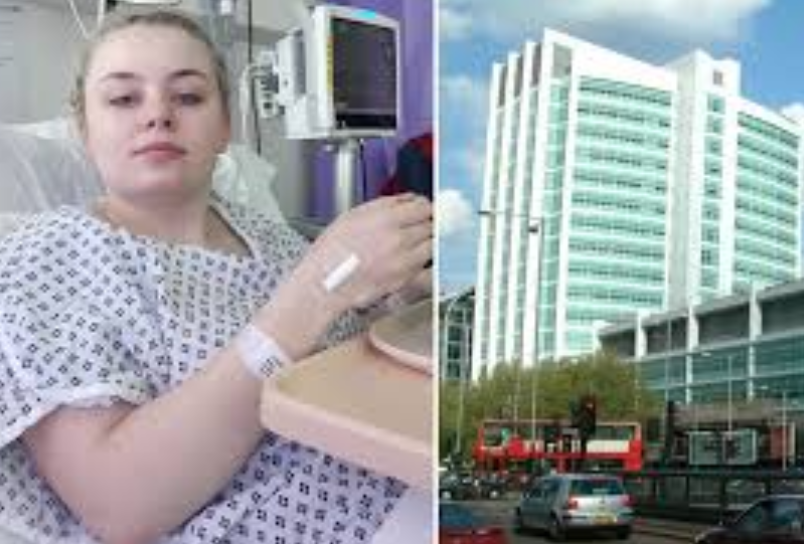
Her story, now shared publicly in her early twenties, pulls back the curtain on how easily severe menstrual pain can be dismissed or misread. It also shows how a hidden anatomical quirk can go undetected through childhood checkups, school sick notes, and even emergency hospital visits, until one dramatic moment forces everyone to look again.
The teen years of “just heavy periods”
From the moment she started menstruating, Ellie Curran’s cycle was less “mild inconvenience” and more full‑body shutdown. As a young teen she bled so heavily that she sometimes needed to change protection every hour, and the cramps were bad enough to keep her curled up in bed instead of in class. She assumed this was simply what womanhood looked like, and early medical conversations framed it as heavy but not alarming, a pattern that left her trying to grit her teeth through each month rather than push for deeper answers.
By her late teens, Ellie’s symptoms had escalated into something that felt impossible to ignore. She was running to the bathroom “every two seconds” when she was on her period, and the pain flared so sharply in her lower abdomen that it started to mimic the classic signs of appendicitis. According to reporting on her case, she eventually landed in hospital where doctors believed she was dealing with appendix issues on top of her long history of intense periods, a combination that finally pushed them to schedule surgery.
The surgery that changed everything
When surgeons went in to investigate what they thought was a failing appendix, they found something they had not expected at all. Instead of a single pear‑shaped uterus, Ellie had two distinct uterine cavities, a structural anomaly that meant she effectively had two wombs. The discovery came when she was 19, a moment she has described as both surreal and oddly validating, because it finally offered a concrete explanation for years of pain that had never quite made sense.
Doctors explained that her anatomy fit a rare pattern known as uterus didelphys, where the reproductive system develops into two separate chambers rather than one. In Ellie’s case, the split was so pronounced that her womb was described as being divided into two cavities, a setup that can complicate everything from blood flow to cramping. The surgical team told her that this unusual structure was likely a major driver of her severe symptoms, and that it had been hiding in plain sight because standard exams had never taken a close enough look.
Living with an “extremely rare” condition
Once the shock wore off, Ellie had to wrap her head around what it meant to live with what specialists called an “extremely rare condition.” Having two wombs is not just a quirky anatomical footnote, it can change how periods feel, how contraception works, and what pregnancy might look like in the future. Her doctors walked her through the basics, explaining that each cavity can respond differently to hormones, which helps explain why her bleeding and pain sometimes felt out of proportion to what friends described as a bad month.
Reporting on her case notes that clinicians framed her diagnosis as an extremely rare condition that likely contributed directly to her most debilitating symptoms. They also flagged that uterus didelphys can be linked to higher risks in pregnancy, including miscarriage and preterm birth, although many people with the condition do go on to have healthy children. For Ellie, the immediate impact was more emotional than clinical: she finally had language for what her body had been doing all along, and a medical team that was taking her complaints seriously instead of chalking them up to low pain tolerance.
How two wombs stayed hidden so long
One of the most striking parts of Ellie’s story is how long such a dramatic anatomical difference went unnoticed. She had been in and out of doctors’ offices for years, describing heavy bleeding, bladder pressure, and cramps that sometimes left her unable to stand upright. Yet it took an operation for suspected appendicitis to reveal that she had not one uterus, but two. That delay is not unusual with uterus didelphys, which can be missed on routine pelvic exams and may only show up clearly on targeted imaging or during surgery.
Earlier coverage of Ellie’s experience notes that she started her period as a young teen and was told she simply had heavy cycles, a message that followed her into her early twenties. She coped by planning her life around the worst days, sometimes needing to change pads or tampons up to four times per when the bleeding peaked. Without a clear diagnosis, she was left to assume that this level of disruption was just her version of normal, a mindset that kept her pushing through symptoms that, in hindsight, were red flags.
From private pain to public awareness
Now in her early twenties, Ellie has chosen to talk openly about her diagnosis, turning what was once a deeply private struggle into a way to raise awareness. She has shared how often she felt brushed off when she tried to describe her symptoms, and how isolating it was to hear that other people’s periods were uncomfortable but manageable while hers regularly knocked her out of daily life. By putting specific details on the record, she is giving other young people language to say, “No, this is not just a bad cramp,” and to push for more thorough checks when something feels off.
Her account of being told in the operating room that she had two wombs has been echoed across multiple reports, which describe how surgeons initially focused on suspected appendix problems before realizing her uterus was split. Follow‑up coverage has emphasized that Ellie Curran, now 21, is using that shock moment to encourage others not to downplay their own symptoms, especially if they are missing school, work, or social life because of period pain.
More from Cultivated Comfort:
- 7 Retro Home Features That Builders Should Bring Back
- 7 Antique Finds That Are Surprisingly Valuable Today
- 7 Forgotten Vacation Spots Your Parents Probably Loved
- 6 Boomer China Patterns That Are Selling Like Crazy Online

As a mom of three busy boys, I know how chaotic life can get — but I’ve learned that it’s possible to create a beautiful, cozy home even with kids running around. That’s why I started Cultivated Comfort — to share practical tips, simple systems, and a little encouragement for parents like me who want to make their home feel warm, inviting, and effortlessly stylish. Whether it’s managing toy chaos, streamlining everyday routines, or finding little moments of calm, I’m here to help you simplify your space and create a sense of comfort.
But home is just part of the story. I’m also passionate about seeing the world and creating beautiful meals to share with the people I love. Through Cultivated Comfort, I share my journey of balancing motherhood with building a home that feels rich and peaceful — and finding joy in exploring new places and flavors along the way.