

Choosing the right color for your kitchen walls can greatly impact the atmosphere and functionality of the space. Some colors, like dark shades and certain greens, blues, reds, and purples, may make your kitchen feel less inviting and even cast unflattering shadows on your food.
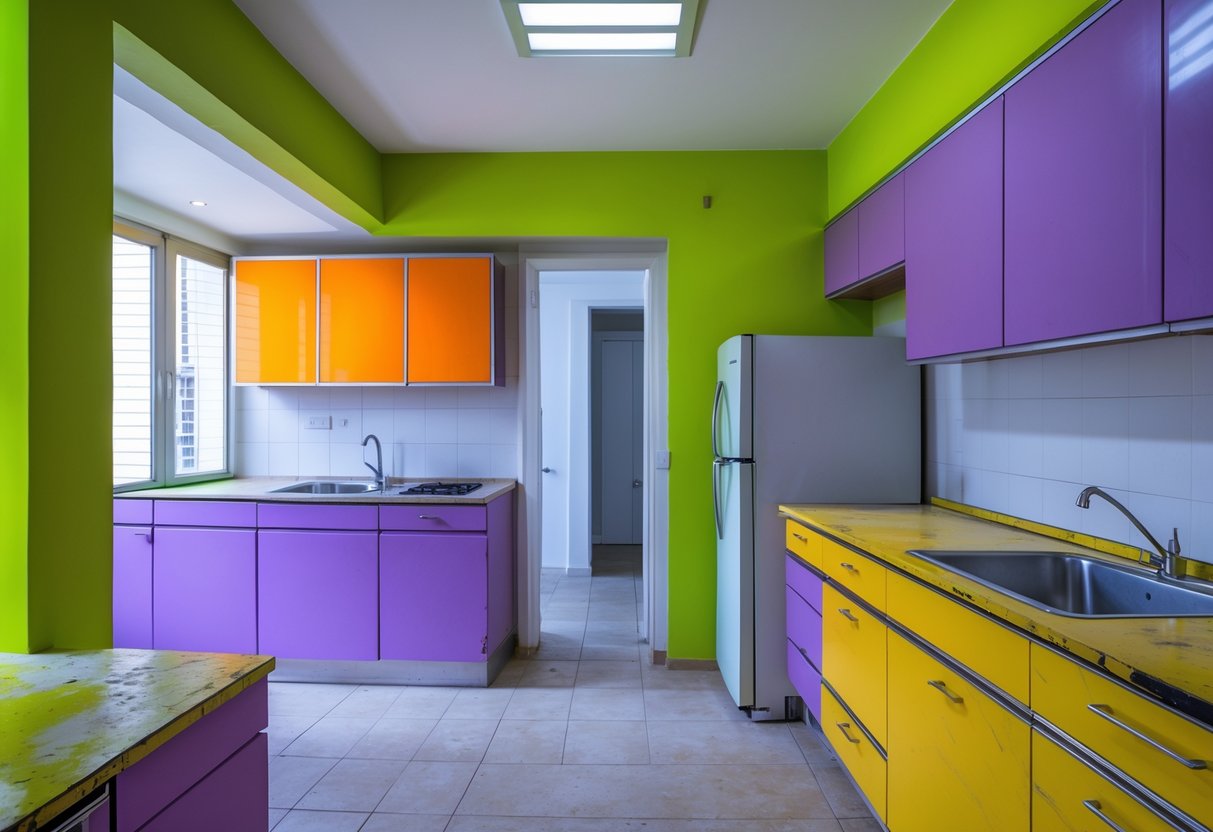
You also want to avoid colors where stains and kitchen grease blend in too easily, such as shades between orange and brown. The right paint can brighten your kitchen and keep it looking fresh, but the wrong one can make it feel dull or even highlight messes.
Knowing which colors to skip can save you time, effort, and regret. Keep reading to find out the worst colors for your kitchen and why they might not be the best fit for your space.
The Worst Kitchen Paint Colors and Why to Avoid Them
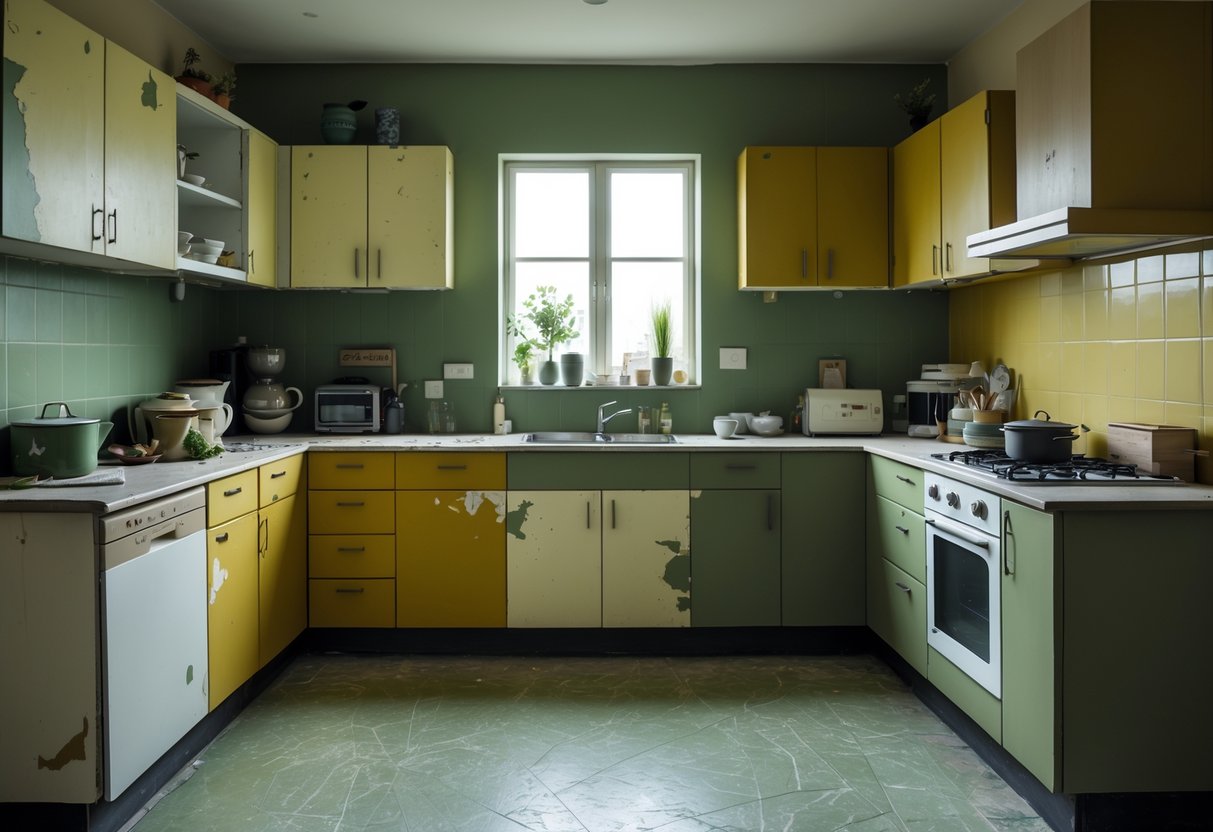
Choosing the wrong kitchen color can make the space feel smaller, darker, or less inviting. Some colors can clash with your lighting or distract from your kitchen’s features. Understanding the downsides of certain shades helps you avoid common pitfalls.
Dark and Moody Shades
Dark colors like deep browns, dark grays, and off-blacks can make your kitchen feel cramped. They absorb light rather than reflect it, which leads to a shadowy, gloomy atmosphere. This can be especially problematic if your kitchen has limited natural light.
In kitchens, where brightness and cleanliness are key, dark shades may highlight dirt and smudges more easily. They also tend to clash with colorful food and accessories, making the space visually heavy.
Overly Vibrant Colors
Bright reds, neon shades, and highly saturated yellows can overwhelm the senses. These bold colors may induce stress or fatigue when you spend time cooking or eating.
Intense hues can also be difficult to match with cabinetry, appliances, and countertops. Overly vibrant colors might limit your decor options and quickly feel outdated. They also often create glare in bright kitchens.
Clinical Whites and Cold Grays
While white and gray are popular, too stark a white or very cool gray can create a sterile, cold feeling. This may cause your kitchen to feel impersonal rather than warm and welcoming.
Walls painted in these shades can emphasize shadows and imperfections on surfaces. Cold grays especially tend to make a kitchen look gloomy if not balanced with warm accents or good lighting.
Outdated Color Trends
Some colors once popular in kitchens—such as yellow-tinted beige or certain shades of green, blue, and purple—have fallen out of favor because they can make a kitchen look dated.
These colors might also cast unflattering tones on food and skin alike. Sticking to timeless, neutral, or softly muted colors is usually a safer bet for longevity and resale value.
| Avoid These Colors | Reason |
|---|---|
| Dark Brown / Black | Makes kitchen feel smaller and shows smudges easily |
| Bright Red / Neon | Overwhelms space; hard to match with other decor |
| Stark White / Cool Gray | Creates cold, sterile environment |
| Yellow-Tinted Beige / Muted Green & Purple | Dated look; shadows cast on food and surfaces |
How Poor Color Choices Impact Kitchen Atmosphere
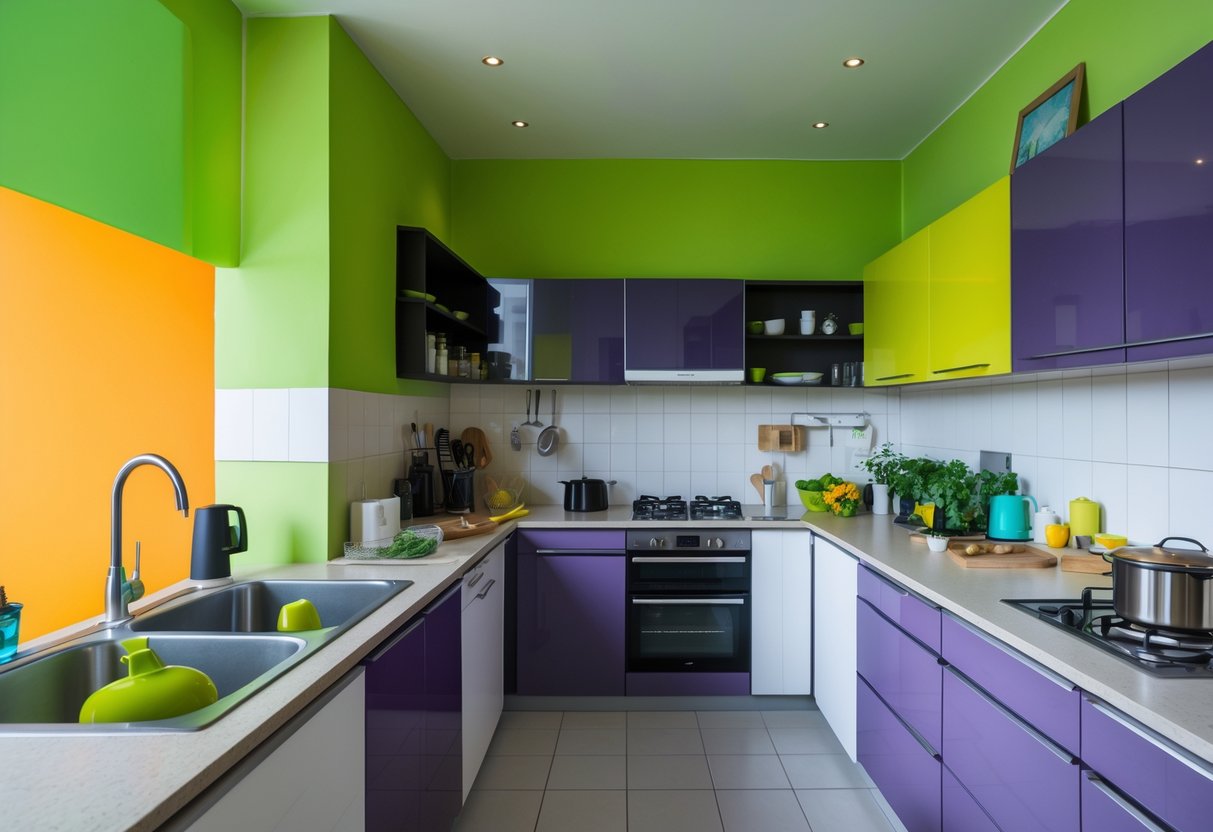
Choosing the wrong color for your kitchen can affect how you feel, how the space looks in different lighting, and how well your decor and appliances fit together. These factors combine to make your kitchen either inviting or uncomfortable.
Effect on Mood and Appetite
Colors influence your mood significantly in a kitchen setting. For example, dark grays can make the space feel dull and uninspiring, which might reduce your appetite or motivation to cook.
Bright reds might sound energetic but can be overwhelming, potentially causing agitation rather than comfort. Cooler tones often calm you down, but if they are too muted, they may make the kitchen feel lifeless.
Picking colors that support a positive mood can encourage more enjoyable meals and kitchen time. Consider how you want to feel in your kitchen before choosing a strong or dark shade.
Lighting Challenges
Poor color choices can also interact negatively with your kitchen’s lighting. Dark colors, like deep gray or black, absorb light and make the room look smaller and gloomier.
Natural and artificial lights affect paint colors differently. A bright red might look intense under daylight but harsh under warm bulb light, which can make your kitchen less pleasant during evenings.
Colors that show dust and smudges easily, such as dark tones, also make cleaning more labor-intensive. You might find yourself constantly wiping surfaces to keep the kitchen looking clean, which can quickly become frustrating.
Cohesion With Appliances and Decor
Your paint color should complement your kitchen appliances and furniture. If the walls clash with stainless steel appliances or wooden cabinets, the room feels disjointed and visually chaotic.
Colors that wash out natural wood tones can make cabinetry look dull, which diminishes the overall appeal of your kitchen décor. You want harmony between your paint, appliances, and decor to create a balanced and inviting space.
Using a color that works with your existing materials helps maintain a consistent style and saves you from needing costly updates to other elements later.

As a mom of three busy boys, I know how chaotic life can get — but I’ve learned that it’s possible to create a beautiful, cozy home even with kids running around. That’s why I started Cultivated Comfort — to share practical tips, simple systems, and a little encouragement for parents like me who want to make their home feel warm, inviting, and effortlessly stylish. Whether it’s managing toy chaos, streamlining everyday routines, or finding little moments of calm, I’m here to help you simplify your space and create a sense of comfort.
But home is just part of the story. I’m also passionate about seeing the world and creating beautiful meals to share with the people I love. Through Cultivated Comfort, I share my journey of balancing motherhood with building a home that feels rich and peaceful — and finding joy in exploring new places and flavors along the way.

