Waiting for a proposal is hard enough on its own, but for creator @georgiaburles, it comes with an extra complication: a self-described need for control that is clashing head-on with the agony of not knowing a single detail while her boyfriend secretly plans the whole thing.
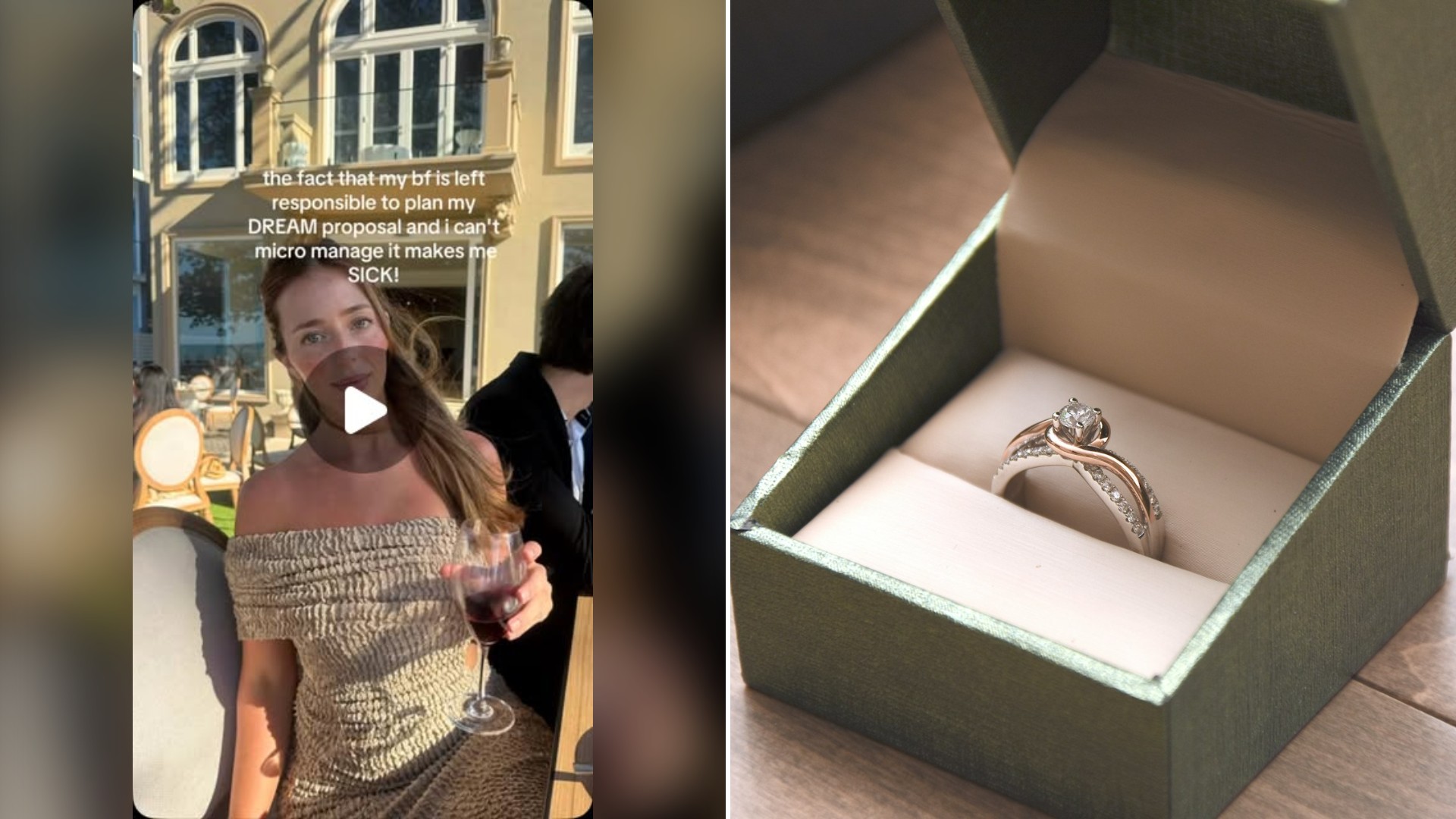
The video leans into the humor of that mismatch, with her openly admitting her own tendencies toward wanting to know and control everything, only to be stuck in the one major life moment she has zero say over. Engagement and proposal content consistently performs well online, and the self-deprecating honesty here gives it an extra layer of relatability beyond the usual countdown-to-a-ring format.
Psychologists who study personality traits note that a strong preference for control is an extremely common and entirely normal trait, often tied to anxiety management rather than any clinical condition, even when people informally describe themselves using clinical language like OCD. Wanting predictability and structure helps a lot of people feel grounded, which is exactly why a scenario explicitly designed around surprise and secrecy, like a proposal, can feel so uniquely uncomfortable for someone wired that way.
Proposal planning itself has become a far more involved process than it once was, with many partners now coordinating with photographers, specific locations, and even family members behind the scenes for weeks or months before the actual moment. That extended timeline means the waiting period a partner experiences, often without even knowing it is happening, can stretch on long enough to become its own genuine emotional experience, mixing excitement, anxiety, and in cases like this one, a very real test of patience.
Relationship counselors who work with engaged couples often point out that this waiting period, uncomfortable as it can be, tends to reveal something useful about a relationship’s dynamic: how a couple handles one partner needing to let go of control while the other quietly takes the lead on something meaningful. Successfully navigating that temporary imbalance, even with plenty of joking impatience along the way, is sometimes framed as an early, low-stakes preview of the kind of give-and-take long-term partnership and eventually marriage require.
There is also a broader trend of partners openly documenting the lead-up to a proposal rather than just the moment itself, turning what used to be a private, after-the-fact reveal into an ongoing storyline followers can watch unfold in real time. For creators, this approach tends to build more sustained engagement than a single proposal video alone, since followers become invested in the anticipation itself, not just the eventual payoff.
Whatever the actual timeline looks like for @georgiaburles, the appeal of the video is in its honesty about how hard surrendering control can be, even over something as happy as an upcoming proposal. It is a small, funny reminder that even the best news can be difficult to sit with when you are wired to want to know everything in advance.