Most people’s idea of a big catering order doesn’t come with an overnight prep shift, but that’s exactly what @khalaniskitchen documented in a reel that’s part behind-the-scenes diary, part small-business flex. The young private chef walks viewers through the hours spent prepping an $1,800 catering order meant to feed 75 people, ending the video with a promise that the drop-off itself is coming in a part two.
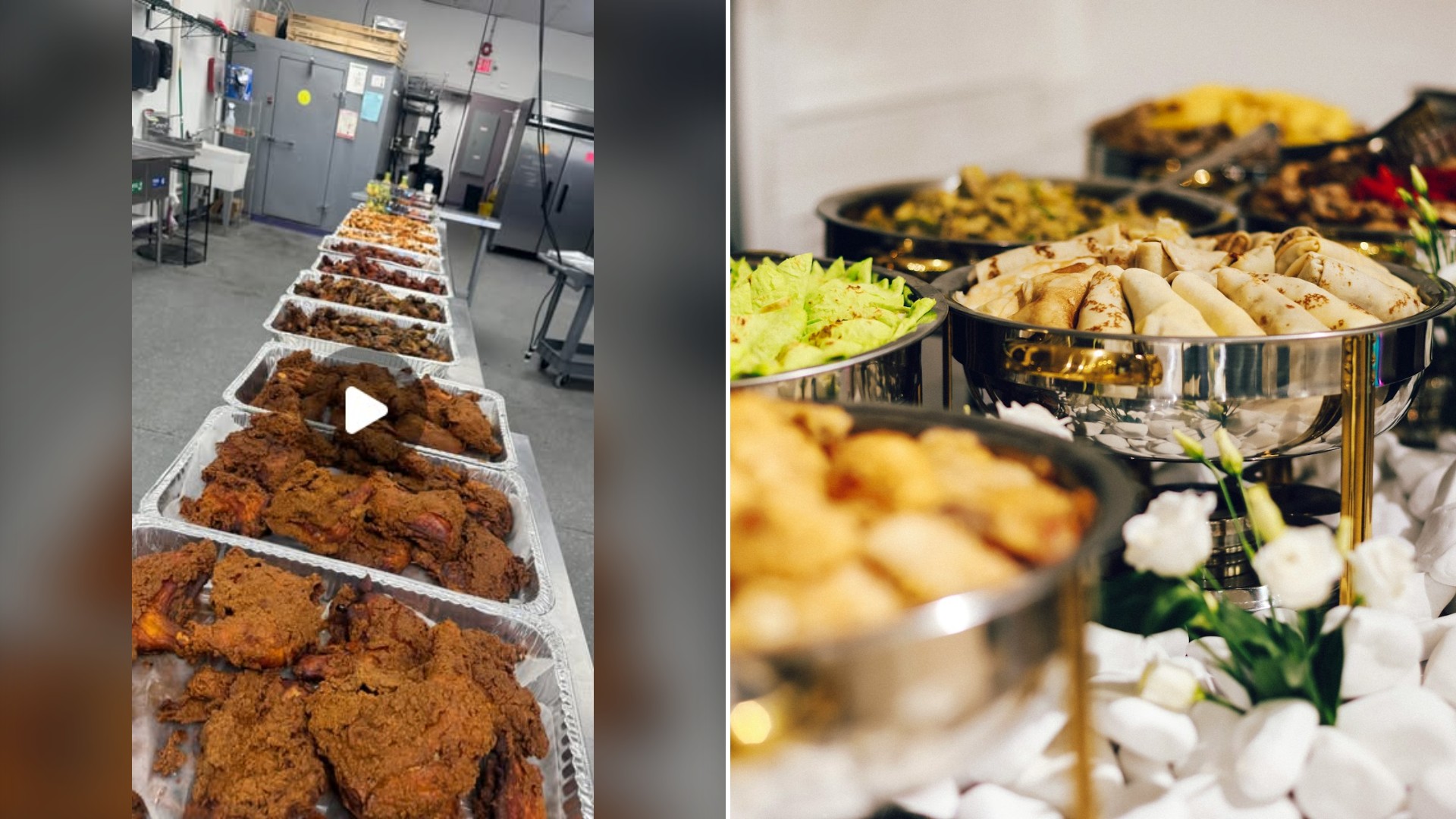
The video shows rows of foil trays lined up in a commercial-style kitchen space, each one packed with food that’s clearly been portioned with a specific headcount in mind. Catering a party of 75 isn’t a scaled-up version of cooking dinner for a family; it’s closer to running a small restaurant service for a single night, with every component timed so that nothing is cold, dried out, or running late when the client needs it ready to serve.
An $1,800 order for 75 people works out to roughly $24 per head, a number that sounds reasonable until you account for everything that figure actually has to cover. Ingredients are only one line item; a private chef running their own catering operation also has to price in prep time, any rented or owned equipment, transportation, packaging, and the margin that makes the whole thing worth doing as a business rather than a favor for a friend. Viewers in the comments often do this math instinctively, which is part of why dollar-figure catering videos perform so well: everyone wants to know if the math works out.
The overnight timing shown in the video isn’t just for dramatic effect. Large-format catering dishes, especially anything braised, roasted, or slow-cooked, genuinely benefit from an overnight head start, both because certain proteins need hours to become tender and because spreading the workload across two days keeps a single chef from trying to cook 75 portions worth of food in one frantic afternoon. Professional caterers build their prep schedules backward from the drop-off time for exactly this reason.
Running a private catering business out of a rented commercial kitchen, rather than a storefront, has become an increasingly common path for young chefs who want to build a client base without taking on the overhead of a full restaurant. It allows for flexibility, lower startup costs, and the ability to scale up or down depending on how many bookings come in during a given month. The tradeoff is that almost everything, from sourcing to delivery, falls on one person or a very small team, which is exactly what makes a behind-the-scenes video like this one so compelling to watch.
For anyone considering hiring a private chef for a party or event, a video like this is a useful behind-the-curtain look at what that price tag is actually paying for. It isn’t just the finished trays of food; it’s the sourcing, the labor, the overnight hours, and the logistics of getting everything to the right place, hot and on time, for a party that only gets one shot at a good first impression.
There’s also a broader small-business story here that goes beyond food. Young entrepreneurs who build visible, documented businesses on social media are effectively running two jobs at once: the actual catering work, and the content that markets it. A well-shot prep video doubles as free advertising, showing prospective clients exactly how seriously their order would be handled, which is likely part of the reason creators like this one keep filming the unglamorous overnight hours instead of just posting the final plated spread.
With a part two promised showing the actual drop-off, the video sets up a natural follow-up that keeps an audience invested in a single order from start to finish, turning one catering job into an ongoing story rather than a single viral clip.
More from Cultivated Comfort
- Food Vlogger Says His Local Friends Laughed at a Mexico City Stall Selling Hand Made Dinosaur Quesadillas, Then Calls the Chicharron Prensado Filling Absolutely Insane
- Man Filming Inside Costco Says a $330 Disneyland Bundle With a Two Day Park Hopper, a Lightning Lane Pass and a $60 Dining Credit Saves a Family of Four $980, Then Shows the Math
- Woman Says She Spent 24 Hours in a Luxury Seafood Spa Buffet in China and the Video Shows Red Crustaceans Piled on Ice, a Tablet Menu, a Makeup Counter and a Room With a Minibar