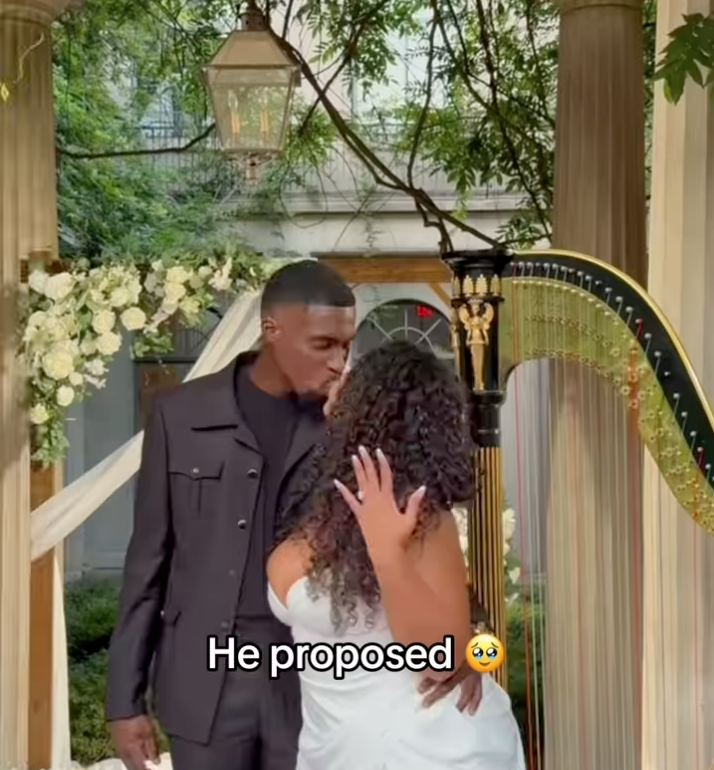
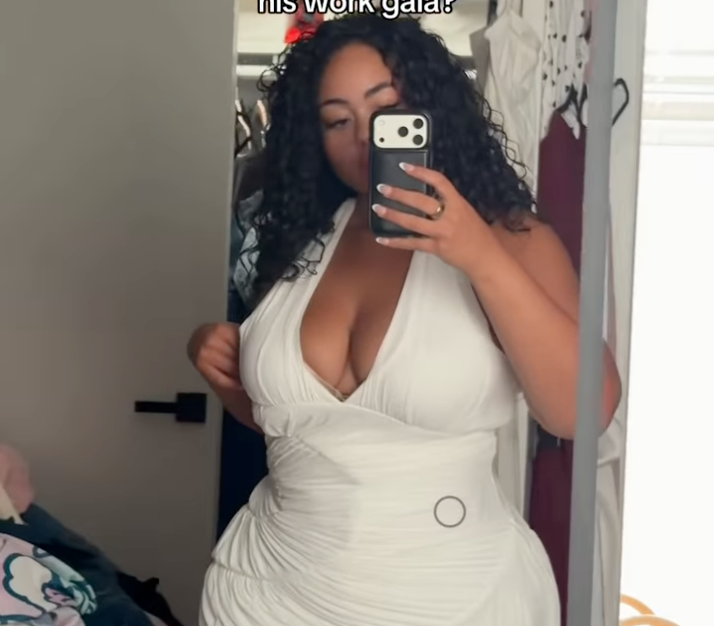
Anyone who has ever suspected a proposal was coming knows the specific mental spiral that follows: every unusual behavior suddenly becomes evidence, and one creator decided to document that exact spiral in real time in the days leading up to a work gala.
The creator, @phaithmontoya, built a montage out of the small, suspicious clues she noticed her boyfriend dropping in the run-up to the event, most notably an unusual amount of happiness and excitement that didn’t quite match the occasion. On camera, she jokes about the two obvious possibilities: either a proposal is coming, or she simply needs to wear all white and hedge her bets.
The structure of the video, building anticipation clue by clue toward an eventual reveal, is part of what makes it work even before the payoff arrives. Anyone who’s ever been in the position of suspecting a proposal knows how consuming that low hum of anticipation can become, turning completely ordinary behavior, a partner smiling a little too much, seeming a little too eager about an upcoming event, into potential evidence for a much bigger theory.
There is something almost universally relatable about the specific genre of overanalysis this video documents. Once the idea of a proposal enters someone’s head, even as a passing joke, it becomes nearly impossible to unsee. A partner humming in the shower becomes suspicious. A phone turned face-down on the counter becomes suspicious. A text that gets answered a beat too quickly, or not quickly enough, becomes suspicious. The mind, once primed to look for a pattern, will find one whether or not it is actually there, and the montage format lets viewers watch that detective work happen in something close to real time, clue by clue, rather than hearing about it after the fact in a single retelling.
View this post on Instagram
What makes the joke about wearing white land so well is that it acknowledges the absurdity of the spiral without deflating it. She isn’t claiming certainty that a proposal is imminent; she’s naming the possibility out loud specifically so that, whatever happens at the gala, she gets credit for having called it, or for having been delightfully, publicly wrong. That kind of self-aware hedging has become its own small comedic tradition within the broader genre of will-they-won’t-they relationship content, a way of getting ahead of the audience’s own speculation before the comment section can do it first.
There’s a reason proposal-adjacent content built around this kind of anticipation performs so well. It invites the audience to play detective alongside the creator, piecing together the same small tells in real time rather than simply being told the outcome upfront. Serialized anticipation, the slow accumulation of small clues rather than one dramatic reveal, tends to hold attention in a way that a single climactic video cannot replicate on its own, because it gives the audience something to speculate about between posts, not just something to watch once and move past. Comment sections on videos like this one tend to fill up with viewers offering their own theories, pointing out clues the creator may have missed, or recounting their own experience of suspecting, correctly or incorrectly, that a proposal was coming.
Whether or not her suspicions panned out, the format itself, laid out clue by clue with a joke about wearing white just in case, makes the eventual reveal, whatever form it takes, land with far more build-up than a proposal shared without any of that groundwork. There is a reason wedding and engagement content creators increasingly favor this kind of before-and-after structure over a single standalone reveal video: the anticipation itself has become part of the story, not just a setup for it. A viewer who has already watched someone talk through their suspicions has an emotional stake in finding out whether those suspicions were right, in a way that a cold-open engagement video simply cannot replicate.
Gala season tends to produce more than its fair share of proposal theories for exactly this reason: dressed-up events, heightened emotions, and a partner acting slightly off-script are a combination almost engineered to set the imagination running, whether or not there’s actually a ring involved. Formal events carry an inherent sense of occasion that everyday life doesn’t, which makes them fertile ground for this kind of speculation regardless of whether anything is actually planned. A partner who is simply excited about seeing colleagues, or nervous about a speech, can easily get swept up into the same category of suspicious behavior as a partner who is quietly planning something enormous, and the fun of videos like this one is that, for a few days at least, nobody watching, including the person doing the speculating, can be entirely sure which explanation is the correct one.
That uncertainty is, in a sense, the whole point of the video, and the reason it works whether or not a ring ever materializes. A confirmed engagement video is a single data point, joyful but static. A video built around the guessing itself invites the audience into the process, not just the outcome, and lets them experience the same low-grade suspense the creator is living through in real time. It’s a format that turns the private, slightly paranoid habit of overanalyzing a partner’s behavior into something communal, something an entire comment section can weigh in on, laugh about, and eventually find out the answer to together. Ring or no ring, the video already did its job the moment people started watching and wondering along with her.