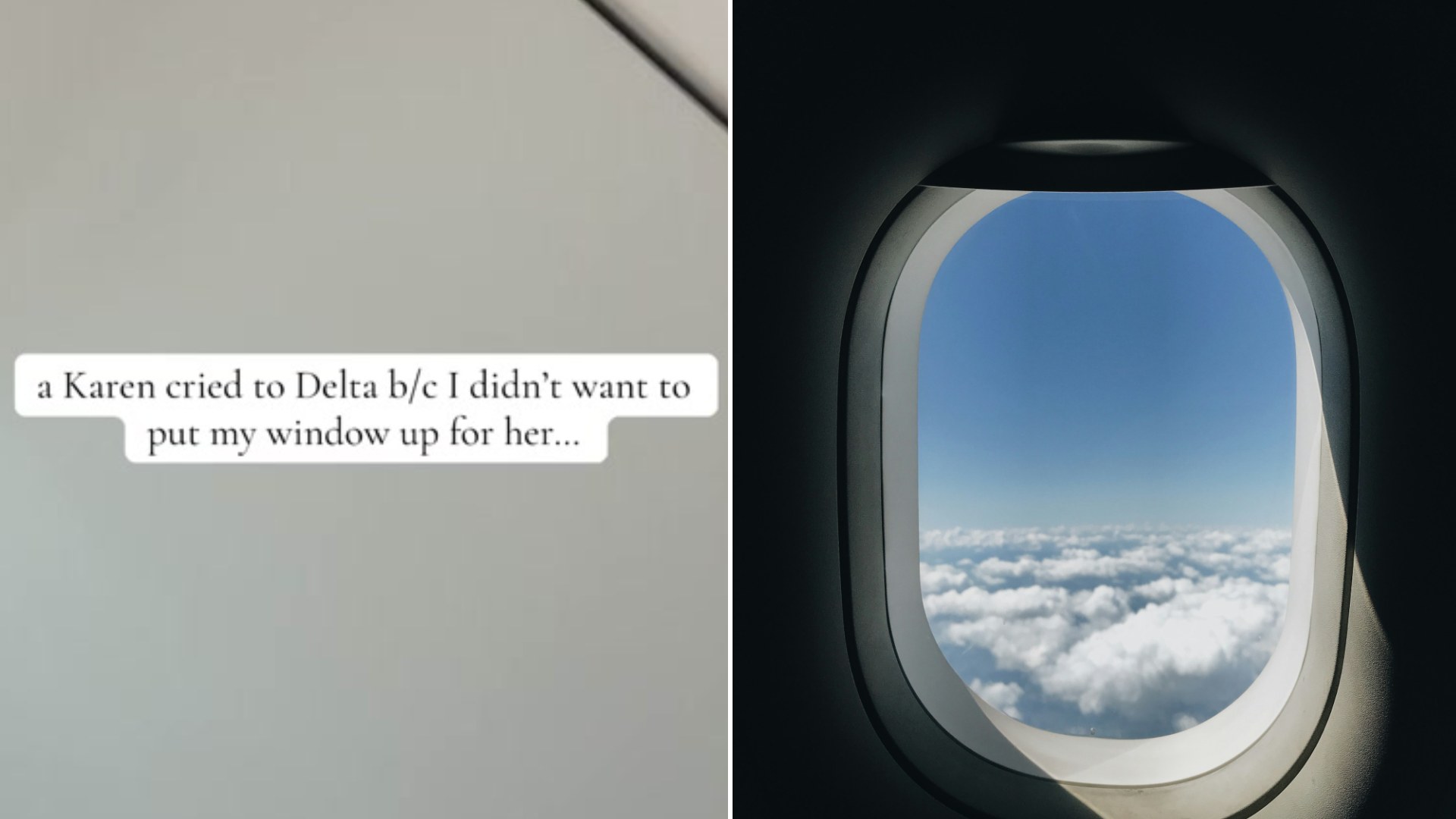
A TikTok creator who posts as @ohhhnyny_ has recounted a tense in-flight dispute over something as small as a window shade, telling viewers in a video watched nearly 748,000 times that she refused to close her window shade on a Delta flight, only to have a fellow passenger complain to the airline in a way she describes as disproportionate to the situation, as if she had “put hands on” the passenger.
Her caption captures the frustration with a mix of humor and disbelief: “you woulda thought I put hands on this lady,” tagged with hashtags including #fyp, #middleseat, #windowseat, #karensoftiktok, and #unacceptable, along with a direct tag of the airline, @delta. The framing signals that the creator sees the complaint as a significant overreaction to what she characterizes as a minor, personal decision about her own window shade.
According to the creator, the conflict began over a simple disagreement: whether the window shade in her row should remain open or closed during the flight. She recounts declining to close it, presumably preferring the view or the natural light, a preference she frames as entirely reasonable and within her rights as the passenger seated at the window. What followed, according to her account, was a complaint escalated to the airline itself, with the other passenger apparently characterizing the interaction in terms serious enough that the creator felt compelled to push back publicly against what she sees as an exaggerated portrayal of a minor disagreement.
In-flight etiquette disputes have become a dependable source of viral content, largely because air travel places strangers in close, confined quarters for extended periods, often surfacing small disagreements over shared space, armrests, reclining seats, and yes, window shades, that might never arise in ordinary daily life. The hashtag #karensoftiktok, a reference to a broader internet trend labeling and calling out perceived entitled or overreactive behavior, situates the creator’s video within that familiar online genre, framing the other passenger’s complaint as an example of overblown grievance rather than a legitimate concern.
Because the story is told entirely from the creator’s perspective, the other passenger’s account of the interaction, and any context she may have had for feeling strongly enough to escalate the complaint to Delta directly, isn’t represented in the video. What is clear is that a dispute over something as ordinary as a window shade managed to escalate into a formal complaint, a sequence of events the creator clearly found both frustrating and, in hindsight, somewhat absurd.
The Takeaway
Shared spaces like airplane cabins inevitably produce small conflicts over competing preferences, and flight attendants generally recommend that passengers try to resolve minor disagreements, window shades, reclining seats, shared armrests, directly and politely with a seatmate before escalating to crew involvement, reserving formal complaints for situations that genuinely warrant them. Airlines, for their part, are generally better positioned to focus their attention on safety concerns and serious passenger conflicts rather than adjudicating personal preference disputes between seatmates. When a disagreement does arise, a brief, courteous conversation about finding a compromise, whether that’s the shade being partially closed or simply timing it around meal service, often resolves the friction faster than escalating the issue to airline staff.