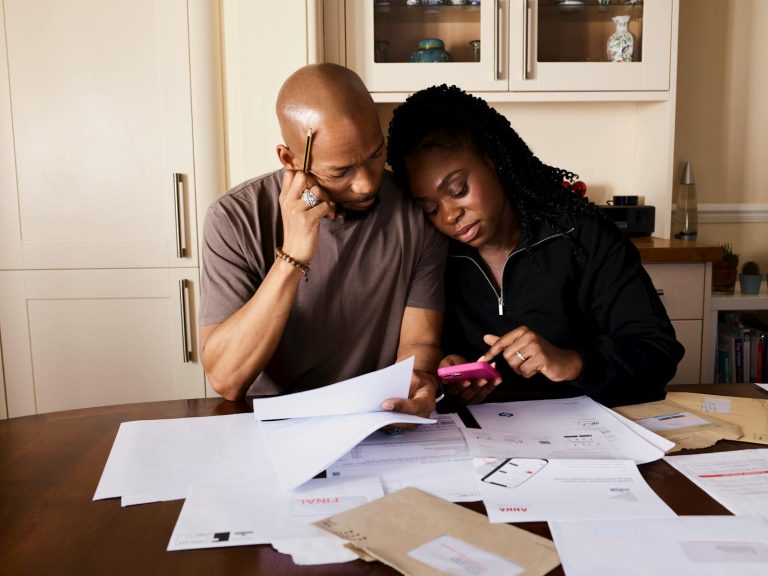
When Bella and her partner Reason named their daughter Pola, they thought the choice was romantic. The name was inspired by Polaris, the North Star, which Reason had pointed out on the night he asked Bella to be his girlfriend. But when relatives heard “Pola,” they didn’t think of stars. They thought of Polaris Inc., the company that makes ATVs and snowmobiles. What followed was a family conflict so intense that Bella says it put real strain on her relationship, all because of a four-letter name.

Their story, which first gained attention through a 2023 feature by Talker News, continues to resurface in parenting forums and social media debates. It strikes a nerve because the argument it captures — who gets the final say on a baby’s name, and what counts as a “real” name — is one that plays out in families everywhere.
The story behind the name
According to Bella’s account, the origin of Pola was simple and personal. Early in their relationship, Reason pointed to the brightest star in the night sky, identified it as Polaris, and used the moment to ask her out. Years later, when the couple was expecting their first child, that memory resurfaced. They settled on Pola: short, distinctive, and tied to a moment that mattered to both of them.
To Bella and Reason, the name carried weight. To several family members, it carried a logo. As The Independent reported, relatives quickly drew a connection to Polaris Inc., the Minnesota-based manufacturer of off-road vehicles, snowmobiles, and motorcycles. The teasing started at family gatherings and escalated in private messages, with some relatives urging the couple to reconsider before the birth certificate was finalized.
When teasing turned into real pressure
Bella has described the criticism as going well beyond lighthearted jokes. Family members questioned whether Pola would be mocked at school, whether employers would take her seriously, and whether the couple had thought the decision through at all. Some framed their objections as concern for the child. Others, Bella said, were blunt enough that the remarks felt like personal attacks on her and Reason’s judgment.
The pressure took a toll. Bella told Talker News that the constant pushback created tension between her and Reason, with the stress of defending their choice bleeding into their relationship. She eventually stopped reading messages and comments about the name because, in her words, the remarks had become too hateful. Still, she maintained that parents who love an unusual name should “just go for it.”
That stubbornness resonated with other parents in similar positions. A video by a young mother defending her own daughter’s uncommon name drew comparisons, with viewers noting how quickly relatives leap from curiosity to condemnation when a name doesn’t fit expectations.
A name debate that reflects something bigger
Bella and Reason’s experience fits a pattern that naming researchers have tracked for years. Data from the U.S. Social Security Administration shows that the concentration of popular baby names has been declining for decades. In the 1950s, the top 10 boys’ names accounted for roughly 30% of all births; by the 2020s, that share had dropped below 10%. Parents are choosing more varied, less traditional names than at any point in modern record-keeping, and that shift generates friction with older generations who grew up in an era of greater conformity.
The friction isn’t just aesthetic. Research published in the Journal of Experimental Social Psychology has found that people form snap judgments about others based on first names, associating uncommon names with lower socioeconomic status or reduced competence, often inaccurately. Those biases help explain why relatives react so strongly: they aren’t just critiquing a sound, they’re projecting fears about how the world will receive the child.
But the evidence on long-term outcomes is more nuanced than the critics suggest. A 2023 study in the British Journal of Psychology found that while unusual names can attract initial attention, the effect on a child’s social development depends far more on family environment and community than on the name itself. In other words, the anxiety that drives relatives to stage interventions over a baby name may be disproportionate to the actual risk.
Online, the debate splits sharply
When Bella’s story reached a wider audience, the response was polarized. Some commenters echoed her family’s concerns, arguing that parents have a responsibility to choose names that won’t invite ridicule. Others were firmly on Bella’s side. A related story on Upworthy described how one set of parents received overwhelming support after their relatives had what the outlet called an “unhinged” reaction to a newborn’s name, with readers calling the family’s behavior controlling.
The online split mirrors the offline one, but with higher volume and less nuance. Supporters frame unusual names as acts of creativity and love. Critics frame them as selfish experiments conducted on children who have no say. Both sides tend to argue past each other, and parents like Bella often end up caught in the crossfire, defending a decision that felt deeply personal against strangers who treat it as a public referendum.
Who actually gets to decide?
Legally, the answer is straightforward: in most jurisdictions, parents have near-total authority over naming. Courts rarely intervene unless a name is deemed obscene or likely to cause administrative confusion. Socially, though, the question is messier. Grandparents, aunts, uncles, and friends often feel entitled to weigh in, and the rise of social media means that even strangers can pile on before the ink on the birth certificate is dry.
For Bella and Reason, the resolution was quiet rather than dramatic. They kept the name. Bella has said that Pola suits her daughter and that the family members who objected most loudly have, over time, softened. The North Star story still belongs to them, even if some relatives still hear an engine when they say their daughter’s name.
Their experience is a reminder that naming a child has never been a purely private act. It’s a declaration made to a community, and communities push back. The question isn’t whether that pushback will happen. It’s whether parents can hold their ground long enough for the name to become what it was always meant to be: not a brand, not a punchline, but a person.
“`
More from Cultivated Comfort:
- 7 Retro Home Features That Builders Should Bring Back
- 7 Antique Finds That Are Surprisingly Valuable Today
- 7 Forgotten Vacation Spots Your Parents Probably Loved
- 6 Boomer China Patterns That Are Selling Like Crazy Online

As a mom of three busy boys, I know how chaotic life can get — but I’ve learned that it’s possible to create a beautiful, cozy home even with kids running around. That’s why I started Cultivated Comfort — to share practical tips, simple systems, and a little encouragement for parents like me who want to make their home feel warm, inviting, and effortlessly stylish. Whether it’s managing toy chaos, streamlining everyday routines, or finding little moments of calm, I’m here to help you simplify your space and create a sense of comfort.
But home is just part of the story. I’m also passionate about seeing the world and creating beautiful meals to share with the people I love. Through Cultivated Comfort, I share my journey of balancing motherhood with building a home that feels rich and peaceful — and finding joy in exploring new places and flavors along the way.