“Today I learned: when you’re in an airplane at night, the pilots can’t see anything.” That is the sentence Annie Perry opened with, and it is the kind of fact that can make a nervous flyer grip the armrest.
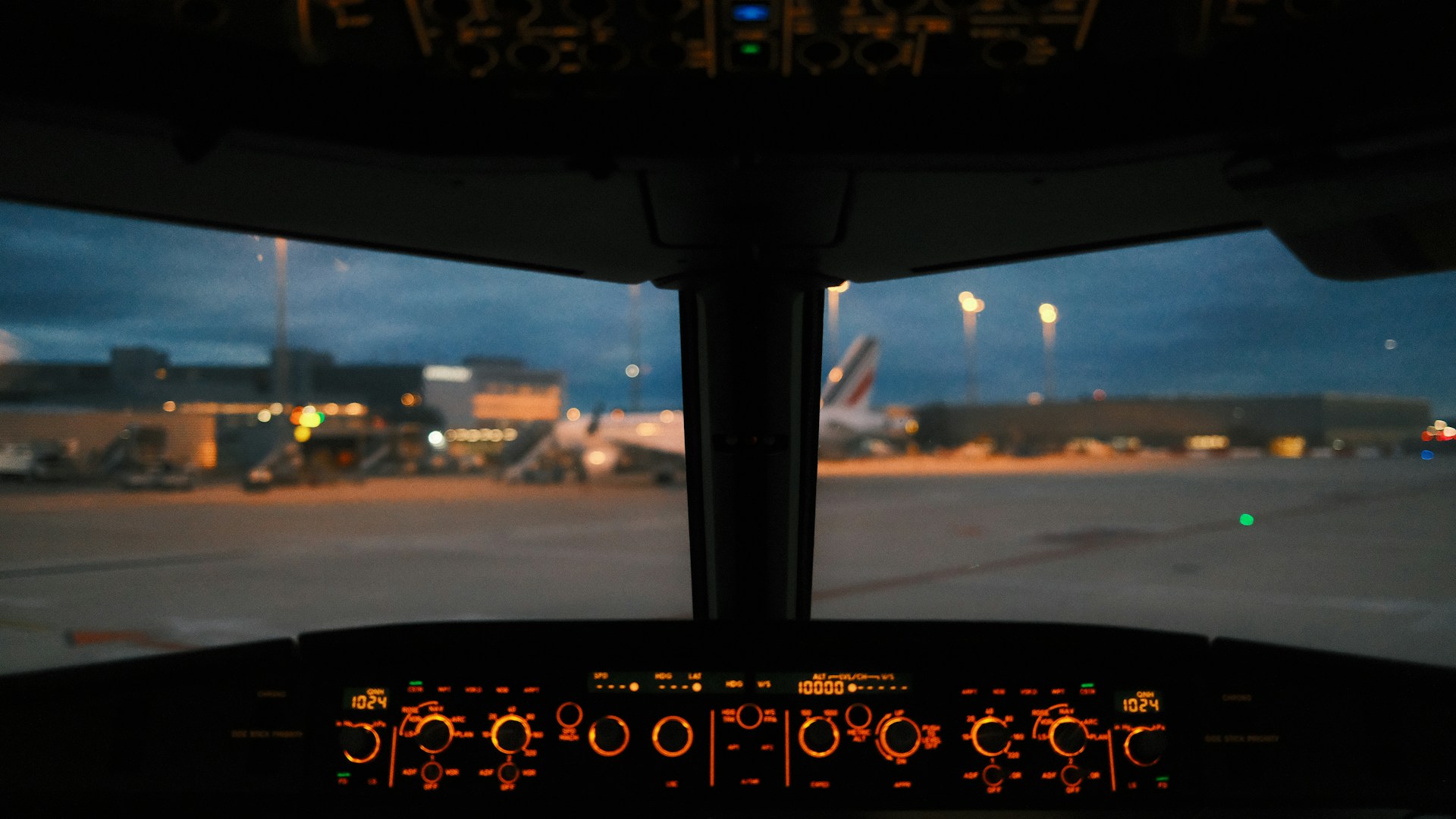
Perry, who posts as @thestrawberryannie, says she always assumed airplanes had headlights, the way cars do. What she saw in a cockpit at night, she says, was nothing like that.
@thestrawberryannie
“They Have All Their Little Lights And Buttons And Switches, And That Is The Sky”
Perry shows a cockpit after dark, lit only by the glow of the instruments. Out of the window, she says, there is pure darkness.
“They have all their little lights and buttons and switches,” she says, “and that is the sky. Just nothing.”
She says she did not expect complete darkness. Her honest reaction, she says, is that “it’s a little unsettling.”
Why She Thought Planes Had Headlights
Many travelers share her assumption. We spend our lives behind the wheel of cars, where headlights light up the road a few hundred feet ahead, so it feels natural to picture a plane with a big beam in front.
The truth is that planes do have lights. They carry navigation lights on the wingtips and tail, flashing strobes and landing lights, but those lights are mainly there so other aircraft and people on the ground can see the plane.
They are not what the crew uses to find the way across the sky. That job belongs to something else.
What Pilots Use Instead Of A Windshield View
Pilots are trained to fly using their instruments, and that is the point behind all of those little lights and buttons she describes. The instruments tell the crew the plane’s altitude, speed, heading and position.
Commercial flights also follow planned routes, and air traffic controllers track aircraft using radar and radio. Controllers give pilots directions and keep planes separated from one another.
Modern airliners carry navigation systems and automation that help crews follow a route precisely. That is why a view of black sky out the window does not mean the plane is flying blind.
Her reaction is a reminder of how different the view from the flight deck is from the view in the cabin. Passengers see a window and a wing, while the crew sees a panel full of screens, dials and switches.
That glowing panel is the real windshield at night, and it shows far more than any headlight could.
A Little Context For Her “Can’t See Anything” Claim
Perry’s observation is a fair description of what a cockpit window can look like on a dark night, especially over open water or empty countryside. It is also a bit of a simplification.
On many nights pilots can see stars, the moon, clouds and the lights of cities and towns below. Over populated areas, the ground can glitter with lights that crew can pick out easily.
The key difference is that pilots do not rely on what they can see out the window to stay on course. At night, as in the daytime, they depend on instruments, charts and communication with air traffic control.
Why Flying After Dark Is Still Considered Very Safe
If her video made your stomach flip, the good news is that commercial flying is among the safest ways to travel. Airlines run extensive training, and crews practice instrument flying regularly.
Night flights are a normal part of airline schedules. Millions of passengers take overnight and red-eye flights every year, and the crews up front are trained for exactly those conditions.
Planes also carry equipment designed to help prevent collisions and to keep pilots informed. Add the layers of procedures that surround every flight, and the sight of a dark windshield looks a lot less scary.
How To Calm Nerves On A Night Flight
If you find the idea unsettling, you are far from alone. A bit of knowledge and a few simple habits can help you relax in your seat.
- Remember that instruments, not the view, guide the plane, and that pilots train for this regularly.
- Look out your own window at the flashing lights on the wing. They are a sign the aircraft is lit and visible.
- Try a travel pillow, headphones and a favorite show or audiobook to settle your mind.
- Tell the flight attendant if you are nervous. Crew members talk to anxious passengers all the time.
- Choose a seat over the wing if you prefer the smoother ride, which many people find easier on the stomach.
A calm breathing routine can also help. Breathe in slowly for four counts and out for six, and repeat until your shoulders drop.
It also helps to remember that turbulence, noises and the dim cabin are normal parts of night travel. None of them mean something is wrong.
Perry’s video is a good reminder that the view from a cockpit is not the same as the experience of flying. The sky may be dark, but the people in charge have a whole panel of tools to find their way through it.
And if you still find it a little unsettling, as she does, that is perfectly normal. Even curious travelers can learn something new on every trip.
More Stories You May Like
- Retirees Who Paid Up To $499,999 To Live On A Cruise Ship Are Told To Leave In Cambodia After A Fuel Shortage, And The Founder Admits He Is The Villain In The Story
- Diner Calls An 11 Ounce Sirloin The Best Steak At Texas Roadhouse And Orders It Medium Rare And Pittsburgh, And Commenters Say Those Two Cannot Go Together
- Reviewer Orders A $30 Omelet Made With Six Eggs At Chef Ludo’s LA Restaurant, Calls It The Best Omelet Ever, But Says The Trout Was The Least Favorite