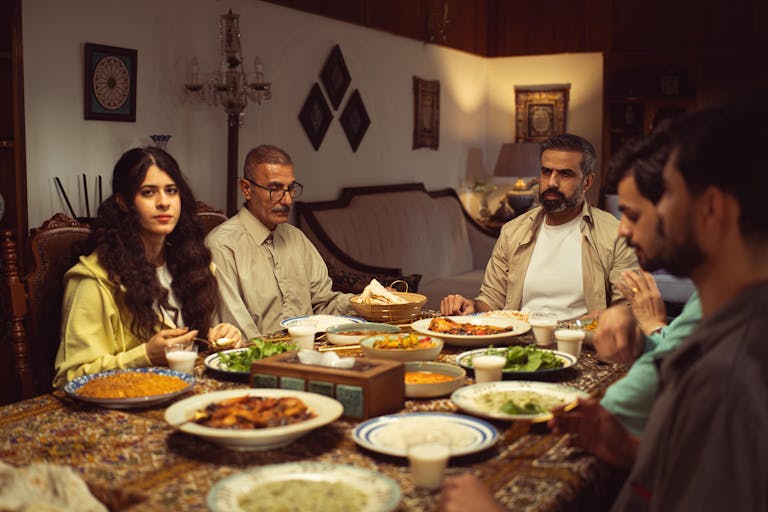
A recent post on Reddit’s popular “Am I the A**hole” forum struck a nerve with thousands of readers: a 20-year-old, freshly discharged from mandatory military service, told their grandparents to “go to hell” at a birthday dinner after the older couple dismissed months of sleeplessness, hypervigilance, and intrusive memories as “character building.” The post, which drew more than 4,000 comments before it was locked, split readers between those who called the outburst unforgivable and those who recognized it as the sound of someone finally refusing to be silenced about their own pain.

The story resonated in March 2026 partly because it touches a fault line that runs through millions of families worldwide. According to the International Institute for Strategic Studies, more than 60 countries still enforce some form of compulsory military service. Yet public conversation about the psychological toll on conscripts remains far quieter than the debate over combat veterans, leaving young people to navigate post-service distress inside families that may not believe it exists.
Mandatory Service, Invisible Trauma, and Generational Myths
Conscription does not have to involve combat to leave a mark. A 2006 study published in the Journal of Traumatic Stress found elevated rates of PTSD symptoms among Finnish conscripts, including those who never deployed, linked to factors such as bullying, loss of autonomy, and sleep deprivation. The U.S. Department of Veterans Affairs notes that deployment-cycle stress affects service members and their families through predictable phases of anticipation, separation, and reintegration, each carrying its own spike in anxiety, irritability, and emotional withdrawal.
Older relatives often interpret these reactions through the lens of their own wartime or post-war narratives. Grandparents who survived earlier conflicts may genuinely believe that stoicism is the healthiest response to hardship. But when a 20-year-old tries to describe panic attacks and is told “we got on with it,” the message received is not wisdom. It is dismissal. A 2011 meta-analysis in Psychological Bulletin found that perceived social support, or the lack of it, is one of the strongest predictors of whether someone develops lasting PTSD after a traumatic experience. Family members who reframe distress as weakness are not just being insensitive; they are, according to the data, actively worsening outcomes.
Emotional Invalidation and the Making of a Breaking Point
Psychologists use the term “emotional invalidation” to describe a pattern in which a person’s feelings are consistently minimized, mocked, or ignored. Phrases like “you’re too sensitive” or “others had it worse” are common examples. Marsha Linehan, the psychologist who developed Dialectical Behavior Therapy, identified chronic invalidation in childhood as a core contributor to emotional dysregulation later in life, a finding explored in detail in a 2018 review published in Borderline Personality Disorder and Emotion Dysregulation. While that research focused on personality disorders, its central insight applies broadly: people who are taught early that their emotions are wrong learn to distrust their own perceptions, and that distrust compounds when new trauma arrives.
For a young conscript returning to a family that already treated vulnerability as inconvenient, mandatory service does not create the invalidation pattern. It detonates one that was already in place. By the time the grandparents at that birthday dinner waved off their grandchild’s distress, they were not making a single mistake. They were repeating a script the family had rehearsed for years. Clinical literature on complex PTSD, as described in the ICD-11 diagnostic framework, recognizes that prolonged interpersonal trauma, including sustained emotional neglect, can produce symptoms distinct from single-event PTSD: disturbances in self-organization, chronic shame, and difficulty maintaining relationships. The birthday outburst, viewed through that lens, was not a sudden betrayal of family loyalty. It was the moment a lifetime of swallowed anger found words.
Why “Go to Hell” Can Sound Like Self-Preservation
To anyone outside the family, telling elderly grandparents to go to hell looks like a straightforward lapse in respect. Inside the dynamic, it can function as something closer to an emergency brake. Judith Herman, whose book Trauma and Recovery remains a foundational text in the field, writes that establishing safety is the first stage of healing from trauma, and that safety sometimes requires cutting off sources of ongoing harm, even beloved ones.
That does not make the outburst ideal. Trauma-informed therapists generally encourage planned, calm boundary-setting over reactive explosions. But they also acknowledge that a person whose nervous system has been running on high alert for months may not have access to calm in the moment when a grandparent says, essentially, “Your suffering doesn’t count.” The VA’s overview of PTSD symptoms lists hyperarousal, exaggerated startle responses, and irritability as core features of the condition. A harsh sentence delivered in that state is less a character flaw and more a predictable output of a nervous system that has not yet been helped to stand down.
From Estrangement to Possible Repair
Family estrangement is more common than most people assume. A 2020 survey by Cornell sociologist Karl Pillemer, published in his book Fault Lines: Fractured Families and How to Mend Them, found that roughly 27 percent of American adults are estranged from a close family member. The triggers vary, but Pillemer’s research identifies a recurring pattern: a single incident that crystallizes years of accumulated tension. A birthday dinner where someone finally says the unsayable fits that pattern precisely.
For the 20-year-old in the Reddit post, the days after the blowup likely included a disorienting mix of guilt, relief, and grief. Mental health professionals who specialize in estrangement, including those at the BetterHelp family therapy platform, note that people who step back from relatives often cycle through these emotions for months before settling into a clearer sense of what they need.
Repair, when it happens, tends to start small. Pillemer’s work suggests that successful reconciliations rarely involve dramatic apologies or tearful reunions. More often, they begin with a short letter, a single phone call limited to one topic, or an agreement to meet in a neutral setting with a therapist present. The key condition, according to trauma-informed practitioners, is that the person who was harmed gets to set the terms. That might look like telling grandparents that contact can resume if they agree not to compare traumas or dismiss therapy. It is a stance that protects the younger person’s recovery while giving the elders a concrete path forward, if they choose to take it.
Building Boundaries That Outlast the Blowup
Whether or not reconciliation ever happens, the young person’s long-term health depends on replacing reactive explosions with deliberate, sustainable limits. Clinicians who work with trauma survivors typically help clients identify specific boundaries around time (how long a visit lasts), topics (what subjects are off the table), and physical presence (which gatherings to attend and which to skip). The American Psychological Association’s trauma resources emphasize that boundary-setting is not a one-time event but an ongoing practice that evolves as a person heals.
In practical terms, that might mean limiting calls with grandparents to brief check-ins that steer clear of service-related topics, or declining holiday invitations when alcohol and political arguments tend to reignite old wounds. Some people find it helpful to rehearse responses in advance: “I’m not going to discuss that” or “I need to end this call now” are simple sentences, but they require practice to deliver without guilt when the person on the other end is someone you once loved without complication.
For conscripts and veterans navigating both service-related trauma and a family history of emotional invalidation, these boundaries are not just communication tools. They are part of recovery itself. The VA’s peer support programs and organizations like Give an Hour, which connects service members with free mental health care, offer structured environments where people can practice naming their needs before testing those skills inside the family.
None of this erases what happened at the birthday dinner. But it reframes the story. One outburst does not have to define a person’s relationship with their family forever. With the right support, it can become the starting point of something harder and more valuable than keeping the peace: building a life where honesty and self-respect are no longer treated as acts of betrayal.
More from Cultivated Comfort:
- 7 Retro Home Features That Builders Should Bring Back
- 7 Antique Finds That Are Surprisingly Valuable Today
- 7 Forgotten Vacation Spots Your Parents Probably Loved
- 6 Boomer China Patterns That Are Selling Like Crazy Online

As a mom of three busy boys, I know how chaotic life can get — but I’ve learned that it’s possible to create a beautiful, cozy home even with kids running around. That’s why I started Cultivated Comfort — to share practical tips, simple systems, and a little encouragement for parents like me who want to make their home feel warm, inviting, and effortlessly stylish. Whether it’s managing toy chaos, streamlining everyday routines, or finding little moments of calm, I’m here to help you simplify your space and create a sense of comfort.
But home is just part of the story. I’m also passionate about seeing the world and creating beautiful meals to share with the people I love. Through Cultivated Comfort, I share my journey of balancing motherhood with building a home that feels rich and peaceful — and finding joy in exploring new places and flavors along the way.