Atlanta lost passengers this year. It still won’t give up the top spot, and the airports actually gaining ground on it aren’t the ones you’d guess. Airports Council International’s newest global rankings, drawn from 2025 traffic data, confirm what’s been building for a few years now: the world’s busiest-airport list is quietly reorganizing itself around Asia, even while the American hub at the very top refuses to budge.
ACI World released its final 2025 global rankings on July 15, 2026, and the headline number belongs to Hartsfield-Jackson Atlanta International, which held the #1 spot despite handling 1.6% fewer passengers than the year before. ACI World Director General Justin Erbacci summed up the tension in the industry’s own numbers: “Global air travel is approaching a historic milestone, but record demand is also exposing growing pressures on capacity.” Translation: total global travel keeps climbing, but individual airports — even dominant ones — are starting to hit physical and operational ceilings.
The scale of that global growth is worth sitting with. Separate coverage of the same ACI World dataset puts total global passenger traffic at 9.8 billion in 2025, up 3.6% year-over-year — and notes that even the entire top 10 airports combined account for only around 9% of that global total, a reminder of just how distributed air travel demand really is across thousands of airports worldwide. ACI has also been explicit that the growth is running into hard limits: the association has flagged “infrastructure and slot constraints in some regions curbing further growth,” alongside aircraft delivery backlogs, as the reason record demand isn’t translating into record ease of travel.
The 10 Busiest Airports on Earth, 2025
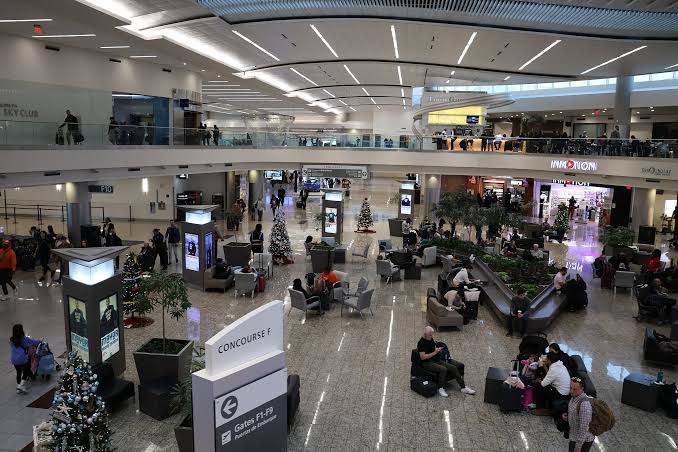
- Atlanta (ATL) — 106.3 million passengers. Down 1.6% year-over-year and down 3.8% since 2019, yet still comfortably #1 by a wide margin over #2.
- Dubai (DXB) — 95.2 million passengers. The Gulf’s flagship hub, built as an intentional long-haul connecting point between Europe, Asia, and Africa.
- Tokyo Haneda (HND) — 91.7 million passengers. Japan’s primary domestic-and-international hybrid airport, minutes from central Tokyo.
- Dallas/Fort Worth (DFW) — 85.7 million passengers. The second-busiest U.S. airport, anchored by American Airlines’ largest hub.
- Shanghai Pudong (PVG) — 85.0 million passengers. The single biggest mover on this list — more below.
- Chicago O’Hare (ORD) — 84.9 million passengers. A legacy dual-hub airport (United and American) that’s held steady rather than surged.
- London Heathrow (LHR) — 84.5 million passengers. Europe’s top entry, constrained for years by runway capacity limits rather than demand.
- Istanbul (IST) — 84.4 million passengers. Turkey’s mega-hub, purpose-built to capture connecting traffic between Europe and Asia.
- Guangzhou (CAN) — 83.6 million passengers. Jumped three spots from 12th — the second-fastest Asian climber on the list.
- Denver (DEN) — 82.4 million passengers. The third and final U.S. airport in the global top 10.
Look at where the actual movement happened and Atlanta’s steady #1 status starts to look less like dominance and more like inertia. Shanghai Pudong leapt from 10th place all the way to 5th, posting 10.7% year-over-year growth — the sharpest jump anywhere in the top tier. Guangzhou climbed from 12th to 9th on 9.5% growth, muscling directly into the top 10 for the first time. A notch further down the full rankings, Kuala Lumpur climbed six spots, from 26th to 20th, on 11% growth — evidence the pattern isn’t isolated to China’s two biggest gateways but reflects a broader Asia-Pacific travel surge.
Why Atlanta Still Wins Even While Shrinking
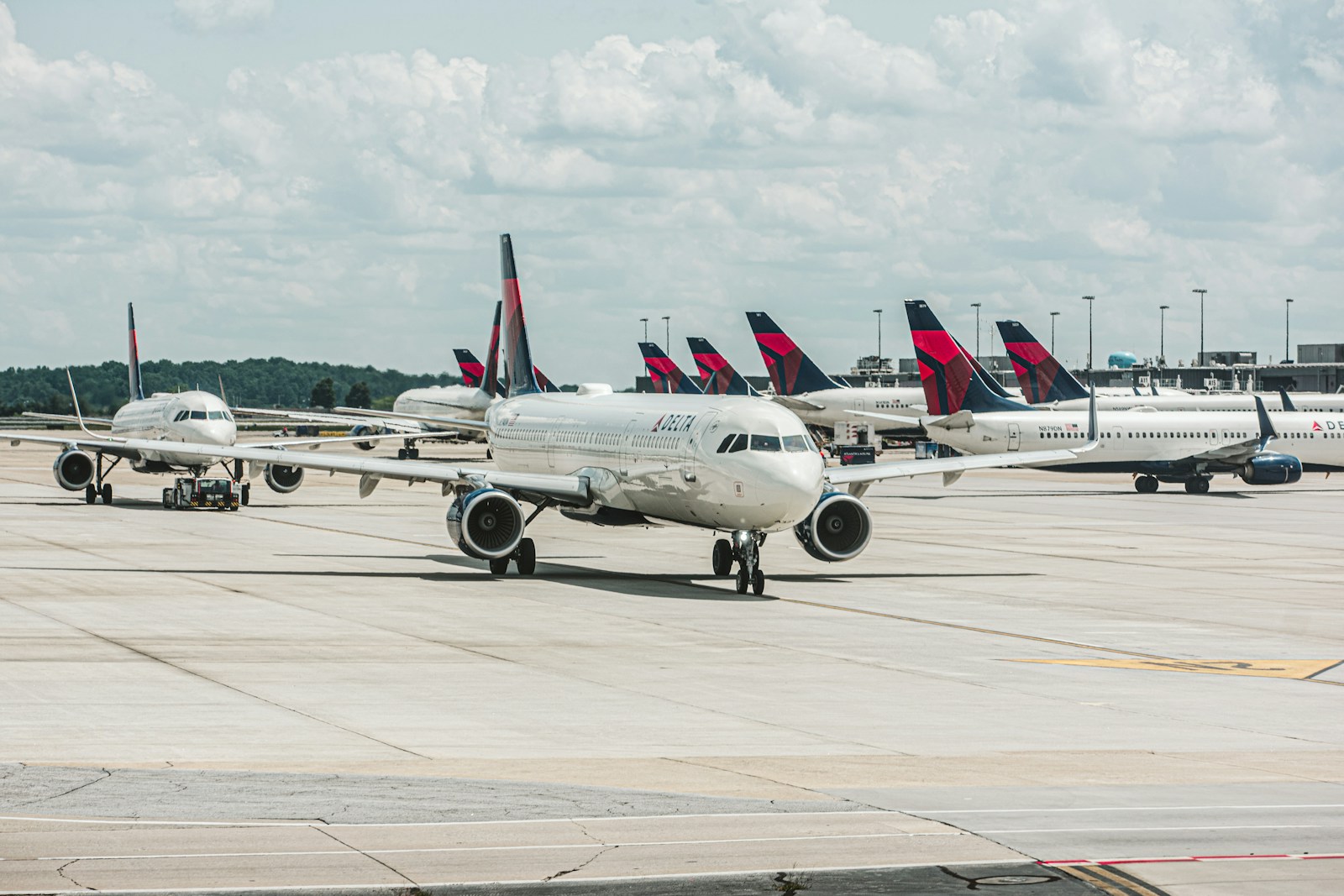
Atlanta’s 106.3 million passengers put it more than 11 million ahead of second-place Dubai — a gap so large that a 1.6% dip barely dents the lead. The airport’s advantage isn’t glamour, it’s structure: Delta Air Lines runs Atlanta as its primary domestic connecting hub in a country where flying, not high-speed rail, is the default way to cross regions, feeding it a volume of short-haul domestic traffic that most international mega-hubs simply don’t have access to. Dubai, Istanbul, and Heathrow all specialize in connecting long-haul international traffic; Atlanta specializes in connecting Americans to other Americans, at a scale nothing else on this list can match.
But “still #1” and “still growing” are now two different sentences, and that’s the real signal in this year’s rankings. Three of the top 10 spots belong to the U.S. (Atlanta, Dallas/Fort Worth, Denver), and all three are mature, largely built-out hubs with limited room to add new capacity. Shanghai and Guangzhou, by contrast, are climbing off comparatively newer, still-expanding infrastructure in a region where air travel demand hasn’t leveled off yet. If the current growth rates hold, this is less a snapshot of who’s biggest today and more an early read on which hubs are positioned to contest the top of this list within the next decade.