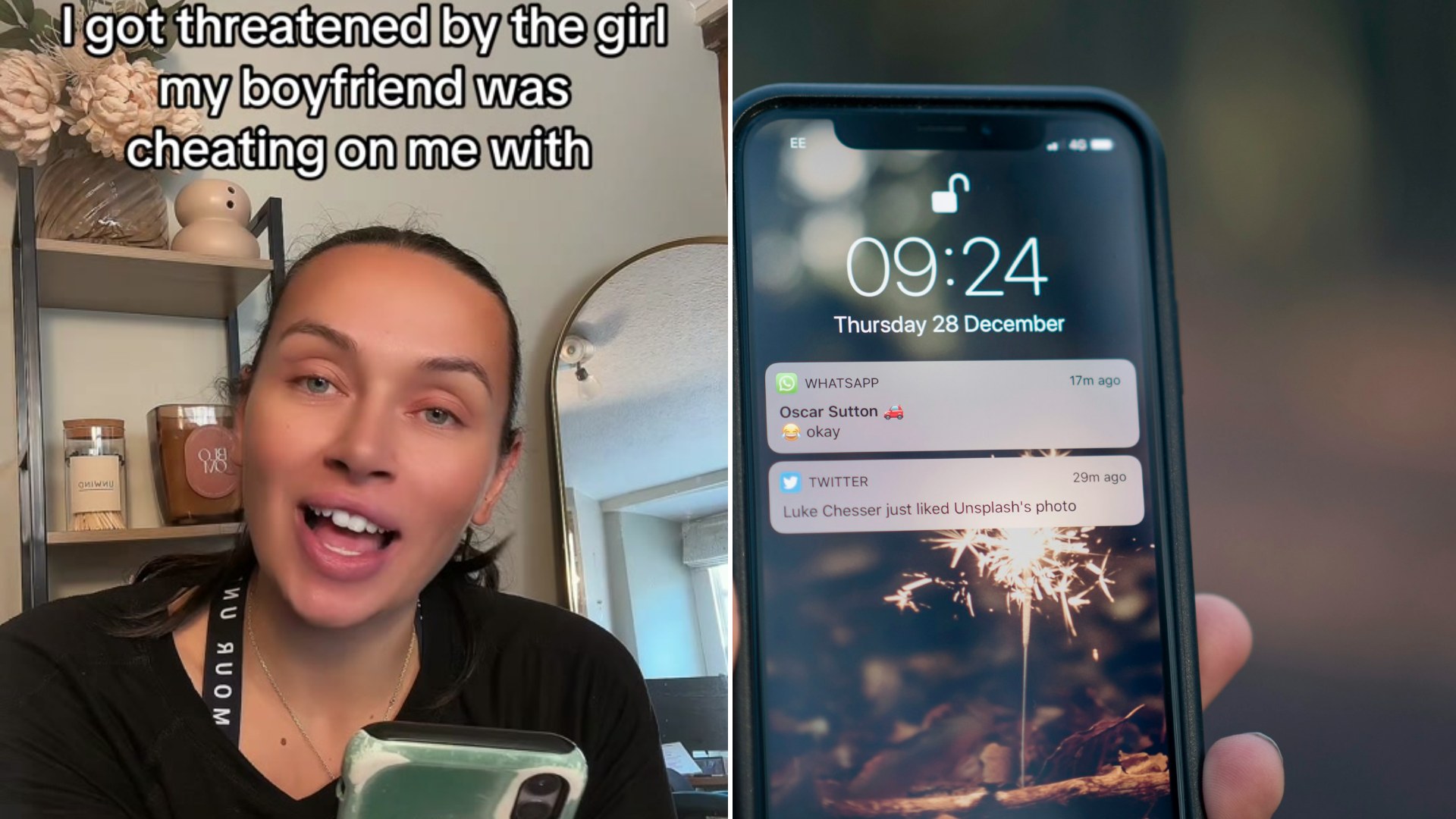
@girlcodelettie opens her video with a challenge, almost daring the comment section to react the way she knows it will. “The girl my boyfriend was cheating on me with sent me this threatening text message,” she says, “and I can’t wait for someone in the comment section to be like, oh, yeah, that’s totally reasonable behaviour.” Then, without further commentary, she reads the message out loud, word for word, letting it speak entirely for itself.
The text is long, and it escalates fast. It opens almost gently — “Hi, babe. I’m actually messaging you because I think it’s time we stop pretending” — before pivoting into a full case for why the other woman believes she’s entitled to the relationship. “He’s told me he loves me. He’s told me he’s going to leave you,” Lettie reads. “We’ve discussed what our life is going to look like when he finally gets rid of you.” The message claims intimate knowledge most partners would assume was theirs alone: where he wants to live, what he wants to name future children, what he bought for her birthday. “Do you? Because if you don’t, maybe you should ask yourself why.”

What makes the clip land the way it does isn’t just the content of the message — it’s the tone shift buried inside it. The message moves from performed reassurance (“not because I’m scared of you”) into open intimidation (“you should be scared of me”) within the space of a few sentences, then into an outright ultimatum: “I’m giving you to the end of the week to make the sensible decision… every single day you stay with him, you’re standing between two people who have already decided they want each other. And I will make your life hell.”
Lettie reads all of it in a flat, almost bored register, which does more to undercut the message’s intended menace than any commentary could. By the time she gets to the message’s closing lines — “pack his stuff, give him back his keys and let him come to me” — the effect isn’t fear, it’s disbelief. She closes the video with the line that doubles as her actual verdict on the whole situation: “That, everyone, is the unstable ramblings of the girl that my boyfriend cheated on me with, who he met on social media.”
Notably, Lettie never raises her voice, never editorializes beyond that closing line, and never says a single negative word about the boyfriend himself in the clip — the entire spotlight stays on the message and its author. That restraint is part of what made it spread: rather than a tearful confrontation or a rant, she let the other woman’s own words do the damning, then closed the loop with a single line that reframed the whole thing as evidence rather than heartbreak.
Reading the Room: What Messages Like This Actually Reveal
Everything above is drawn directly from the message as Lettie read it on camera. There’s no way to verify the text independently, and this piece isn’t taking a position on any of the three people involved beyond what’s shown. What is worth unpacking is why a message like this — confident, detailed, and threatening all at once — tends to say more about the sender than the intended target.
- Threats framed as inevitability are a control tactic. Relationship counselors often note that phrases like “we’ve already decided” are designed to remove the other person’s sense of agency, making a choice sound like it’s already been made for them.
- Detailed “proof” of intimacy doesn’t prove exclusivity. Knowing a partner’s private plans or preferences can come from a real relationship or from a partner who talks the same way to more than one person — the message alone can’t distinguish between the two.
- Ultimatums with deadlines are a red flag, not leverage. Giving someone “until the end of the week” to act rarely reflects confidence; more often it signals urgency because the sender fears the situation isn’t actually as settled as they’re claiming.
- Publicly reading a message can be a form of documentation. Sharing a screenshot or reading a threat aloud, calmly, creates a record and can defuse the sender’s intended power — turning an attempt at intimidation into something the audience simply finds absurd.
Infidelity stories are common online precisely because so many people have lived some version of this exact dynamic — a third party who is convinced they already understand a relationship better than the person actually in it. Lettie’s decision to let the message speak for itself, rather than escalate the confrontation herself, is part of why so many viewers walked away feeling like she’d already won the exchange before it even started.
You can watch the full video and follow @girlcodelettie on TikTok for more.

As a mom of three busy boys, I know how chaotic life can get — but I’ve learned that it’s possible to create a beautiful, cozy home even with kids running around. That’s why I started Cultivated Comfort — to share practical tips, simple systems, and a little encouragement for parents like me who want to make their home feel warm, inviting, and effortlessly stylish. Whether it’s managing toy chaos, streamlining everyday routines, or finding little moments of calm, I’m here to help you simplify your space and create a sense of comfort.
But home is just part of the story. I’m also passionate about seeing the world and creating beautiful meals to share with the people I love. Through Cultivated Comfort, I share my journey of balancing motherhood with building a home that feels rich and peaceful — and finding joy in exploring new places and flavors along the way.